

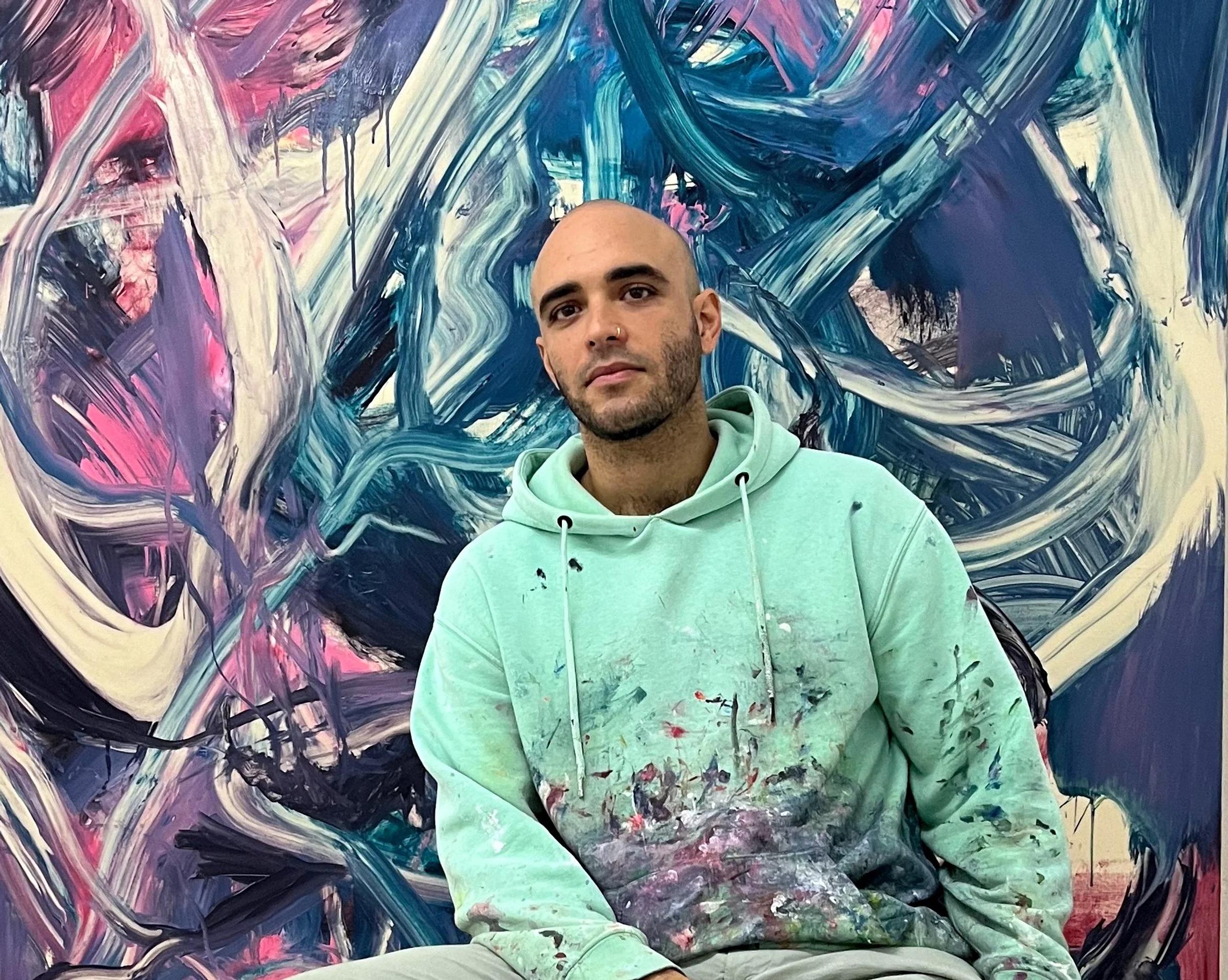
bP: Hey Jesús! The interaction between perception and discovery seems central to your practice. How do you believe the viewer's engagement shifts depending on individual perspectives?
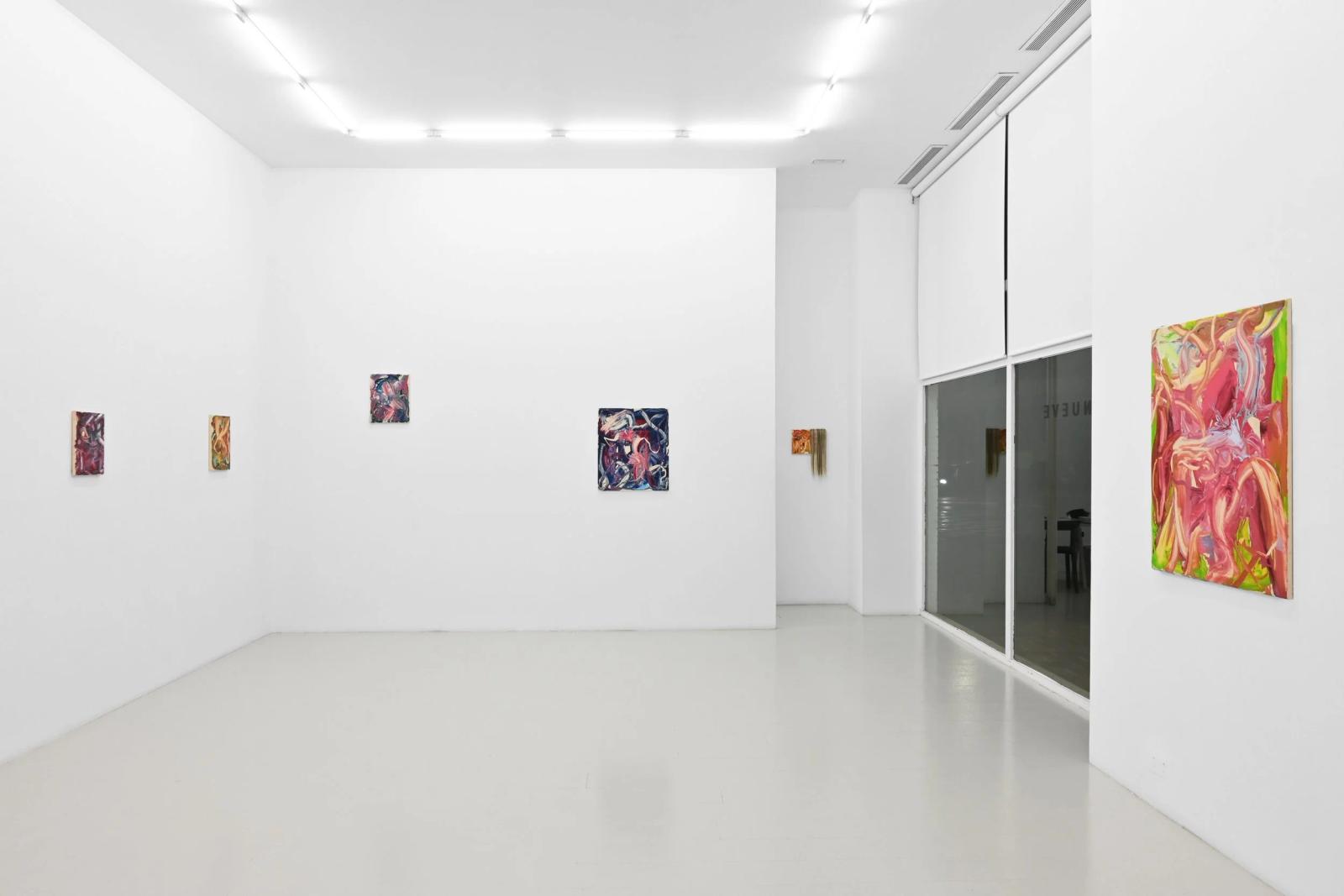
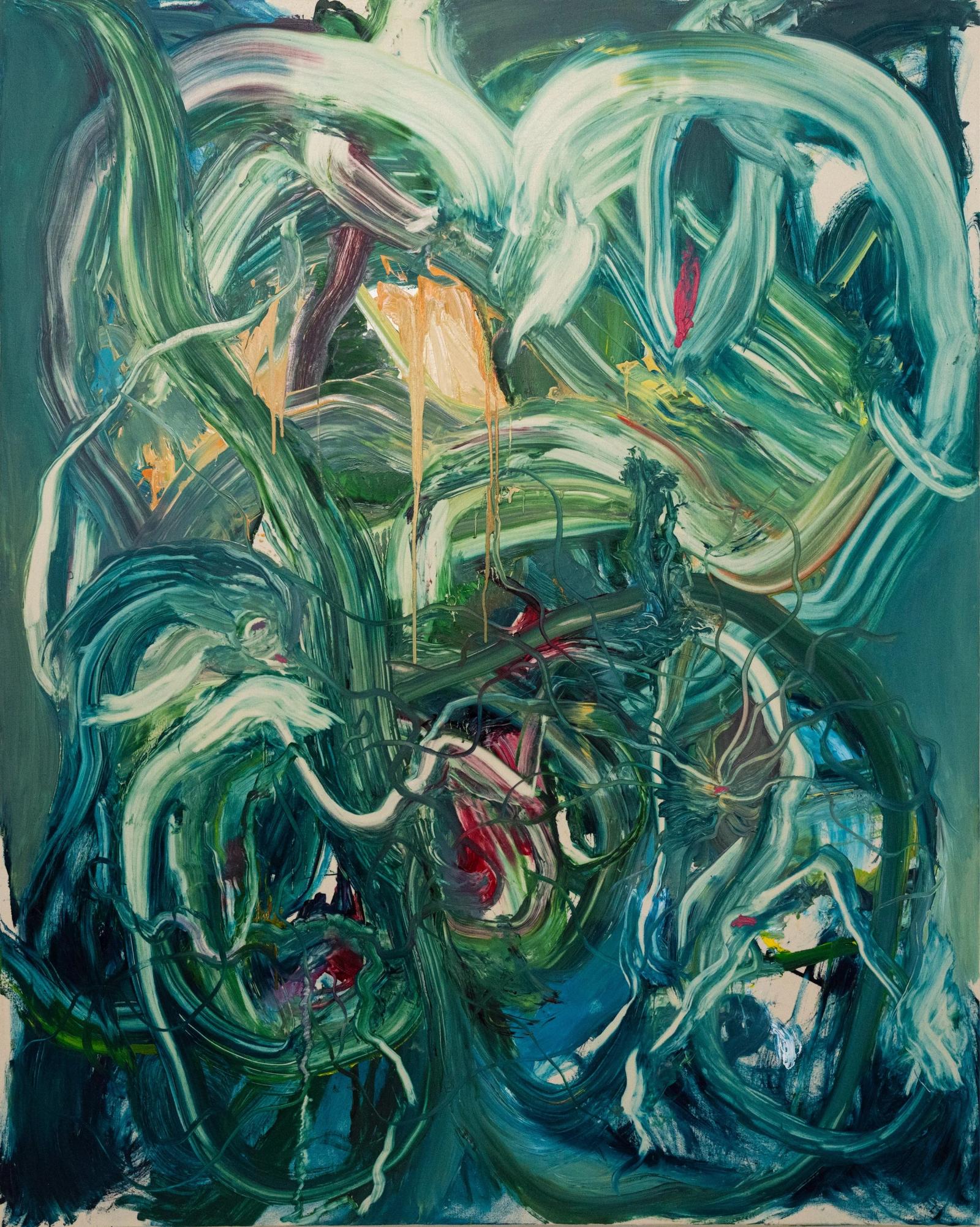
JC: Based on many conversations I've had with viewers of my work, I would say that the context defines most of the formal issues related to meaning. What we feed into our brains is what our brains tend to process into ciphered images. There's a bit of psychological play here. Let's say I start with abstraction and twist shapes until I get an image that suggests a complex of forms turning into 'something.' That 'something' is what each viewer tends to complete with their own experiences: pleasures, doubts, fears, ambitions, etc. That's where the cerebral action comes in. The brain feels very uncomfortable when a form isn't resolved and always wants to synthesize it into something recognizable for each person. So, the personal experience of each viewer is key to deciphering my work. After that, the collective imaginary—based on our image consumption in a world with access to any digital context—also plays a role, where I think it confronts our personal world where we try to find something in the unrecognizable.
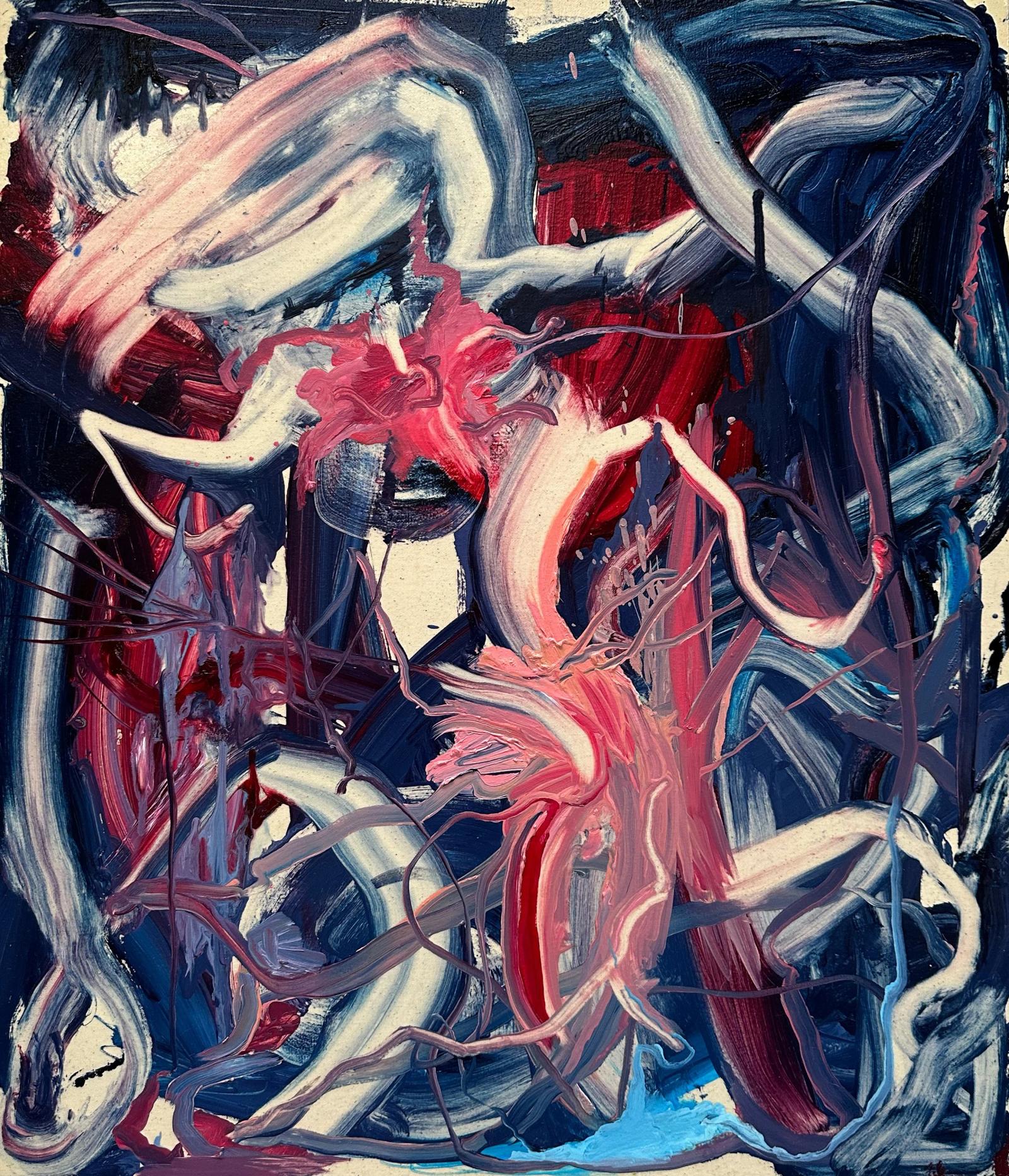
bP: You've had the opportunity to work in a range of locations through residencies, including Guadalajara, Lisbon, and Tunis, suggesting a strong international influence on your practice. How have these diverse cultural contexts informed the themes and techniques in your painting?
JC: Well, if I wanted to create paintings that embraced ambiguity or had a truly open meaning, I had to break away from the customs of my primary place of formation, which in my case was Madrid. I believe that traveling is a very wise and important thing to do if you want to understand humanity and yourself. As I mentioned before, context is very important in my practice; it feeds the way I understand the process and the decisions I make in my paintings, whether from my own eyes or from the eyes of my viewers. For me, it's a good strategy to increase sensitivity in the way of seeing. I feel that the more I learn about other contexts and cultures, the more strategies I'll have to twist my paintings. That's why, while I was at university, I decided to finish my degree at Camberwell College of Arts in London, which is where I truly began to realize the importance of decontextualizing myself. Some fellow artists find this distracting or blocking; in my case, it helps me a lot. I put so much interest in what viewers can decipher from my work, and being in other contexts and understanding how people locally interpret and view an image or a painting has only enriched my perspective. In my practice, it helps me see how far we can go in the meaning of an image and whether there's a possibility of twisting it so much that I end up getting lost in my own work!
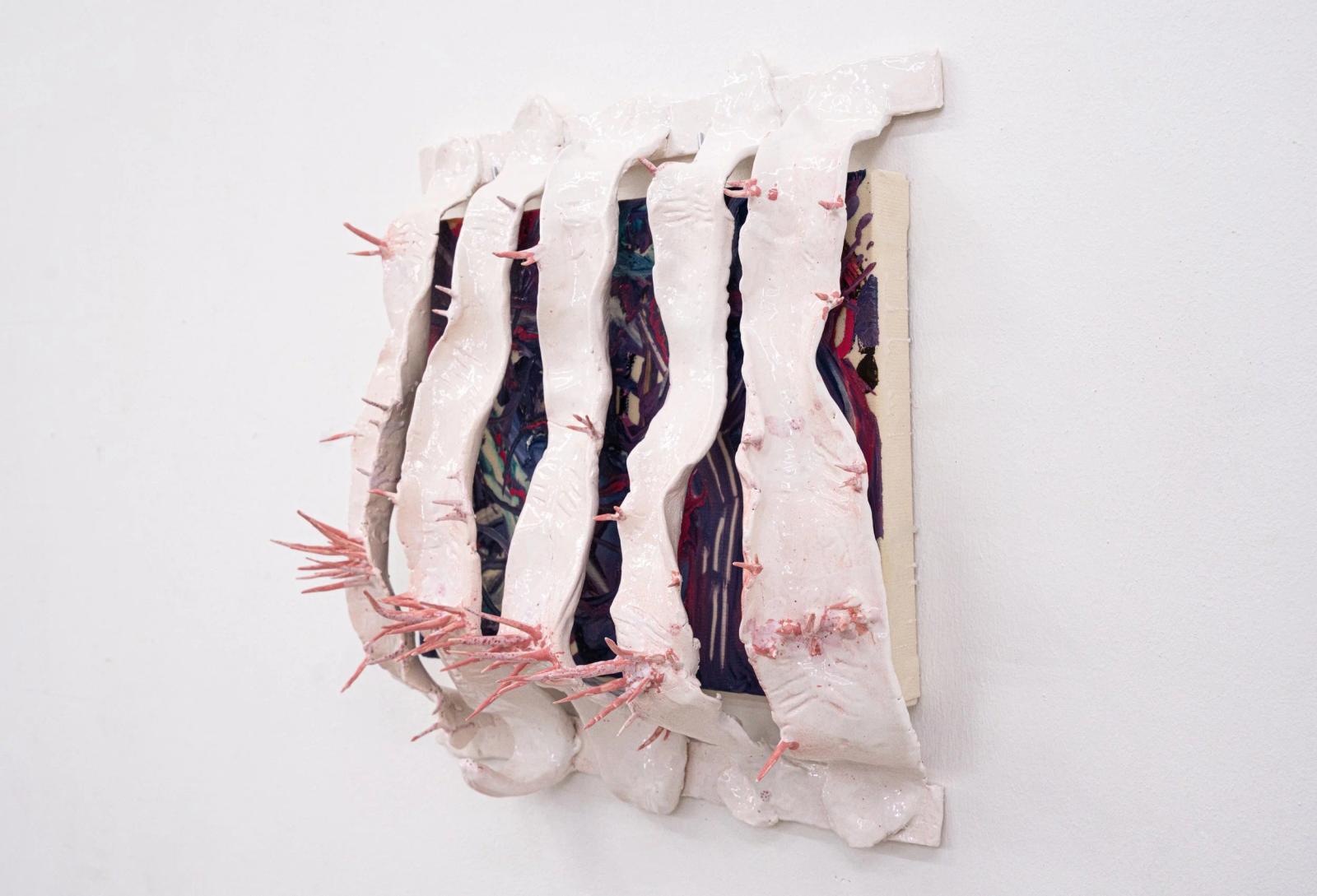
bP: Do you intentionally leave space for unpredictability in your creative process? We ask because you've spoken about embracing new possibilities for understanding that arise from the random meaning of abstraction.
JC: Always, and allowing the unpredictable into my work feeds back into my practice and motivates me to keep searching for 'something' in each painting. I like the risk of being able to connect with people through the hidden. I've learned from my own life experiences that humans engage in a lot of covert communication, in the delayed impact of what we understand or in the new discovery of what we once took for granted. That's why I find a certain comfort in abstraction, but precisely to shift it with my process in a way that transforms it into an uncomfortable abstraction.
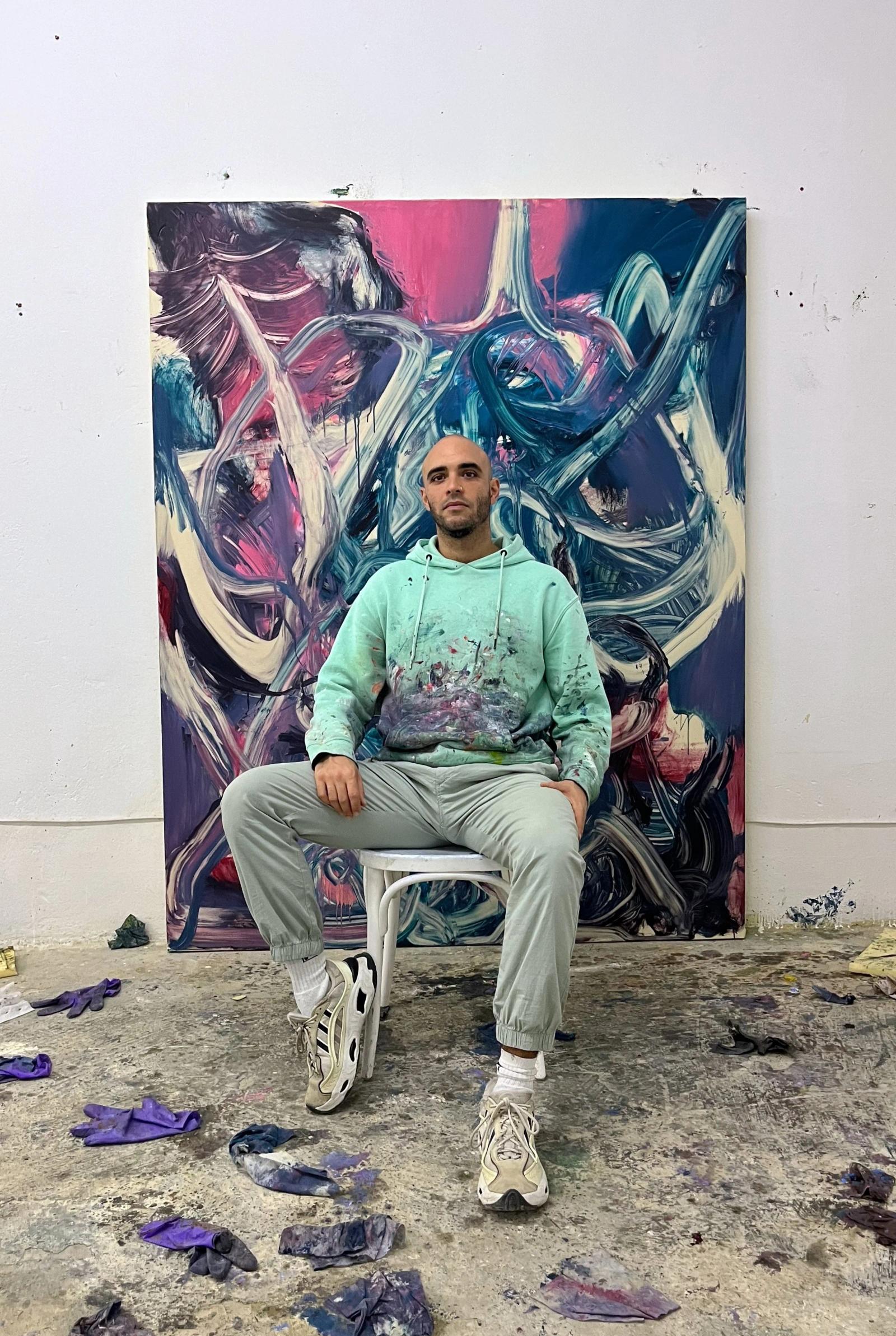
bP: How does your background in graphic arts influence your approach to painting today? Is there a lingering connection between your earlier training and your current artistic explorations?
JC: My background in graphic arts was truly a first approach to the technical aspects of the image in general. Concepts like color and composition were very useful when facing my own concerns in painting. I recognize that the nature of digital image editing, such as the immediate modification of pixels, gave me an accelerated understanding of creation in the image that still serves me today, helping maintain it as an underlying theme in my process. Perhaps it's one of the obsessions I retained from that period, and why I decided to dedicate myself to painting. During my technical training in graphic arts, I understood that embracing the immediate and infinite possibilities of the virtual world opened up a vast working horizon for me in the way I think about what painting is today and what inner worlds an artist can transmit.
bP: You've cited artists like Albert Oehlen and Francis Bacon as inspirations. What aspects of their work resonate with you and how have they influenced your approach?
JC: These two have always been kind of talismans that I've wanted to keep close to me, but always at a certain distance. The references in contemporary painting are something I approach in a delicate way, and perhaps my case is a strange one when it comes to how I understand references. But yes, in Bacon's case, for me, he was one of the first figures in whom I could appreciate raw emotion and existential darkness. These are concepts that have always made me feel supported in my own searches. As for Oehlen, I have always admired his ability to create sensations of controlled chaos, in addition to the ironic undertones contained in his works. Today, I continue to admire both of them, although I also look to artists like Charline Von Heyl, Rashid Johnson, Kerstin Brätsch, and Adrian Ghenie.
Comments
Leave a comment