

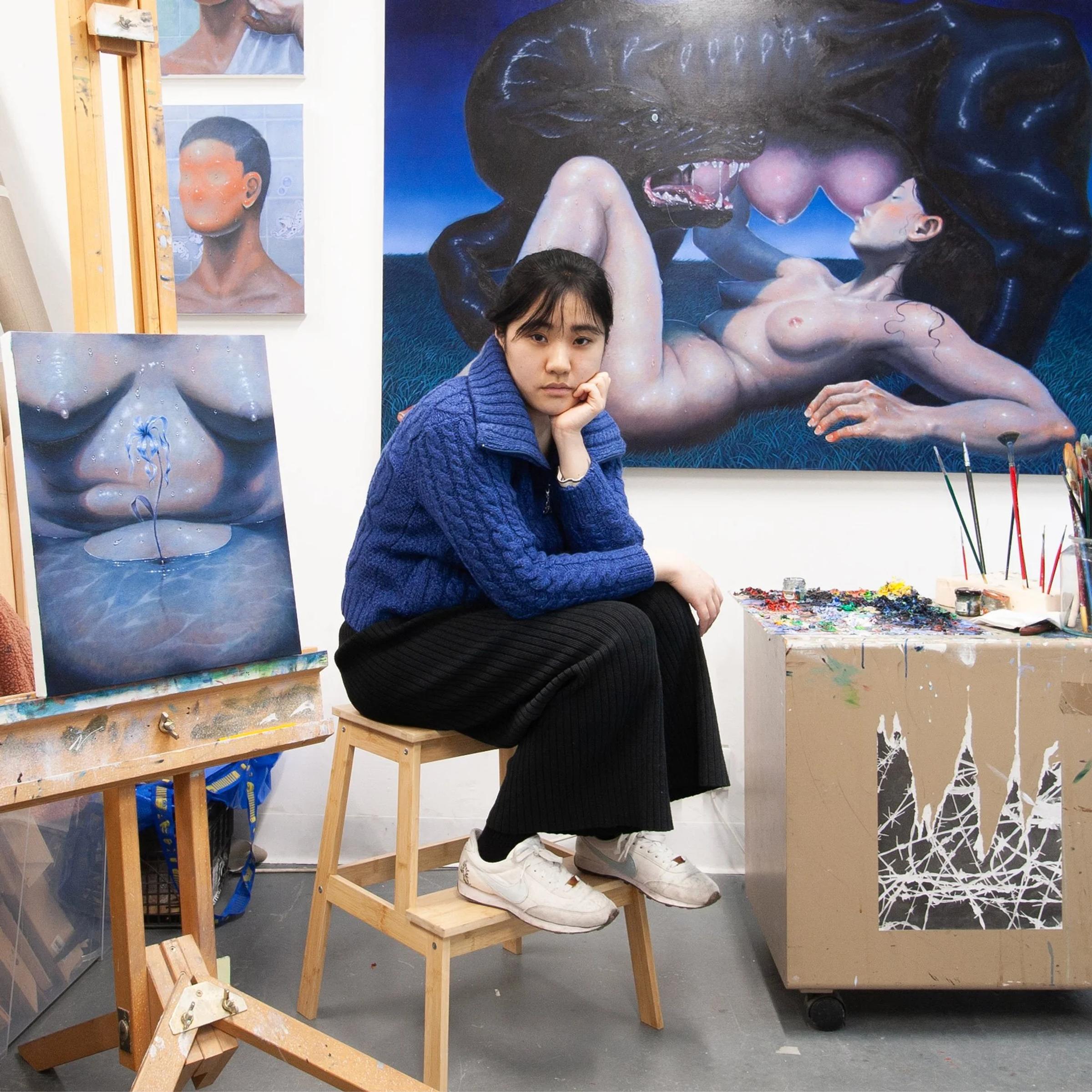
bP: Hey Heeyoung! Having completed your MFA at the Glasgow School of Art has your time in the UK shaped your perspective on art and identity in any way?
HN: My experience at the Glasgow School of Art was truly enjoyable and fruitful. However, it wasn't simply because I was enrolled in the MFA course there that I was able to develop my work in this way. Living outside of Korea, in a completely different country, was like breaking out of an eggshell in Demian, a shocking experience that also brought constant external stimuli, allowing me to explore myself more deeply. It was only after leaving Korea and settling in Scotland that I was able to fully realize my identity as an Asian woman. From hair colour to religion, everything around me was different. Through that contrast, I was finally able to begin exploring the identity of "Heeyoung Noh." Life after graduation became somewhat simpler. I spent most of my time painting in the studio. For almost a year after graduating, I minimized contact with the outside world and focused solely on my work. That period allowed me to specify the direction of my practice. If the time I spent in school was about exploring the possible directions of my work, then the time I spent alone in the studio after graduation was about understanding whether the direction of my work aligned with the images I was producing, about discovering what exactly I was seeking from those images. Through this period of intense focus, I experienced significant improvement in technical aspects, and more importantly, I began to seriously reflect on what painting means to me as an artwork.
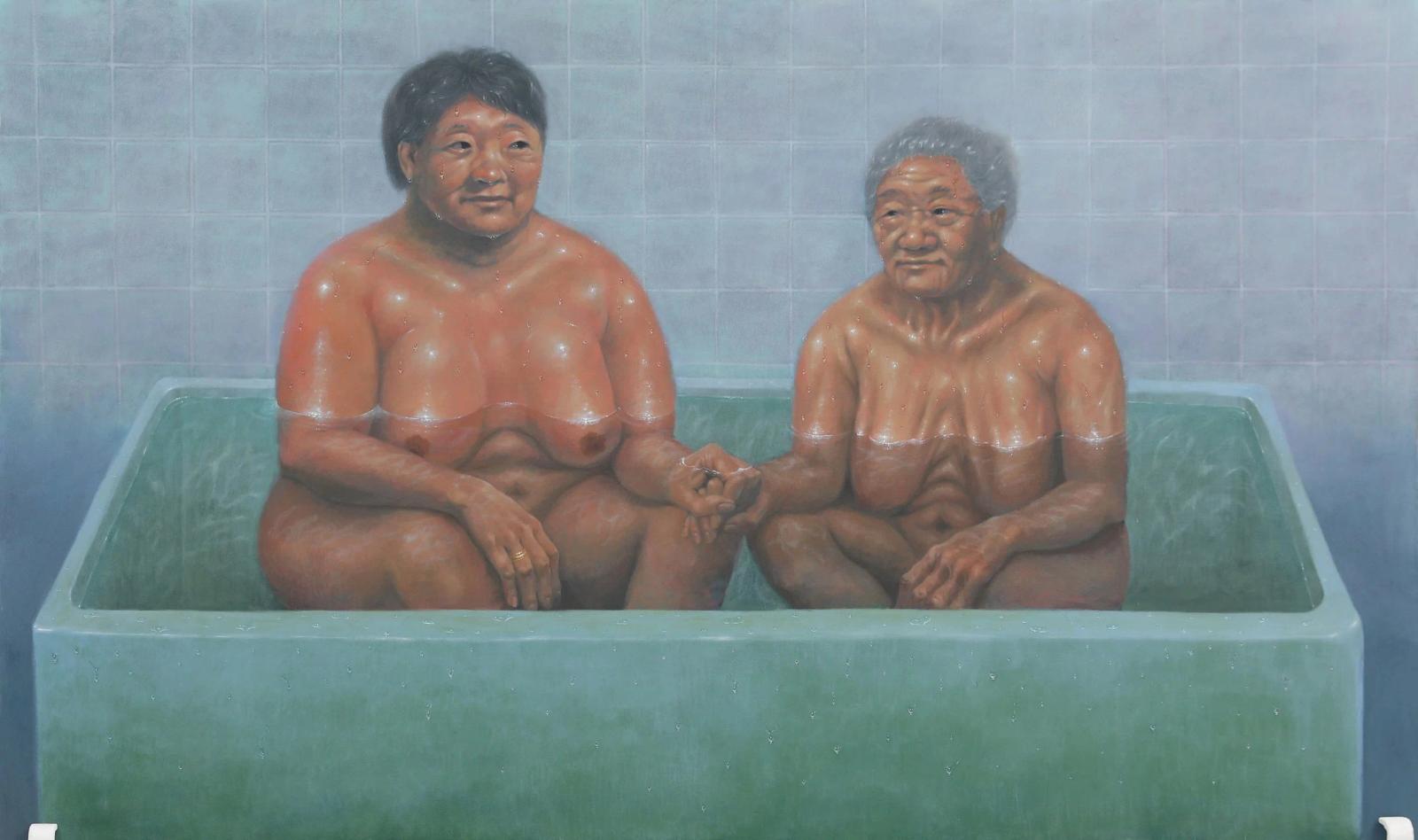
bP: Your work often centres the female body as a focal point. How do you approach the representation of skin hair and physicality to explore themes of identity and cultural memory?
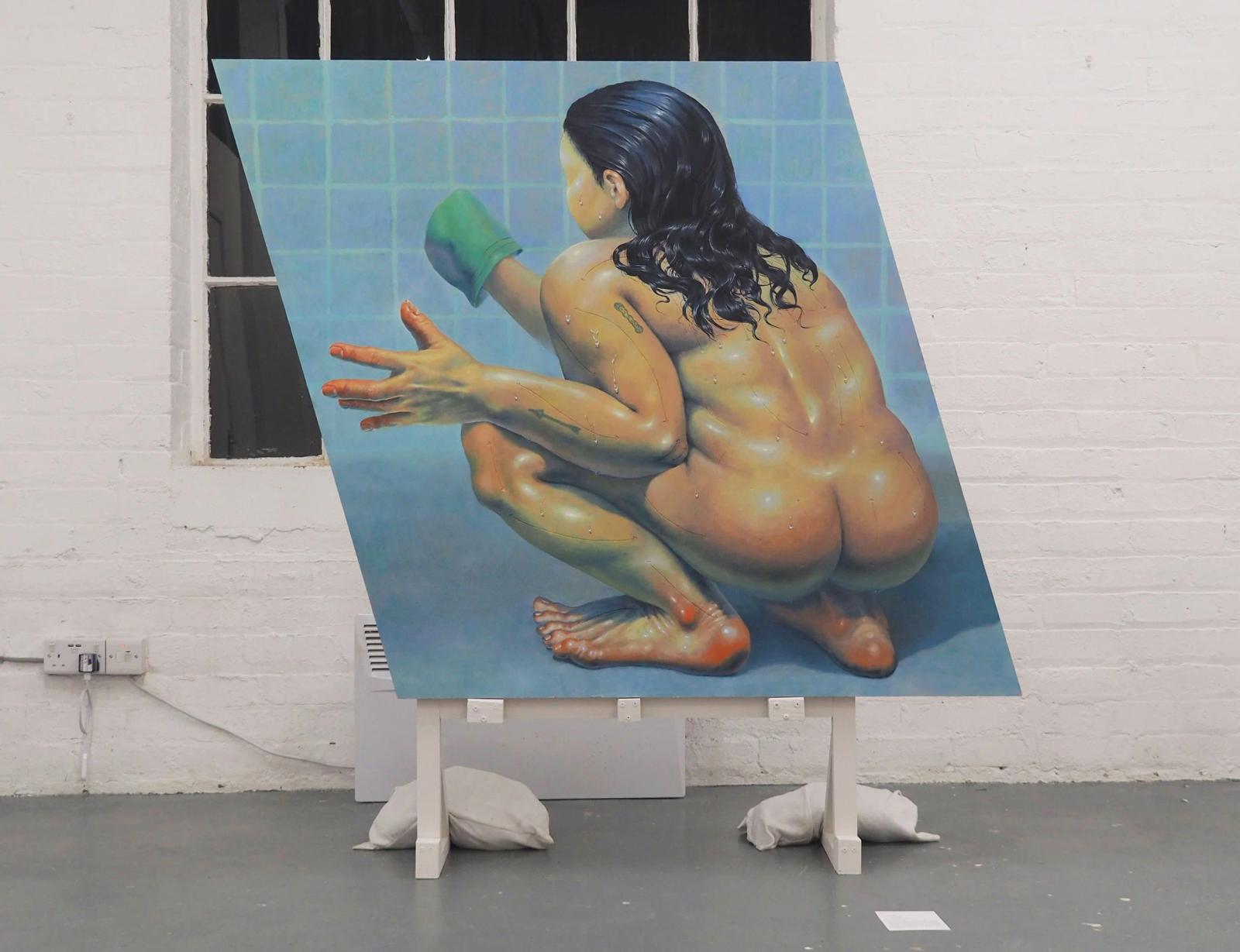
HN: My focus on depicting the body, particularly the skin and hair, began with a personal experience of scrubbing my body in a small accommodation shower booth. In that dark, confined space, I spent a long time observing and rubbing every corner of my body. This repetitive act led me to objectify my own body, not perceiving it as "my body," but rather as something that needed to be thoroughly cleaned and stripped of every trace of dead skin cell. The gaze I directed at my own body, along with the compulsive scrubbing I performed on my skin, felt deeply violent. To me, this mirrored a kind of metaphor for colonialism. This led to my first nude painting series, Ttaemiri Series. Furthermore, my identity exploration, rooted in the background of being an East Asian woman from Korea, eventually led me back to observing my own physical body. My black hair, soft and undefined facial features, and ambiguous skin tone serve as elements that reinforce my identity as an East Asian woman. Through this, I began to understand the image of the body not only as a reflection of my identity, but also as a medium through which the act of bathing could become a way to explore transgenerational trauma.
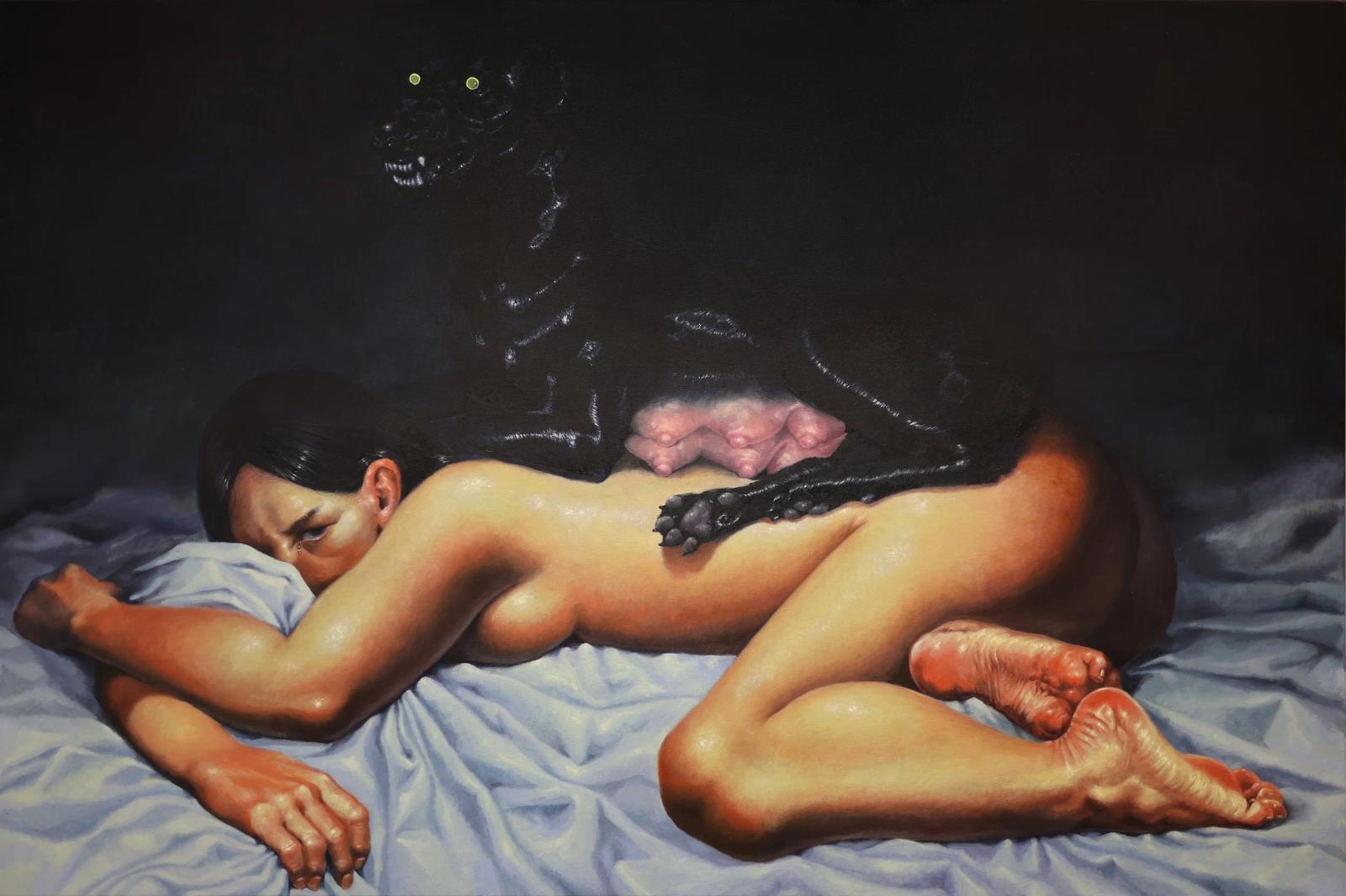
bP: In your Ttaemiri series you draw from the traditional Korean bathing ritual. What do you hope this ritual communicates to viewers through your paintings?
HN: The history of public bathhouses in Korea is not particularly long. Of course, Koreans did bathe in the past, but bathing was more of a ceremonial act done on special occasions. However, the widespread cultural adoption of public bathhouses stemmed from a different origin. In the late 1890s to early 1900s, during the era of Korea's gate opening to the world, members of the enlightenment movement advocated for the establishment of public bathhouses as a step toward becoming a "civilized nation." As Korea entered modernity, the practice of scrubbing the body (ttaemiri) in bathhouses became widespread. What is particularly interesting is that during the Japanese colonial period, the act of ttaemiri began to be associated with more than just cleanliness and hygiene, it came to carry a sense of inferiority. The Japanese defined Koreans as "unclean," thereby branding Korea as a backward nation. This perception that Koreans were colonised because they were less clean than the Japanese was internalised by Koreans themselves, eventually developing into an obsessive scrubbing culture. This historical trauma surrounding bathing practices has now become embedded in what is often seen as a unique aspect of Korean bath culture. I found this ironic and fascinating, and that is what led me to begin the Ttaemiri Series. In my paintings, water droplets clinging to the body may seem like they're about to vanish, but within the image, they remain forever suspended. These eternal, un-evaporating droplets serve as a metaphor for transgenerational trauma, something that stubbornly refuses to disappear.
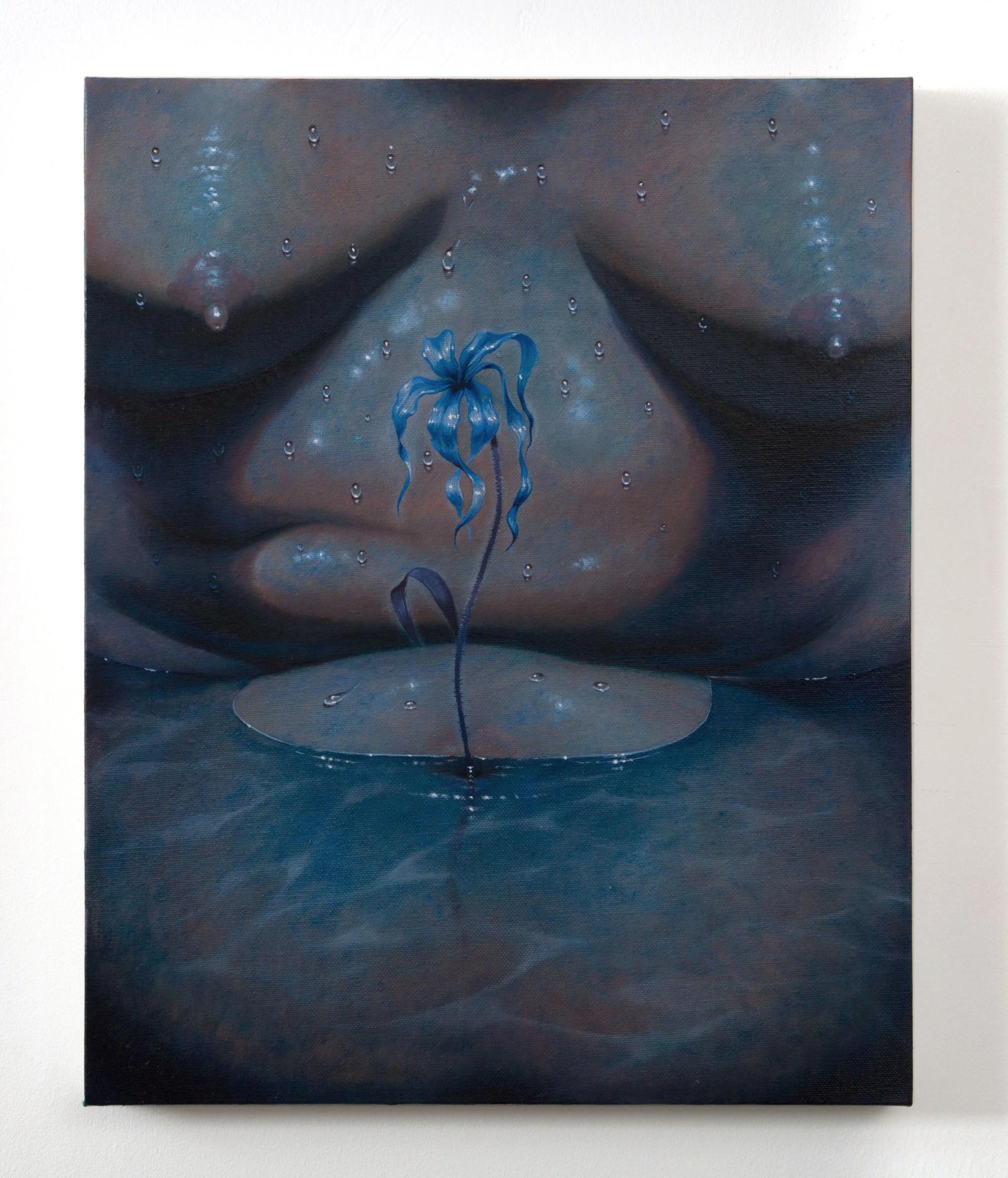
bP: Your practice engages with colonial trauma and the Korean diasporic experience. How do you navigate these layered histories in your work and what conversations do you hope to spark through them?
HN: Rather than focusing solely on colonial trauma in Korea, my work brings together various experiences that form the basis of transgenerational trauma among Koreans, such as colonial trauma, war trauma, and trauma caused by state violence, through the motif of ttaemiri. Personally, I scrub my body about once every two weeks. I remember the first time I tried to do this after moving from Korea to the UK, in the small shower booth of the accommodation. Sitting crouched in the dimly lit, cramped space, scrubbing my skin, I realized for the first time that I was truly living as a complete foreigner in this land. In Korea, even people living alone can visit a public bathhouse to have a scrubber help them, or they might go with a friend and scrub each other's backs. In my case, I usually went to the bathhouse with my mother, and we would scrub each other's backs. But in this country, I had no one to entrust my back to, no family, no friends, not even a stranger who understood the ttaemiri culture. This absence represented more than just the lack of someone to help me bathe; it signified the absence of intimate relationships and also of a shared cultural understanding. In that moment, I think I began to truly understand what it means to live as a complete outsider.
bP: Congratulations on your recent solo exhibition Submerged Attachment at The Tagli gallery. How did you come to the title and what can audiences expect from the exhibition?
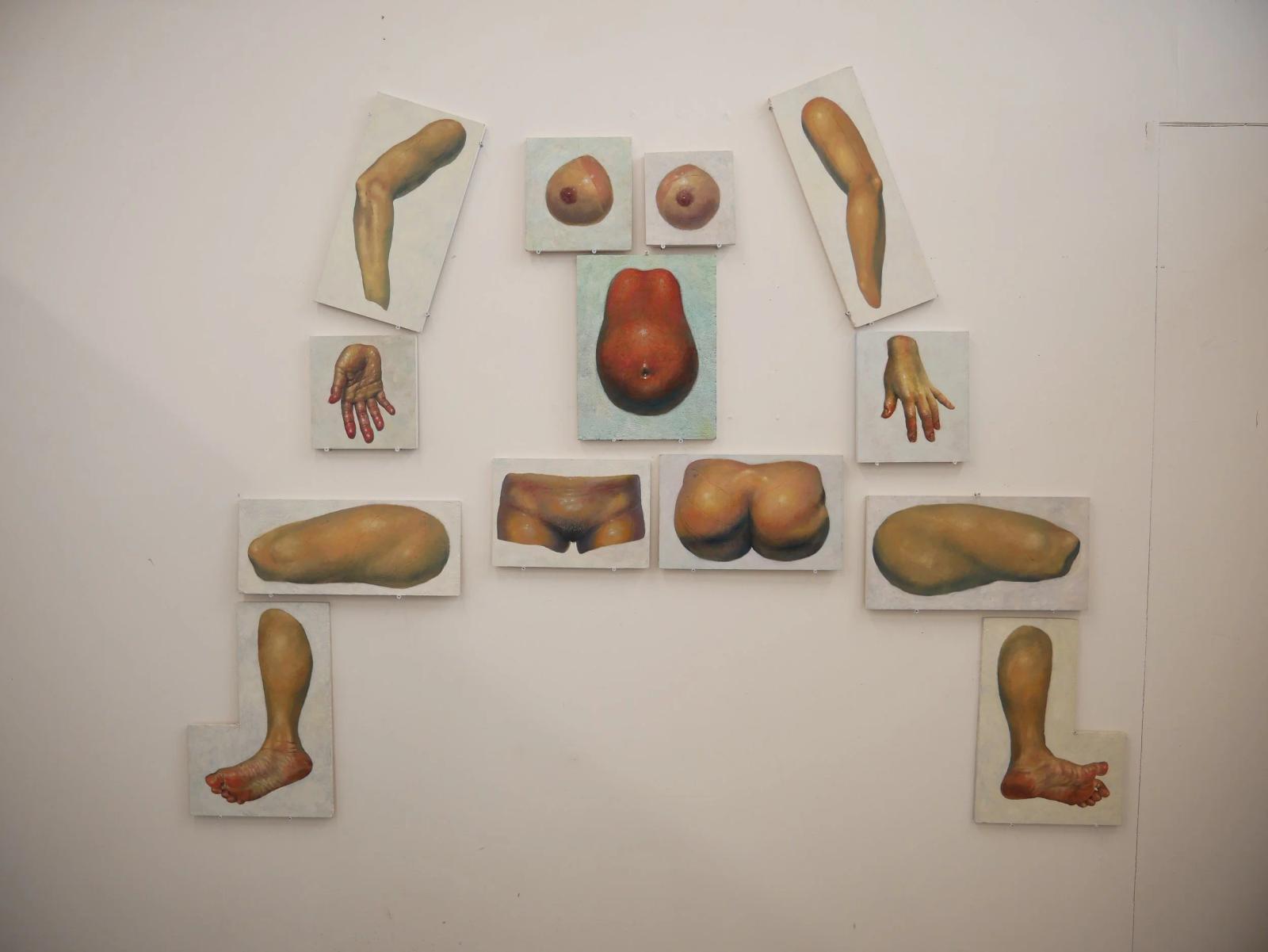
HN: One of the paintings in my exhibition is titled Fierce Attachment. It depicts an older mother and daughter, both nude, with two black dogs running in the background. The inspiration for this work came from Vivian Gornick's book Fierce Attachments, which explores the intense anger, obsession, and love that exist within mother-daughter relationships. Its themes strongly resonated with the series I'm currently working on. Through painting, I often explore the shared memories and emotions that are passed down across generations. I see the vivid memories and feelings of my grandparents' generation being transmitted through my parents and eventually reaching me, like small seeds of emotion buried beneath the surface, quietly germinating through my own body. Because my grandparents, my parents, and I are all bound together through attachment, I felt that the term Submerged Attachment aptly captured the emotional undercurrent running through my work. This exhibition presents a layered exploration of the themes I have been investigating: the transgenerational trauma of being Korean, the deeply rooted anxieties and traumas of being an East Asian woman, and the complex relationship between mother and daughter as a source of these experiences.
bP: What kind of dialogue do you hope your work encourages across generations genders or cultures?
HN: To be honest, I don't hope for a specific type of dialogue to emerge from my work. Rather, I believe that if my work sparks any kind of conversation, whatever form it may take, then it has succeeded as a piece of art. Although I spend a great deal of time painting, I believe that once a painting is hung on the wall for viewers to encounter, my relationship with that painting is, in a way, concluded. From that point onward, it becomes about the interaction between the viewer and the work. That's why I don't want to say something like, "I hope the audience interprets my work in this or that way." Whatever the response may be, if someone is reminded of something, anything, through my painting, even if it's something entirely different from what I intended, I would still be happy.

Comments
Leave a comment