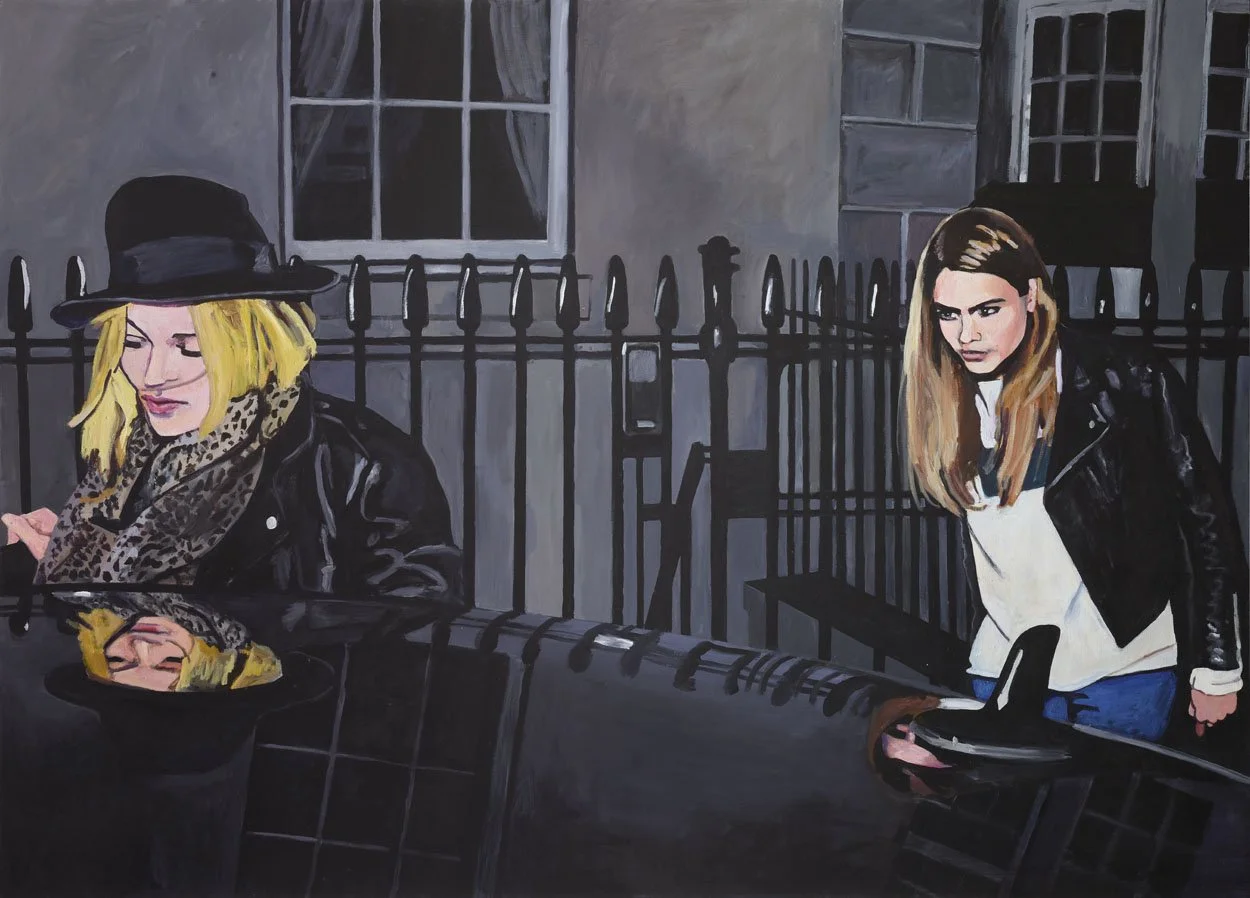
diaries
What’s the Point of a Private View?
March 2026
8 min read
Arts Editor: Sam Moore
Contributors:
Laurie Barron / Herald St
Freddie Powell / Ginny on Frederick
Henry Hussey & Sophia Olver / OHSH Projects
Augustine Paredes
Dan Guthrie / Spike Island
The private view is one of the art world's most beloved institutions, and also one of its most contradictory. It's supposed to be about the work, but it’s also about free wine, the right eyes on the work, and enough social anxiety to warrant a Xanax on entry. Sam Moore speaks to the gallerists and artists navigating that tension, one glass of warm white wine at a time, to ask what – and who – the private view is really for.
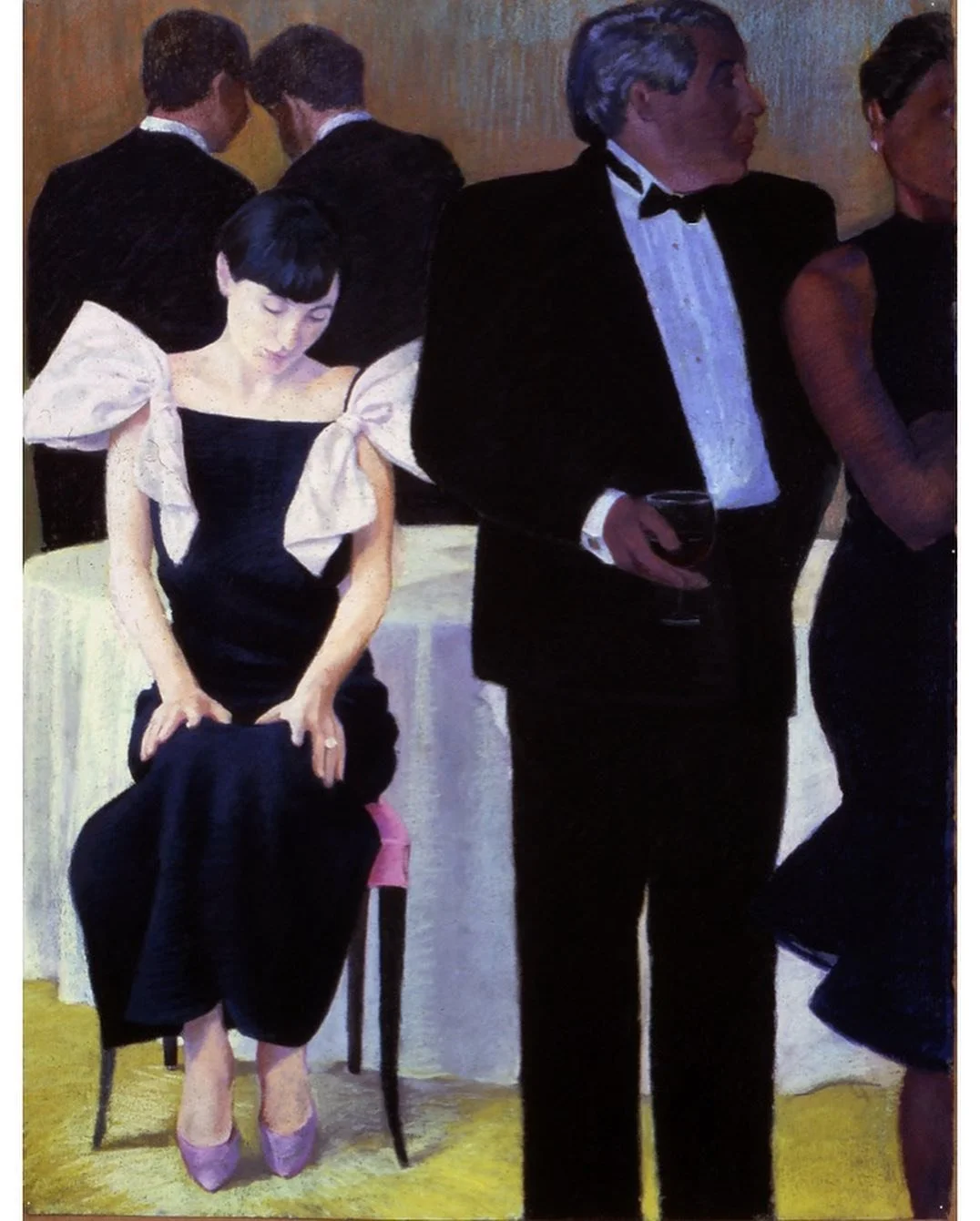
Nigel Van Wieck, The Silent Treatment, 1990.
The public opening of any exhibition, whether it's an artist’s debut in a small commercial gallery or a career-spanning retrospective in an institutional space, is rarely the first time that their art is put on display for prying eyes. The night before there is often a private view (PV), a sort of advanced preview of the work. But a question seems to loom large over them: what’s the point? They exist in a sort of halfway point between an exhibition and a social occasion. More than that, it’s something that seems pulled in multiple directions, always trying to be all things to anyone in the periphery of the art world that puts in an appearance at events like these. The Private View, and the countless Thursday nights in art world calendars that they take up, is a hangover of decades old journalism practices for theatre critics in London and New York. A Thursday night press view gave writers plenty of time to dash back to the office after the curtain fell so that they could write a review for Friday’s edition, letting readers decide what shows were worth spending money on the following weekend.
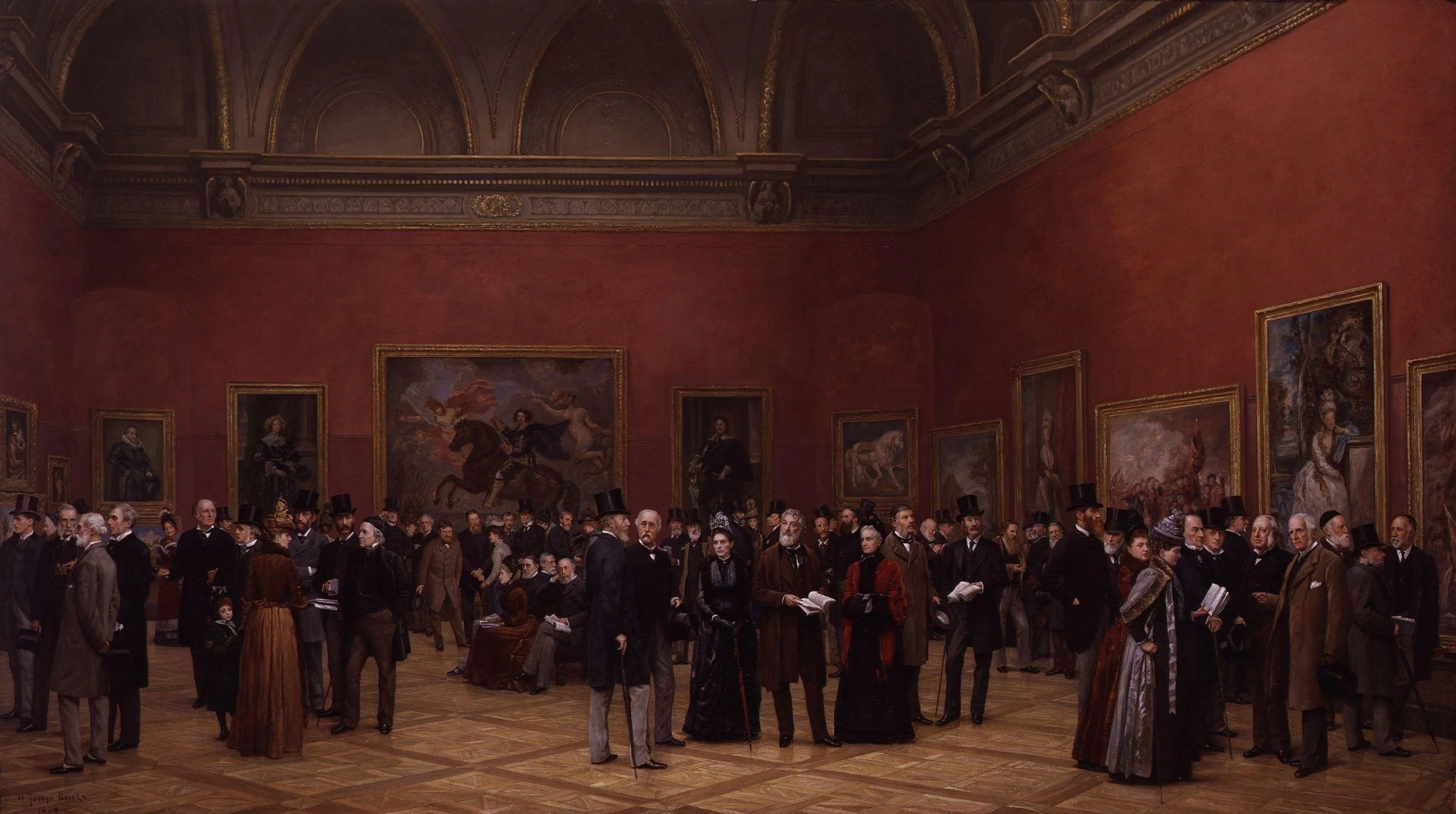
Nathanial Hone, The Pictorial Conjuror, 1775.
In the art world, the PV offers less emphasis on what any given consumer or connoisseur might want to spend their weekend admiring, but the end-of-week, evening time slot that ushers in so many new shows still carries with it that vital purpose: accessibility. It’s much easier to get to a gallery on a Thursday night than it is in the middle of a workday. Laurie Barron, associate director at Herald St, stresses that accessibility is the core of what a private view is for. He argues that they “let people preview a show at an accessible time – outside of typical working hours, when only a few people can run around visiting galleries.” This need to actually be able to sit and see the work isn’t something that’s exclusive to audiences; Barron stresses that for artists themselves, an event like this allows them to actually take a moment and see their work as intended. “Many artists travel for only a few days while exhibiting, and much of that time is absorbed by installing their show, press interviews, meetings.”
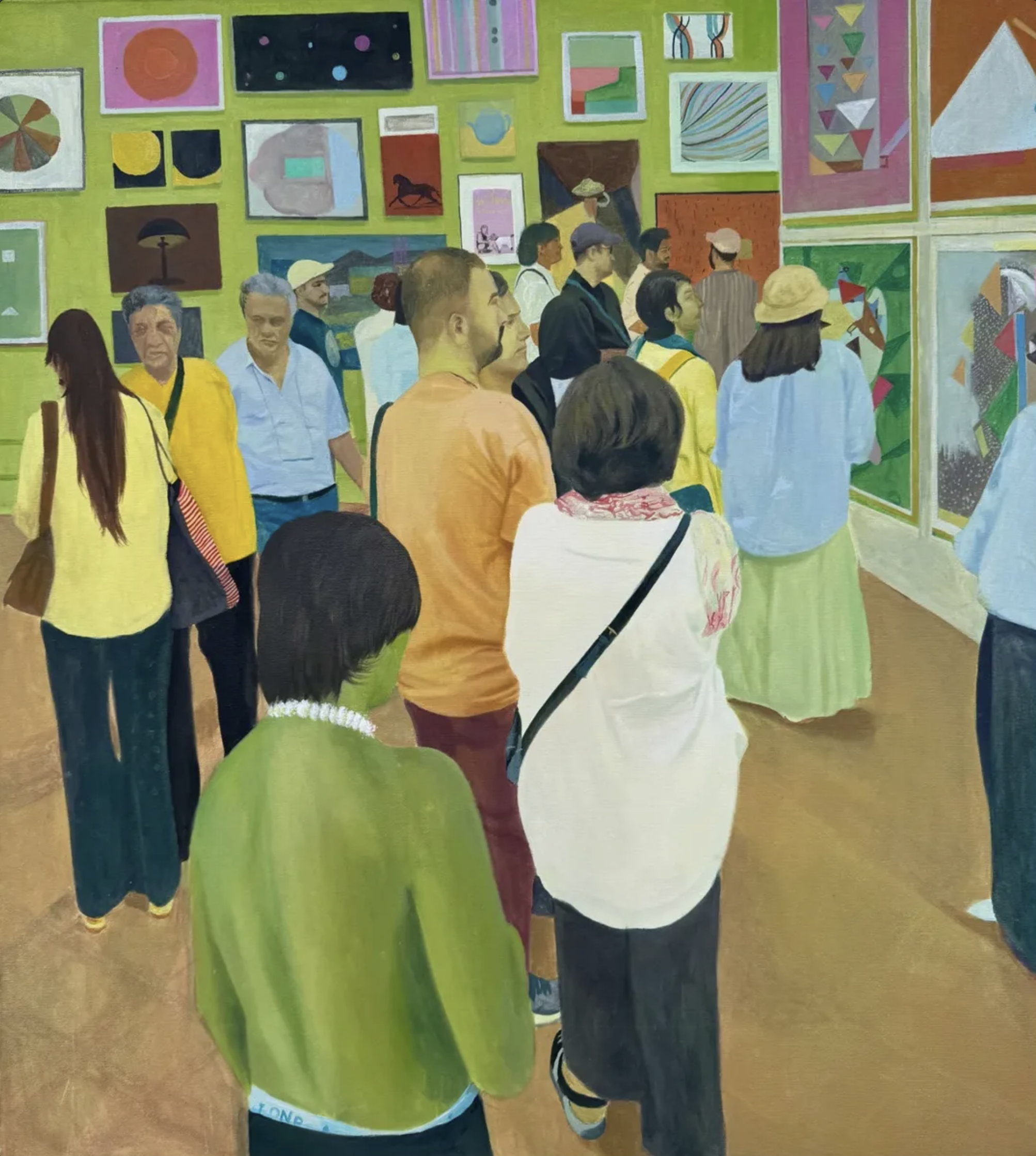
Usama Toru, The Unseen Observer, 2025.
Subscribe to our newsletter for more opinion pieces
This is a common thread in the purpose of a private view, especially for gallerists and directors: it allows for a celebration of the artist and their work, an acknowledgement of everything that leads up to the show itself. To Freddie Powell, the founder of Ginny on Frederick, the PVs are a highlight whenever a new show comes around: a “big celebration for the artist and the madness of a show finally coming together,” even though, he admits “it’s not always the best time to stand back and marvel.” This is something that’s impossible to ignore; the breathless social energy that so often accompanies a PV (the good ones, at least) inevitably ends up with the art feeling like something of a supporting player, even as it transforms into something that, often for the first time, finally exists in the world.
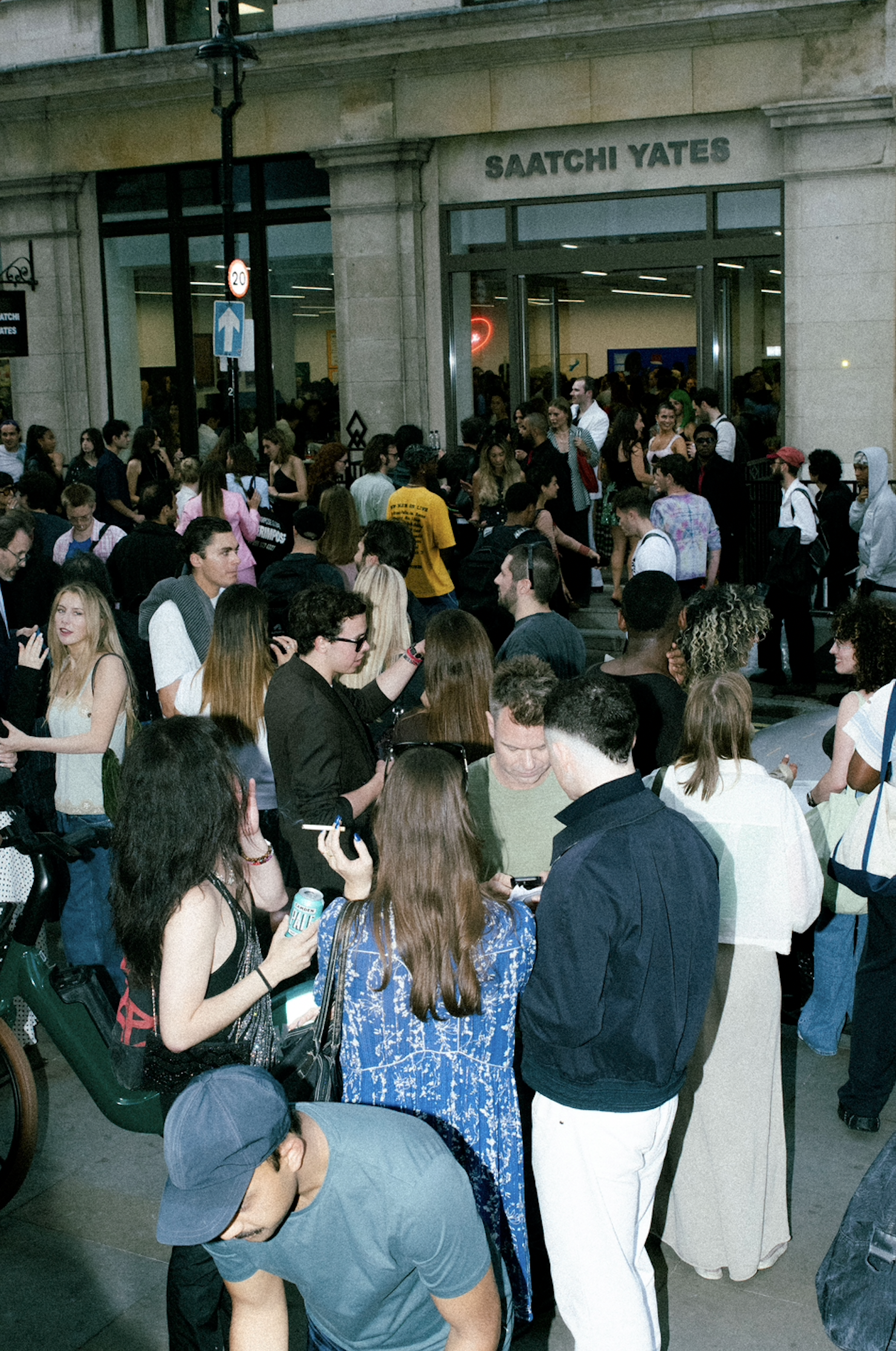
Saatchi Yates’s ‘Once Upon a Time in London’ private view, 2025. Photo courtesy of gallery.
Henry Hussey and Sophia Olver, the co-founders of the roaming OHSH Projects – and self professed “hive-mind” – are trying to redefine the idea of what a PV can be, stressing that through its history, it’s been a transactional event: “collectors circulate,” they note, “sales happen, drinks flow to loosen conversation and, sometimes, wallets.” But their hope is to make an opening like this something that’s about the artist, what they call “the moment the work becomes social, when it’s seen, responded to in real time […] and when artists can connect directly with peers, writers, curators, friends, and audiences.”
Ironically, however, this kind of artist-forward possibility for PVs isn’t one that’s always shared by artists. Multidisciplinary artist Augustine Peredes confesses that “personally, PVs exhaust me,” even if that exhaustion isn’t all bad – like Powell, Peredes mentions relief at that first breath of a finalised show, the gallery being cleaned after the chaos of installation. But the finality means “I have to stop myself from doubting my decisions.” For Peredes, the presence of friends is a sign that everything’s going to be okay – especially “when you’re showing abroad and you’re a stranger there, there’s only so much a Xanax can do.” The finality and pressure of a PV also extends into his feelings being there as a spectator, a desire to be able to engage with work “without the ‘hi hello’ of it all,” which Peredes describes to me as being made to talk about the work with “a fake urgency. You feel like you need to rush,” when inundated with questions about the work that inevitably come with an opening.
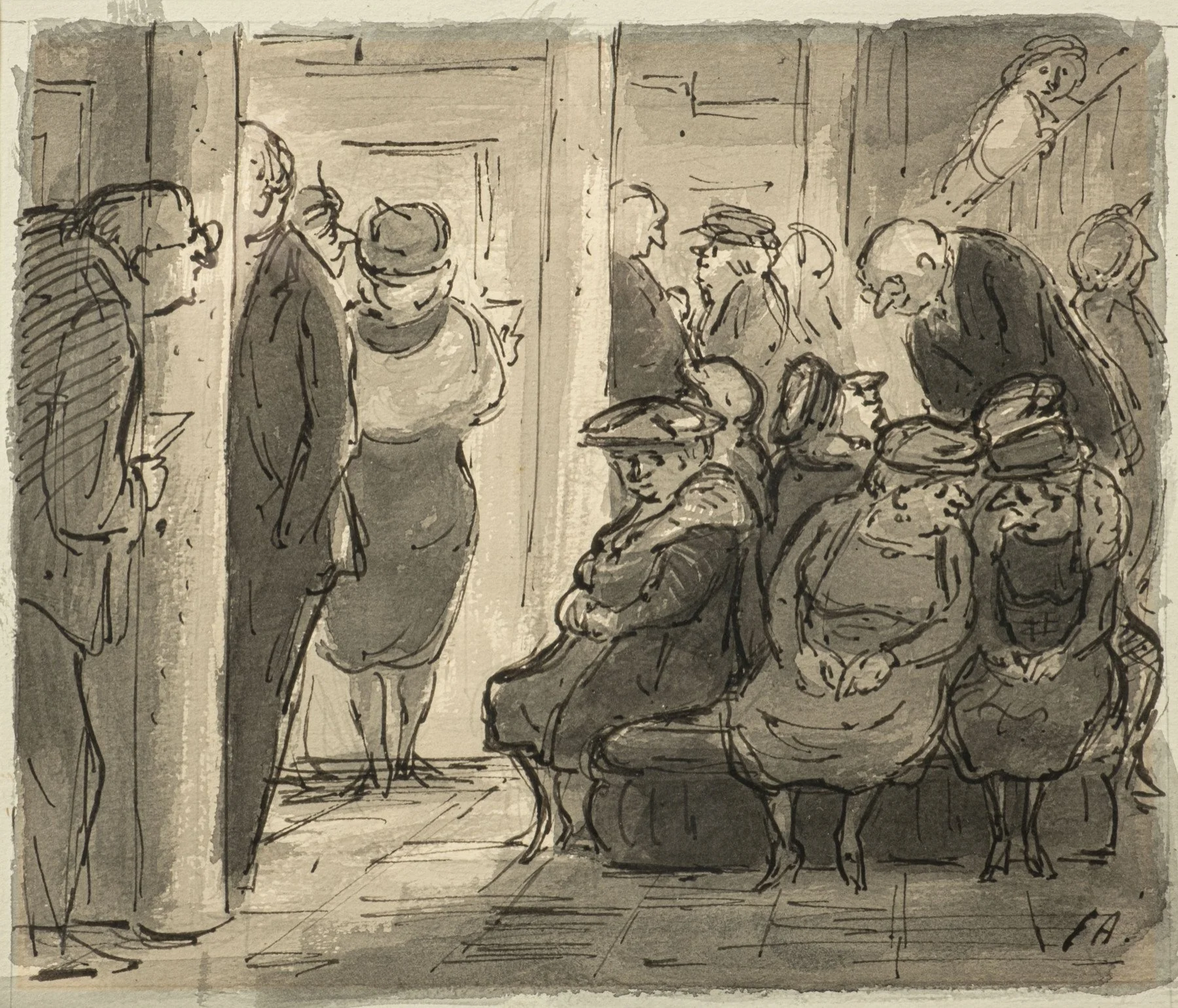
Edward Ardizzone, Private View at the RWS, c. 1950s.
Subscribe to our newsletter for more opinion pieces
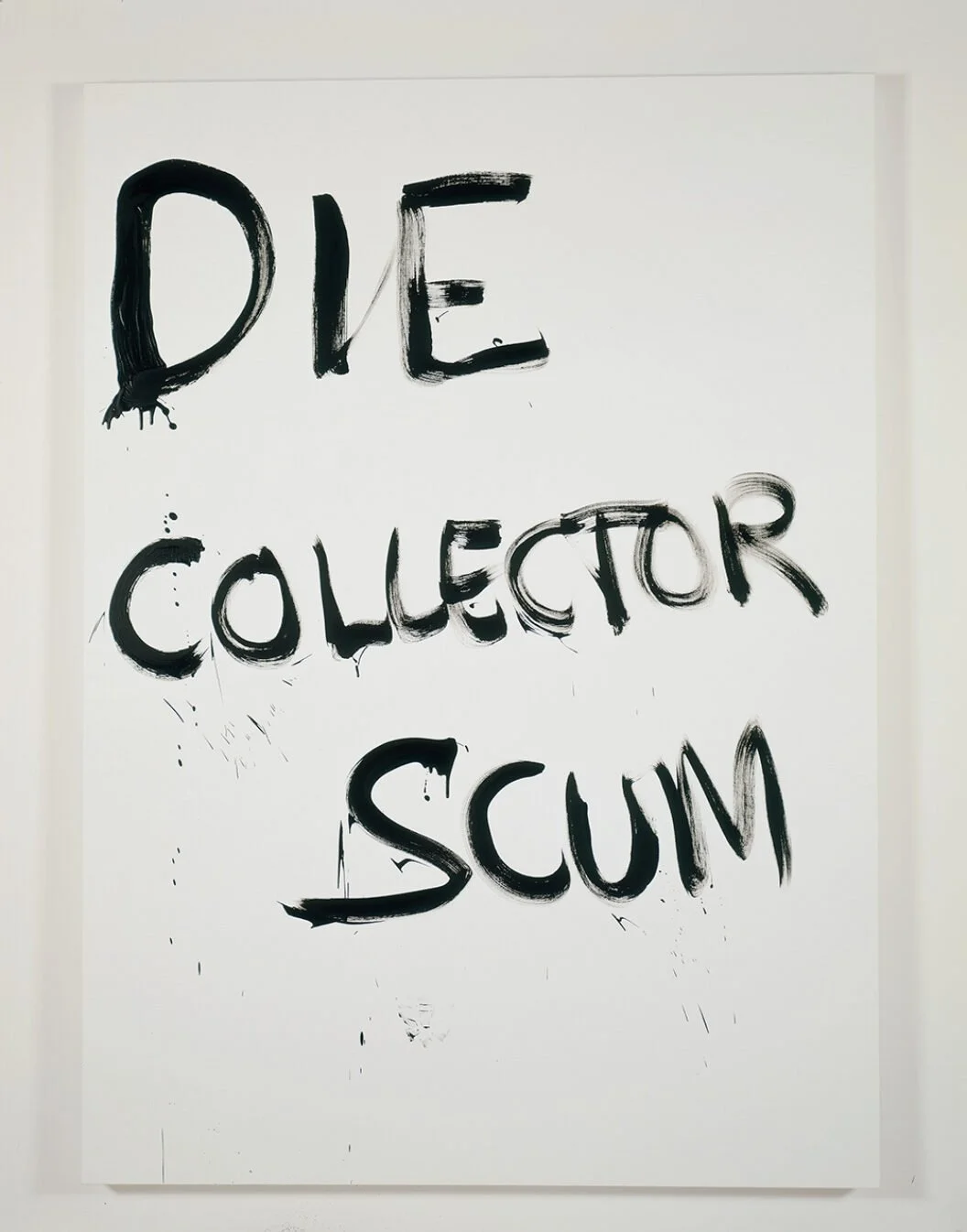
Merlin Carpenter, The Opening: The Black Paintings: 8, 2007.
The PV then is strangely fluid in what it can mean; whether in the way specific spaces try to curate the event, or the pressure that can be associated with them. A difference seems to emerge between PVs that feel more like social or celebratory occasions, and those that seem more driven by exposure and commercial possibilities. For artist and film-maker Dan Guthrie, two different PVs in 2025 seemed to capture the dichotomous feelings the events can elicit. One at Spike Island, a key space in the Bristol art scene where Guthrie has spent a lot of time, “felt like a bit of a homecoming moment” whereas the other, part of London Gallery Weekend, was “to get London and international art scene eyes on [the work]”. This is to say nothing of the added strangeness of the opening being a part of LGW, full of people hopping between galleries across a frantic few days.