

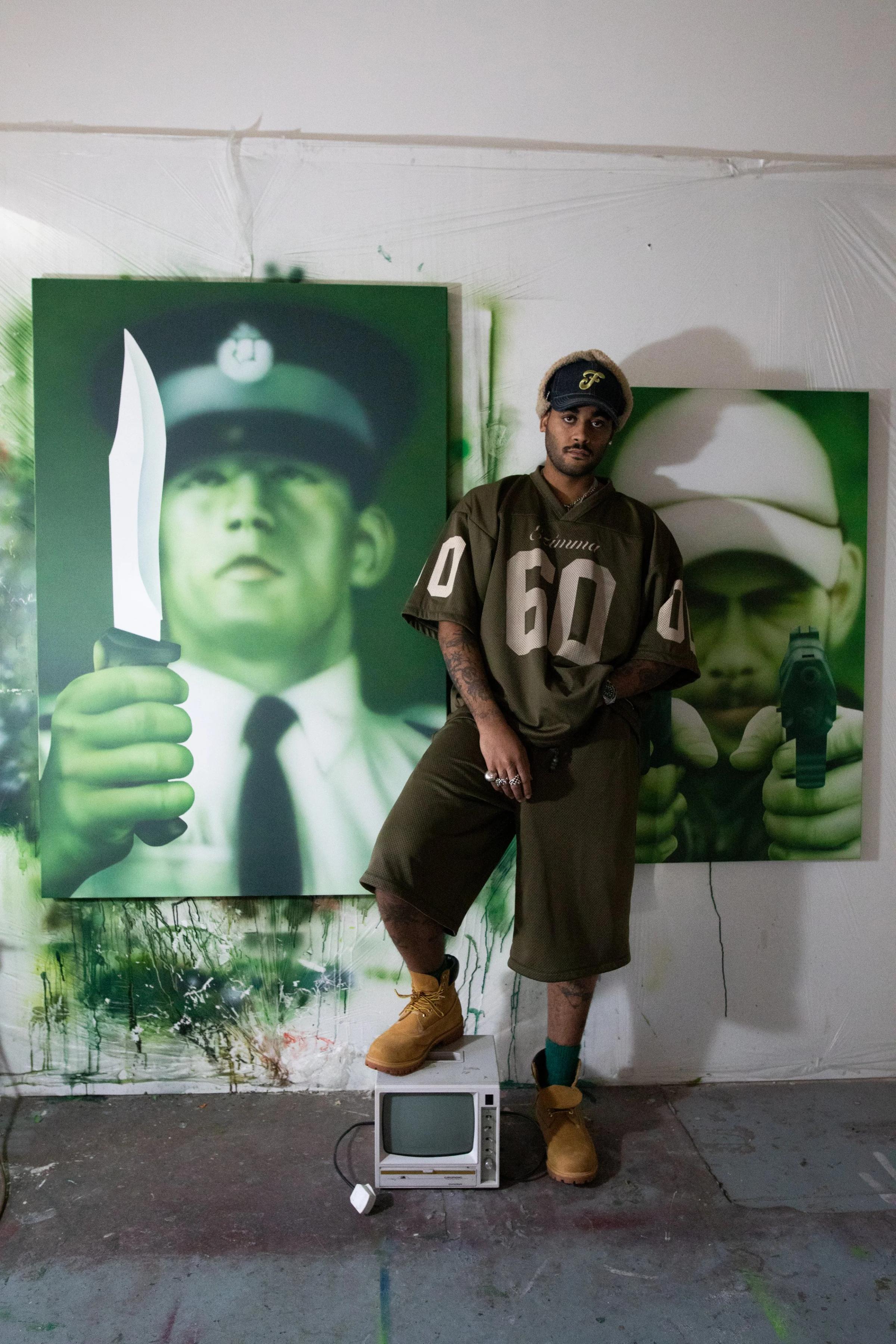
bP: Hi Mattia, let's start at the beginning. Where did you grow up, and would you say your environment has left a lasting impression on you and your art?
MG: I was born and raised in South East London, primarily in Peckham. This area is bursting with diversity, visual inspiration, and creativity, all of which have definitely shaped my journey into art. When it comes to my practice today, I see my upbringing and the environment I grew up in as being instrumental in shaping how I view the world and my approach to life, which inevitably reflects in my art.
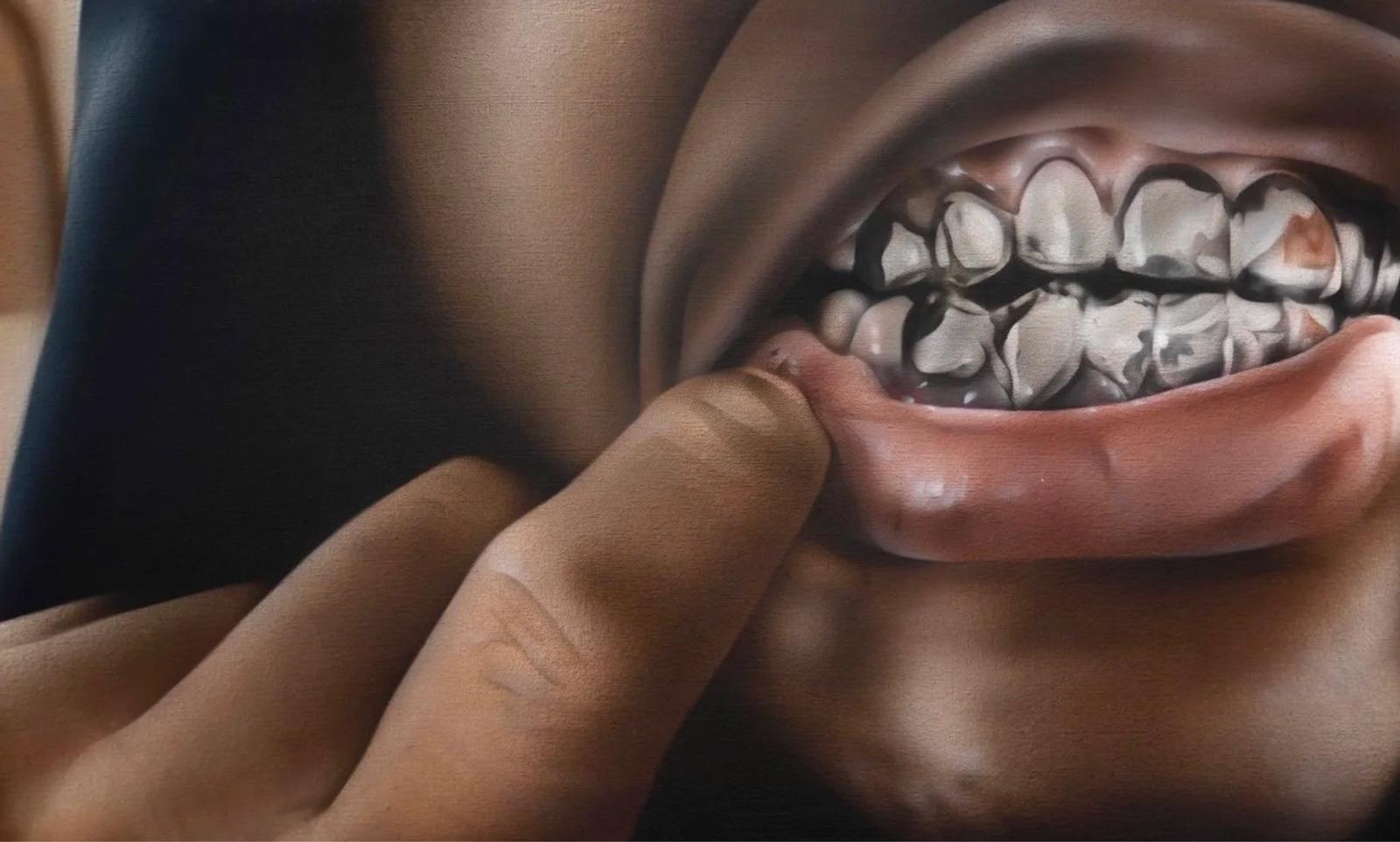
bP: You explore dualities like good and evil, pain and glory, and the digital versus the real. How do you navigate these oppositions within your work?
MG: This ties in closely with the previous question and what I call my 'modality to life.' Growing up surrounded by such diversity, in both my relationships and environment, shaped a very open and non-binary way of seeing the world. Because of this, my work doesn't lean towards being overly direct or explicit. I want to hold space for multiple truths, something I feel reflects our shared lived experience in all its complexity. In my practice, this often results in paintings with non-linear thought patterns behind them or pieces that intentionally remain open-ended. For me, it's about presenting all forces, whether they seem opposing or complementary as equal and valid.
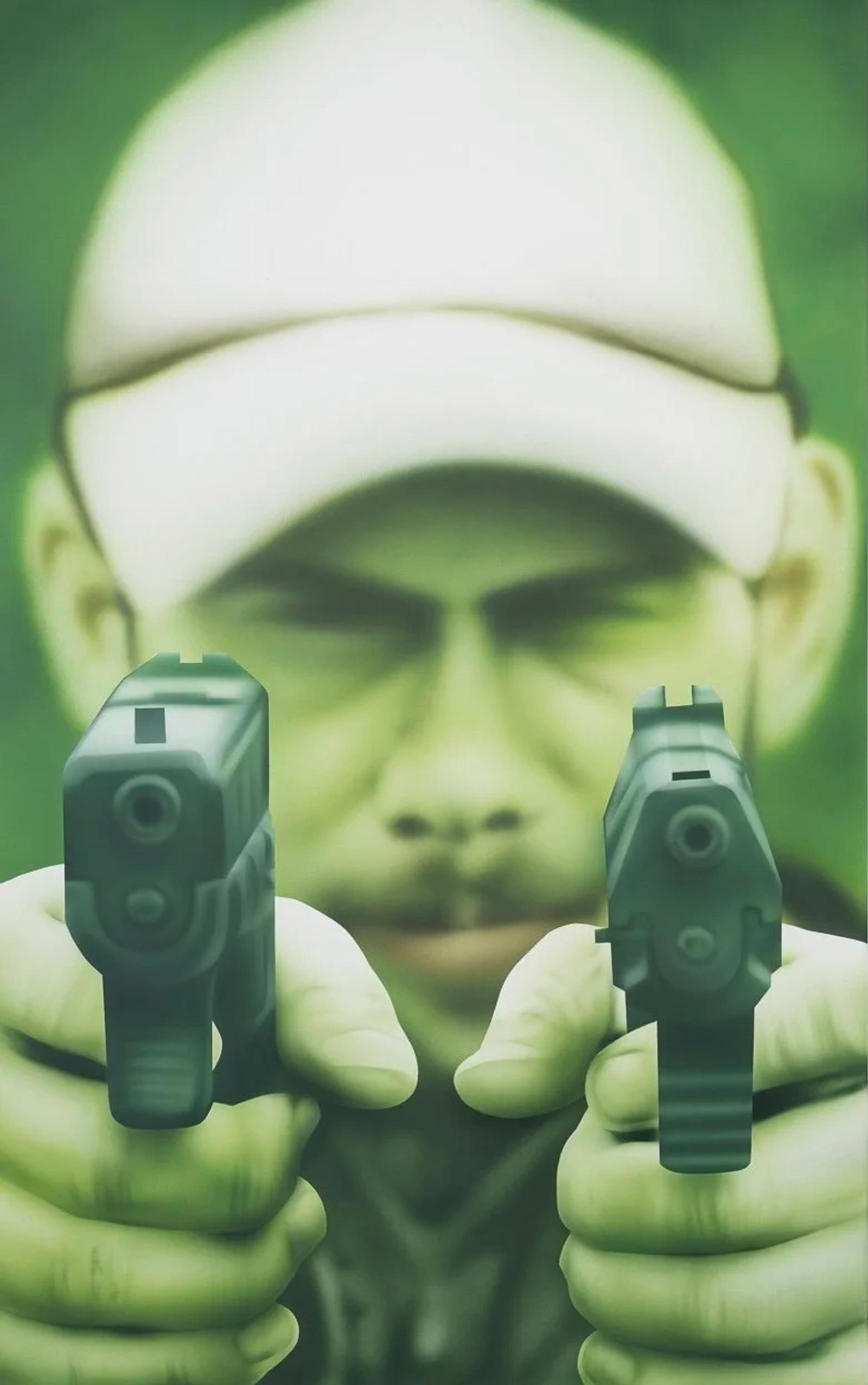
bP: What challenges do you encounter when distilling complex philosophical or ideological themes into visual form?
MG: When tackling complex themes, there's always the risk of the explicit message getting mystified, or even lost. But I think a subtle trace of the idea always remains distilled down, living vicariously through the work. That's what I find most interesting about painting: it creates space for different, nuanced, or even less articulated thoughts and feelings to exist. It pushes the conversation forward and allows ideas to transcend the empirical, moving into a more intuitive and subconscious realm.
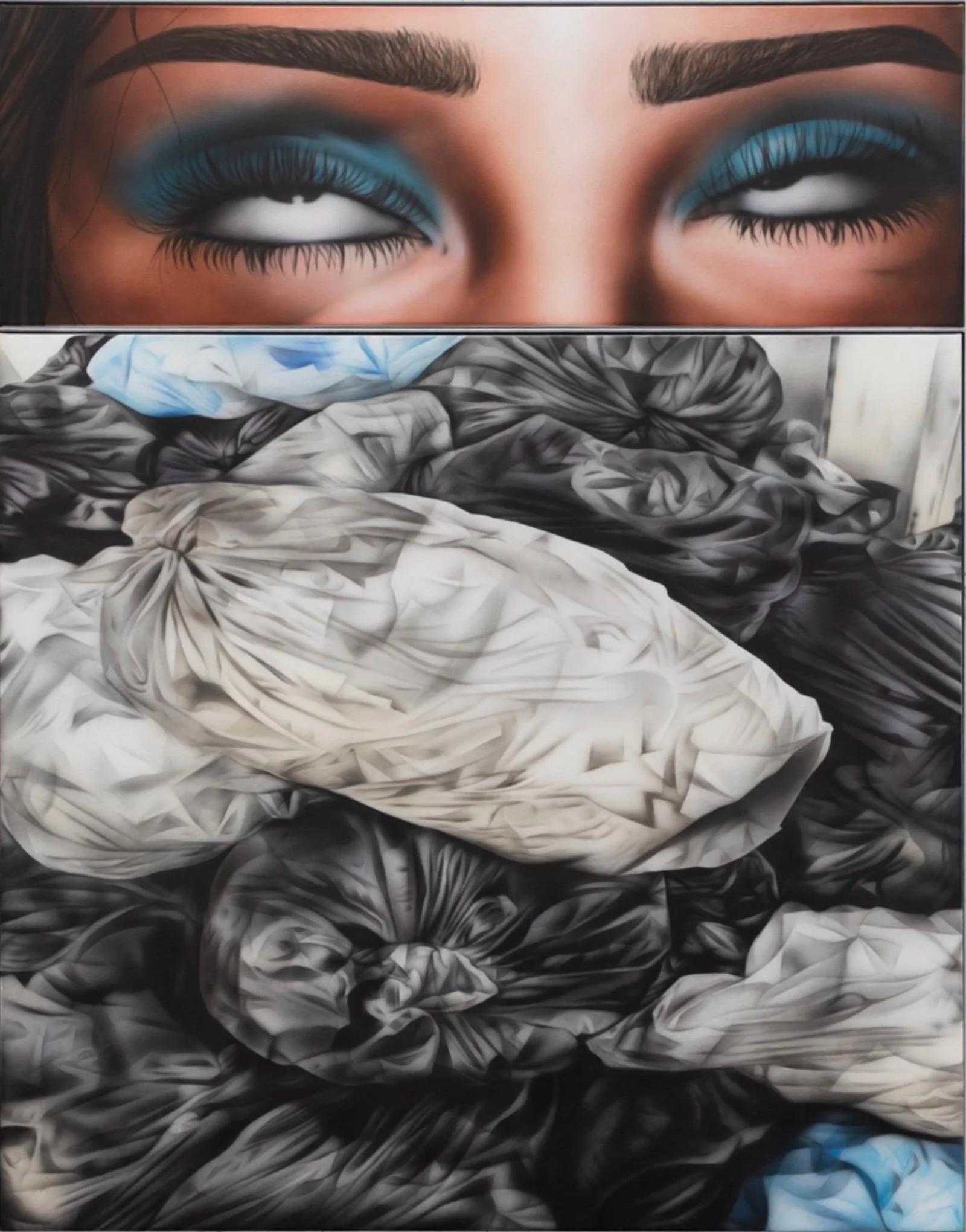
bP: You've mentioned Carl Jung as an influence. How has his philosophy or psychology shaped your artistic perspective?
MG: Carl Jung's philosophies and ideas have massively influenced me, especially in how I approach my practice. I wouldn't say I hold any strict beliefs, but I do try to connect with what Jung calls 'synchronicities.' That idea acts as a guide for my work, letting life's threads naturally lead my process. Beyond that, other parts of Jung's ideology form the foundation for how I think about and approach painting. His focus on the unconscious, archetypes, and the interconnectedness of experiences underpins a lot of what I do.
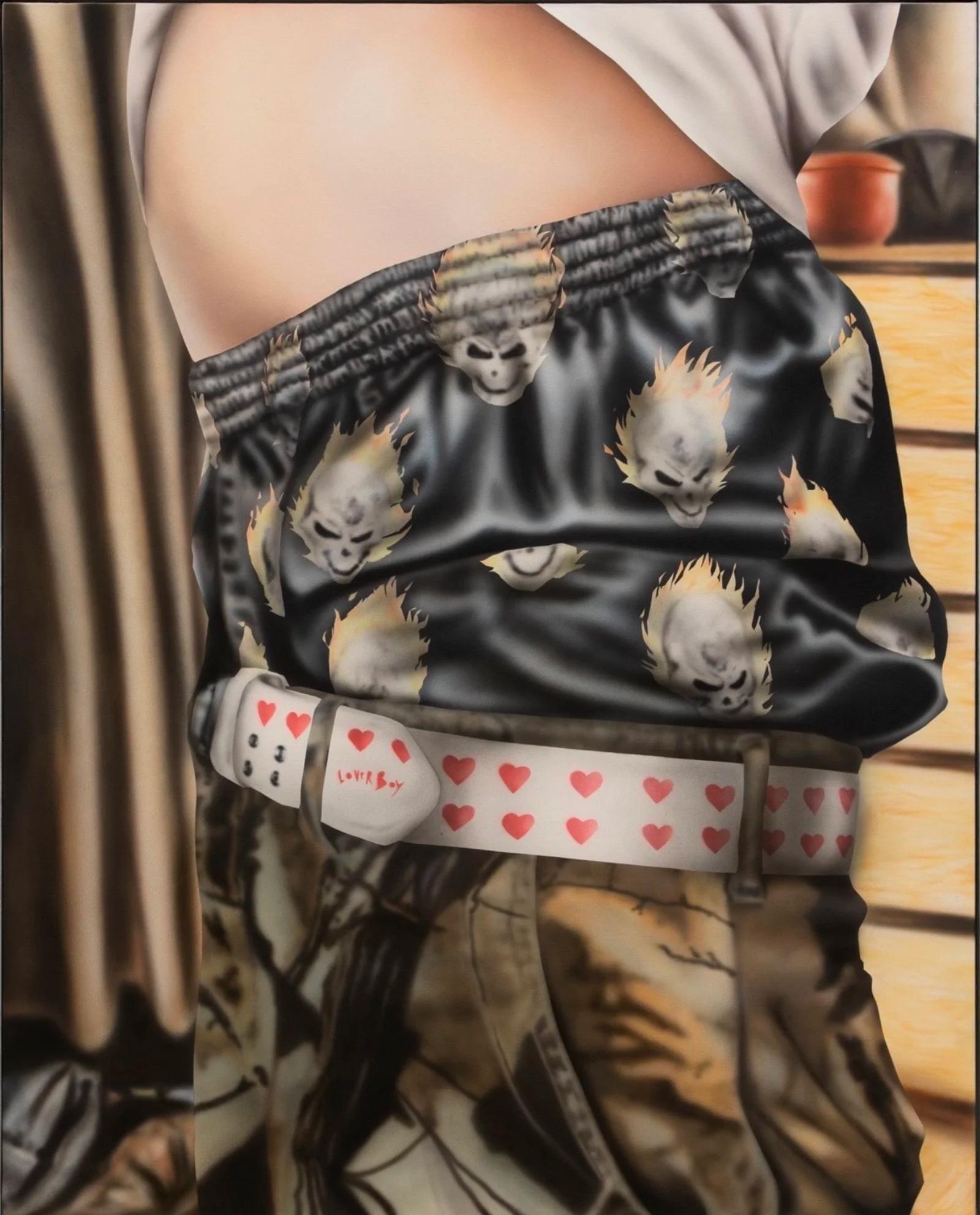
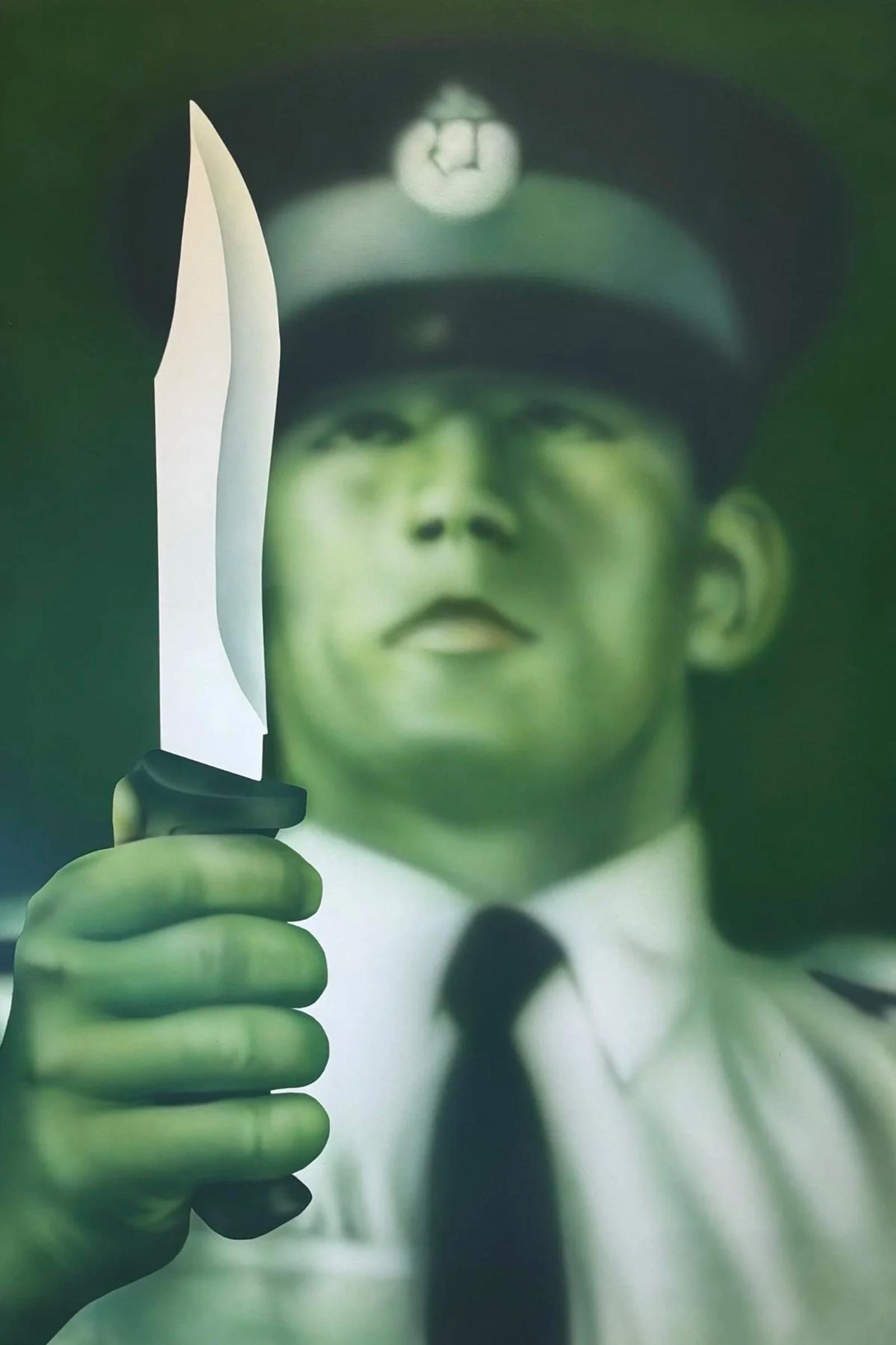
bP: Your work is incredibly powerful and emotive. When viewers encounter a piece like Stop and Search, what kinds of conversations, internal or external, do you hope to spark, if any?
MG: I definitely have personal meanings and significance behind each piece, but I don't think I have any specific intention for what viewers take from it. Everyone's in such a different place internally, so the work is always going to resonate differently for each person. That said, I do hope my work emphasises our shared commonalities and sparks feelings of familiarity or connection. Beyond that, people will interpret the work in their own way, sometimes their conclusions might intersect with my direct intentions, and sometimes they won't, and that's completely fine. Ultimately, I hope my work creates a space for pensiveness and stillness, something that might help move the viewer forward in their own personal journey of understanding. If that moment of stillness can transcend the immediate and help connect to a deeper part of themselves, I'm happy with it.
Comments
Leave a comment