

It's telling that my feed is littered with memes teasing "babe you're literally at the intersection of art and technology" / "all that crying we did for you to end up working at the intersection of art and science." They make me laugh, and they point toward a real cultural fixation on this liminal meeting point, as if naming the intersection is enough to account for its complexity. My own writer's bio has long been haunted by that trope: the notion that these two domains can be neatly sutured together by proximity alone. I guess what I'm trying to say is that something more porous is at work, which feels a little more accurate than that trite, reductive binary. Each discipline subtly alters the imaginative conditions of the other. The lab and the studio can't be all that different? Even CERN, home of the Large Hadron Collider (big hot sun machine), is doing artist residencies - which I discovered through the lucent project of researcher-artist-author Rasheedah Phillips; CPT Symmetry and Violations. One maps the territory, the other tells us what it is to be lost in it.
“A lot of art is science fiction. It just isn't named that.”
Lately, my research has been orbiting imagination as the cognitive engine of science fiction. Phenomena like otherworldly bioluminescence, or even the simple stuff like combustion, mark the perceptual edges of the natural world: this is what physics permits, this is what our senses can register. Our nervous system is the poster on AI's bedroom wall. It can only dream (can it dream?) of perception this rich. But richness comes with limits. And it's precisely at those limits that imagination activates. When embodied experience hits a boundary, we begin to transcend it, subverting natural rules and reassembling them into surreality that melts logic and heats up a dream. The results can be deeply poetic. That's why so much art feels transcendent. It widens our sense of what's possible, stretches the capacity to speculate. I'd argue a lot of art is science fiction. It just isn't named that.
Modern science increasingly serves the technocapitalist fantasies of billionaires: visions of the future so abstracted from lived reality and collective desire that they generate a design language full of vagaries. Discovery now means cheating death and maximizing life, with scant attention to the poetics in between. What makes life worth not ending? And why is that question so rarely what drives the research? I found that building empirical evidence across the natural sciences used to feel aspirational and like it was shifting something. It’s what led me to study neuroscience for uni. Now, siloed from spirituality, from art, from anything beyond the quantifiable, logic is painted out to always be warring with faith, antithetical to creativity. In this imposing and limiting worldview, science optimises the world but hollows out its charm.
But that’s not true. Scientific discovery decorates our lifeways with beauty, and these categories aren’t dialectical opposites. As intertwined modes of inquiry, they each probe the textures of reality, even as it shifts under our feet.
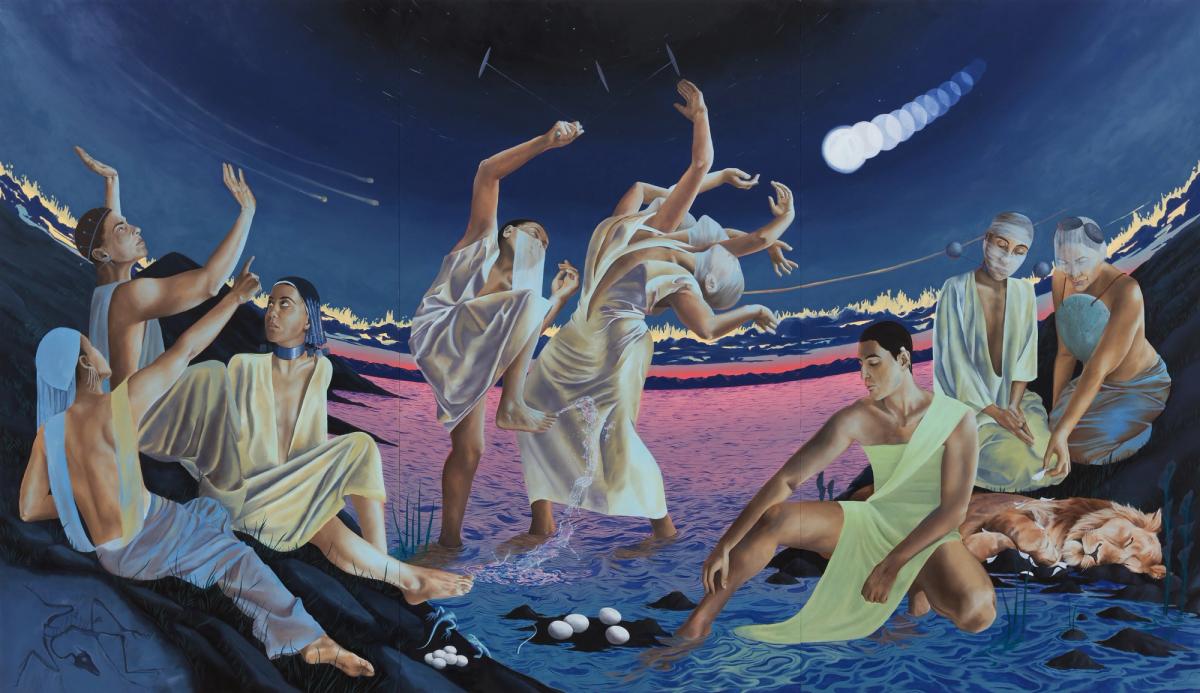
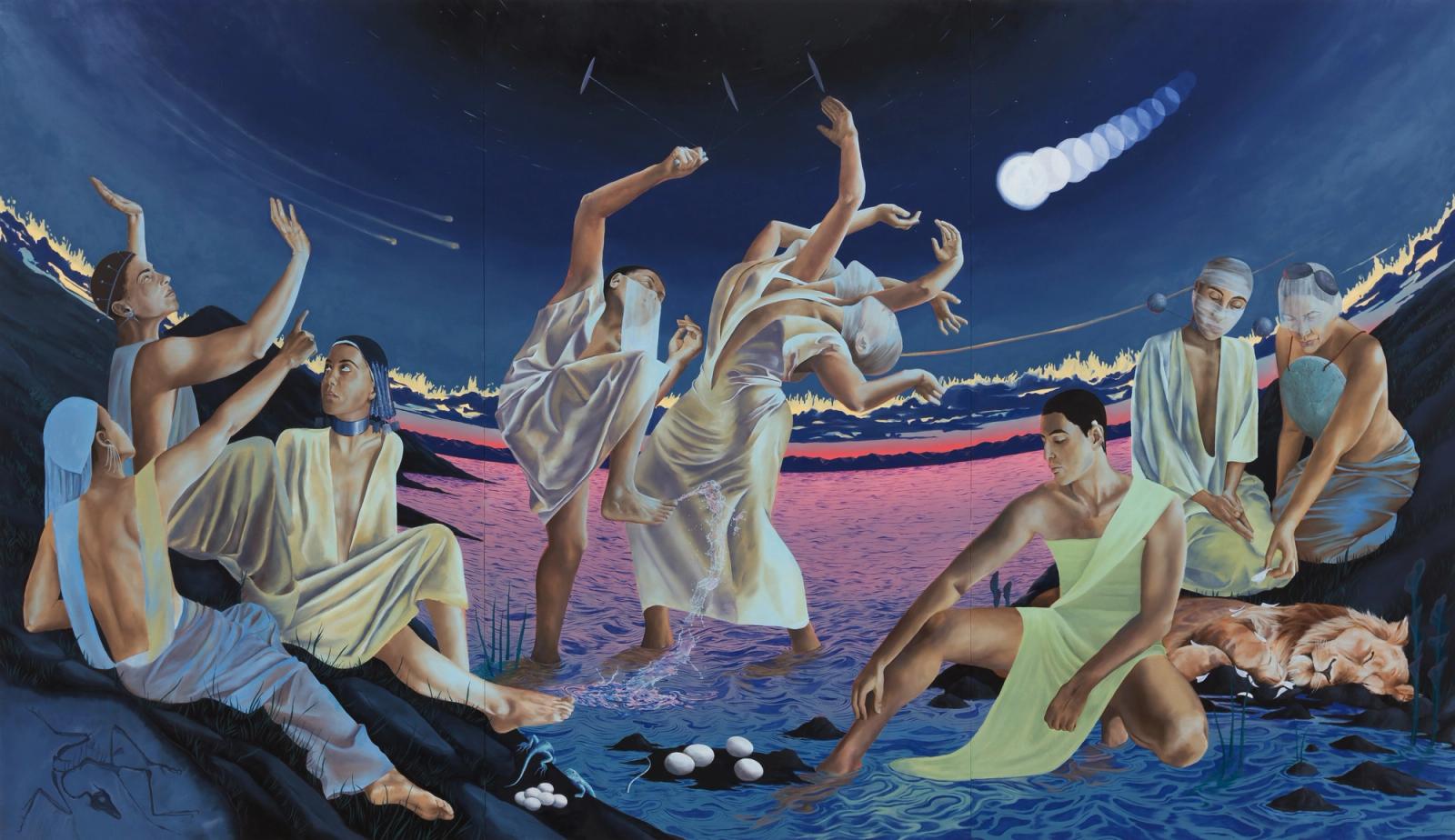
Encountering the work of one of my favourite visual artists, Sarah Al‑Sarraj’s exhibition Limbs of the Lunar Disc at Mimosa House prompted me to reconsider how temporal structures shape ecological thinking. “Science really allows us to instigate paradigm shifts. Which I think is hopeful and is important for imagining other futures.” Al-Sarraj tells me.
“As an artist who is interested in ecology,” she says, “that lens really allows me to call in new ways of delving into my practice. Like when I was researching time, I was really studying the temporal cycles of nature and biological markers of time that provided something different to extractive, capitalist cycles. It’s about understanding this highly malleable, really kind of protean nature of the world, and how we see it.
“Historically, different scientists have conceptualised the world,” she adds. “And that's a really fertile place for us artists because we’re trying to provide a mirror or offer another conceptualisation. But from a different viewpoint, that departs from the mainstream.”
“Many artists today borrow concepts from cosmology, ecology or physics”
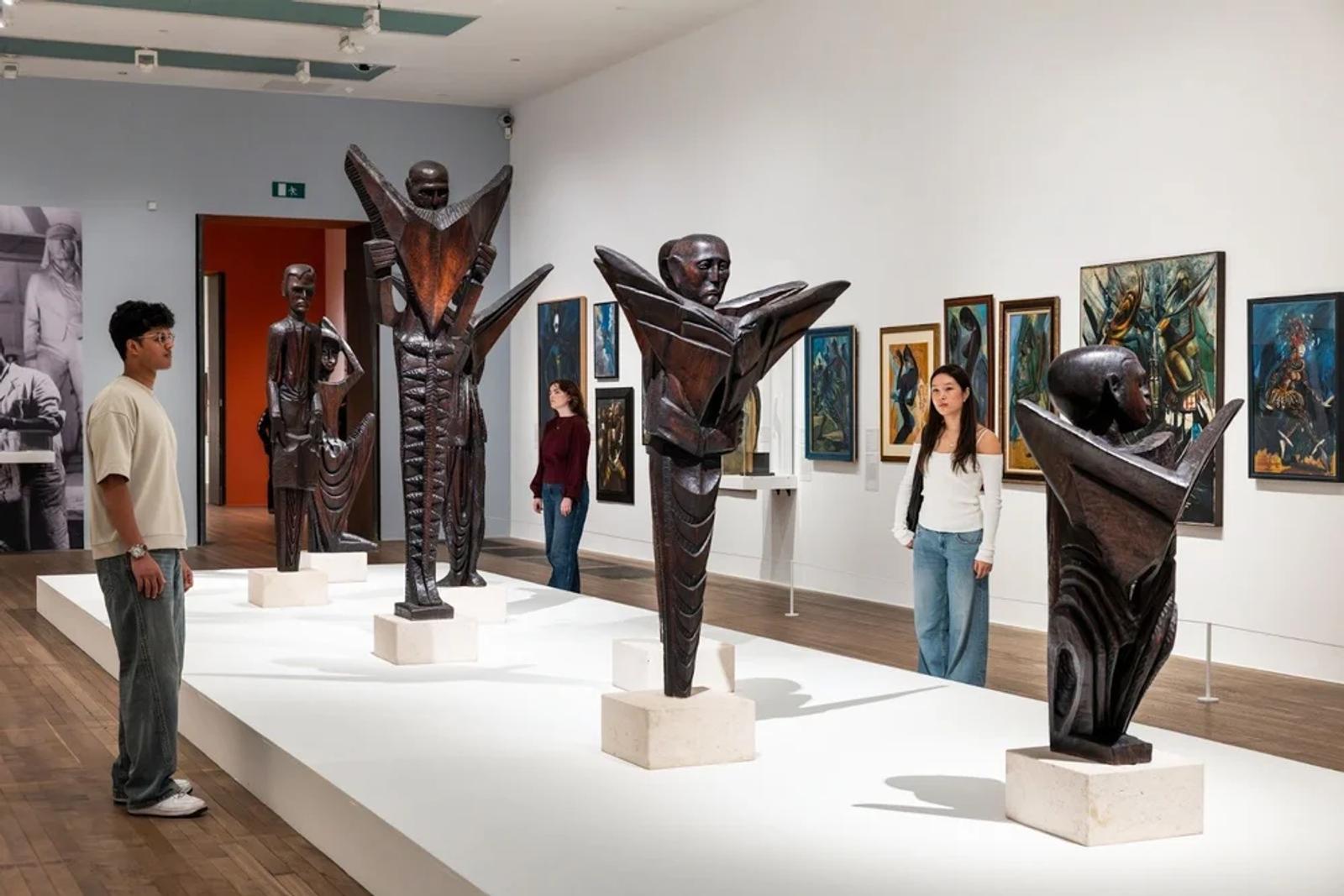
Speaking to Bilal Akkouche, Assistant Curator of International Art at Tate Modern and a 2025 juror for the Cavendish Art Science fellowship, I was struck by how clearly he articulated the deep entanglements between artistic thinking and scientific inquiry. As he notes, “Many artists today borrow concepts from cosmology, ecology or physics as a way of thinking about forces that are difficult to see but deeply felt: time, gravity, climate or memory.” From a curatorial perspective, he explained, such a dialogue “opens exhibitions outward, allowing artworks to be understood in relation to systems and scales that extend far beyond the gallery setting.” This meeting point, he reminded me, is hardly new. Akkouche tells me how artists like Gustav Metzger were already interrogating scientific processes in the mid-twentieth century, reflecting both the promises and anxieties of technological modernity. While researching Metzger’s work for the 2022 exhibition Postwar Modern: New Art in Britain 1945–65 at the Barbican, Akkouche revisited Liquid Crystal Environment (1965, remade 2005) in Tate’s collection, an installation in which heat-sensitive liquid crystals, pressed between glass slides, bloom and recede in colour as they warm and cool, turning microscopic chemical reactions into an ever-shifting landscape of light and pattern.
“Works like this show how artists can translate complex scientific processes into artistic experiences that are both perceptual and deeply philosophical for countless generations of audiences,” he says, capturing the urgency of the dialogue that arises from this meeting point.
Two women who I trust implicitly to tend to the very pulse of the machine are the two who make up Studio Sala-sil. Cofounders and Curators Zainab Hasoon and Sara bin Safwan find the beating heart in pretty much everything. Excavating worlds within objects is exciting to them, and for that, I knew I wanted to peek at their observations. Hasoon brings to my attention the work of iconic Iraqi artist Michael Rakowitz: “He transforms loss and memory into material and cultural systems,” she explains. “[by] using everyday objects to materialise histories that might otherwise remain unseen. In this context, the exhibition functions as a critical apparatus; a site of epistemic negotiation in which scientific, ecological and cultural knowledge is both produced and contested through the historical and cultural traces that structure, disrupt and rearticulate the ways in which we perceive the world.” Here, she references the work of Al-Sarraj, as well as the desert landscapes of Sama Alshaibi.
“Data becomes sensory, abstraction becomes embodied”
“Especially within a research based practice, sciences can help inform artistic thought and vice versa, both practically and conceptually.” explains Safwan. “Data becomes sensory, abstraction becomes embodied. Through this exchange, art develops a relationship with the audience in a way that challenges their implication, and seeing becomes tied to responsibility. Not just based through abstract thought but facts as well.”
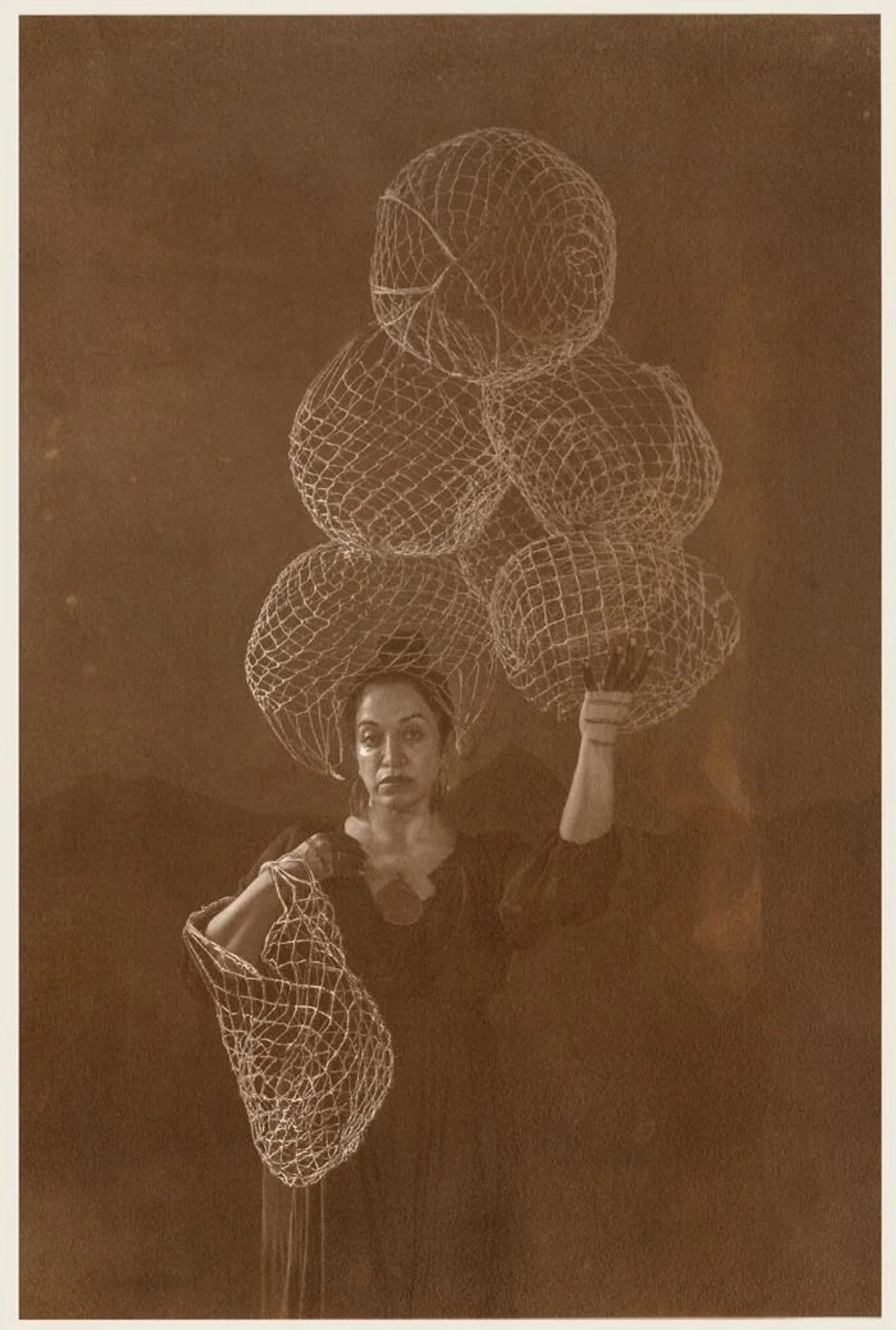
Sama Alshaibi, The Harvest, 2019.
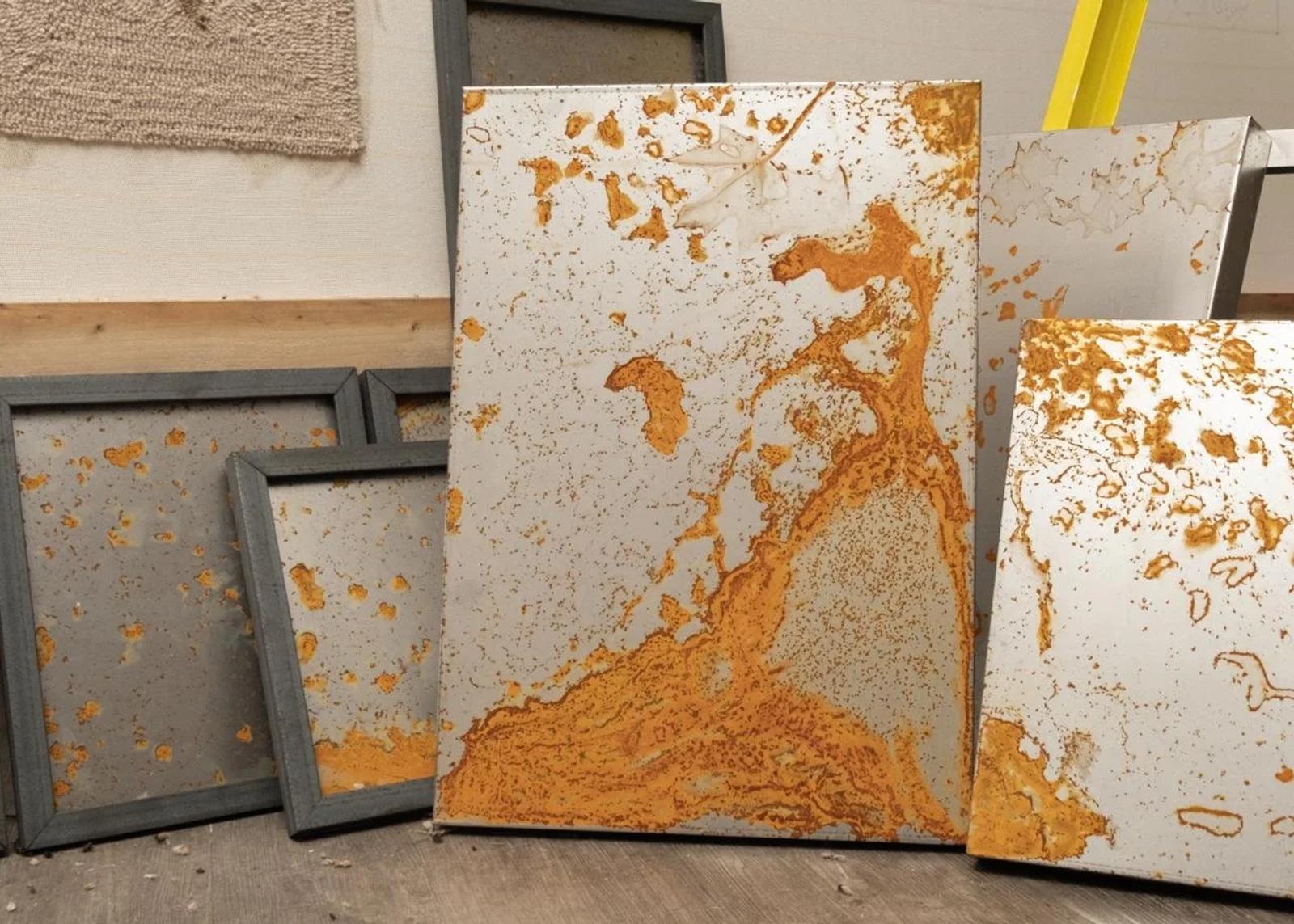
For Irish artist and curator Lottie Mac, science and art converge via process. I was floored when I first visited her studio and she explained to me the chemical journey of her steel sheet works, aged outdoors to develop rusted surfaces with delicate imprints of leaves and raindrops. Stunning metal paintings that feel wise with what they’ve witnessed.
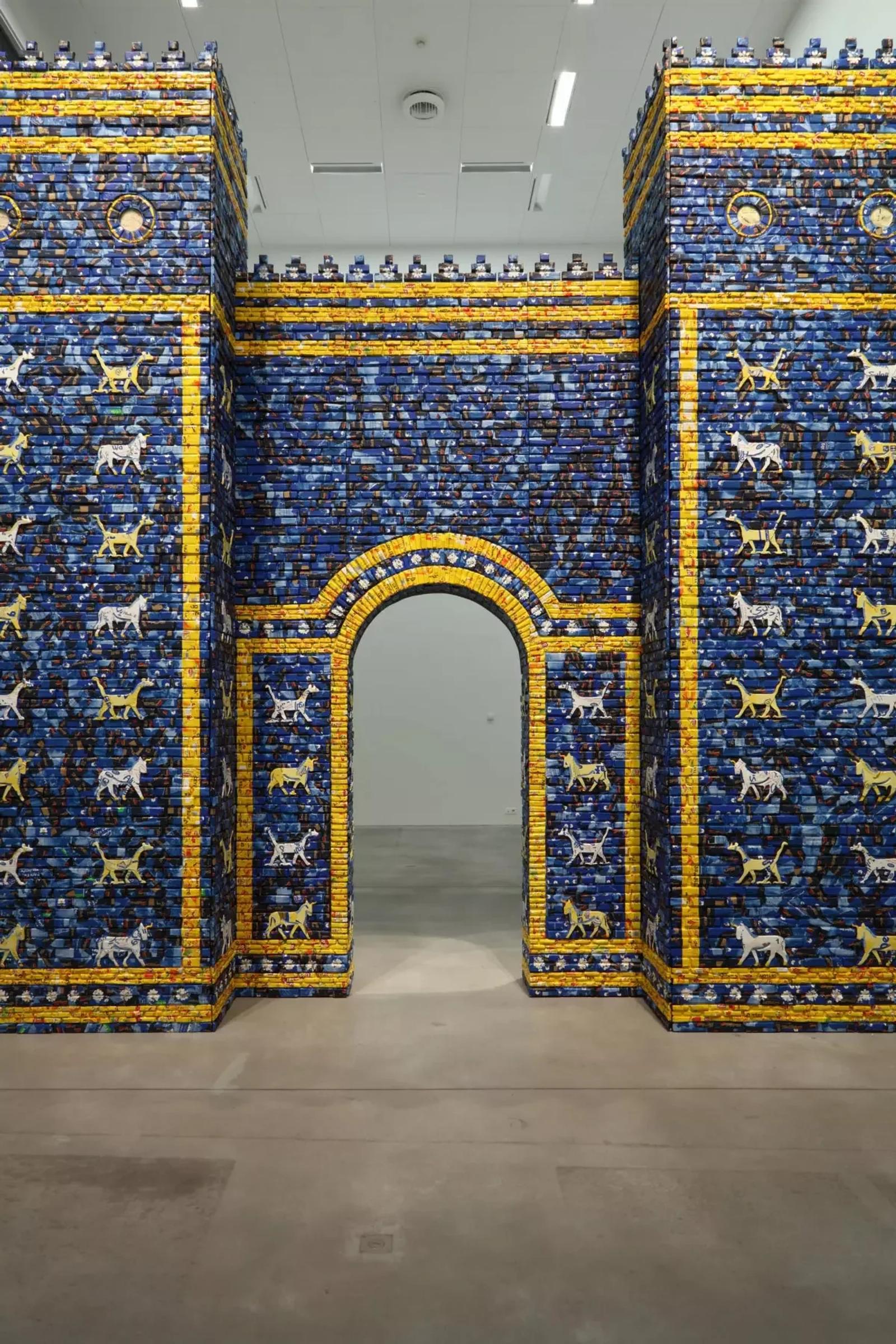
Michael Rakowitz, May the Arrogant Not Prevail, 2010. Photo courtesy of the Museum of Contemporary Art Chicago.
“When the steel sheets come,” she explains, “they arrive with this protective layer on them. I take my time scrubbing that off–getting this material that's completely man-made and synthetic, and trying to strip it off as much as I can with soap and water.” She insists on interrupting the interruption, on revealing the natural face of the metal.
“Then after scrubbing off this I leave it outside - for two weeks, three weeks, sometimes two to three months. The different lengths of time allow it to oxidise at different rates. In two weeks, I will get this rich, brighter orange. The longer it's out, the darker and deeper the browning gets and black colouring too. It’s a beautiful process, it makes me step back from work, I have to physically take time from it. In my work with wool and tufting, I’m really manipulating the material. But here, it’s all about loss of control. This really allows me to leave it up to the elements, leave it up to Allah, the higher power. It’s relinquishing control over practice. Sometimes ladybugs crawl over and have even died on them. Sometimes leaves make contact with them, or dew from the grass it's left on. It mimics the topography and landscapes I left it with when it was aging. It’s kind of a broken science” Mac explains, finding divinity in the entropic nature of rust.
Maybe the intersection was never the point. Maybe it was the friends (and discoveries) we made along the way. What matters isn't where art and science meet, but that they circulate through the same body like twin currents. Neither is the system; the living is. The world and bodies that make it up, littered with junctions and crossings, each with their own emergent qualia and emotion. Both teach us to see differently, and seeing is tied to responsibility. One carries blood toward the heart, the other away like an artery. Both conduits, both carrying charge, altering our waking life simply by passing through.
Comments
Leave a comment