diaries


What Does a Solo Show Mean Today?

February 2026
6 min read


Arts Editor: Victoria Comstock-Kershaw


Contributors:

Charlotte Leseberg Smith
Soho Revue
Marcelina Amelia
Roxane Hemard
Blackbird Rook
Nzinga Audre Adaeze Ngola


Mentions:

Greg Rook
Blackbird Rook


From refusal to rite of passage, the solo exhibition has travelled a long way. Once a workaround for artists shut out of academies and salons, it now sits at the centre of how careers are built, valued, and remembered. Drawing on conversations with artists, curators, and gallerists, Victoria Comstock-Kershaw traces the history of the solo show from acts of artistic insubordination to today’s prestige format, asking whether one artist in one room can still be a space for experimentation rather than expectation.


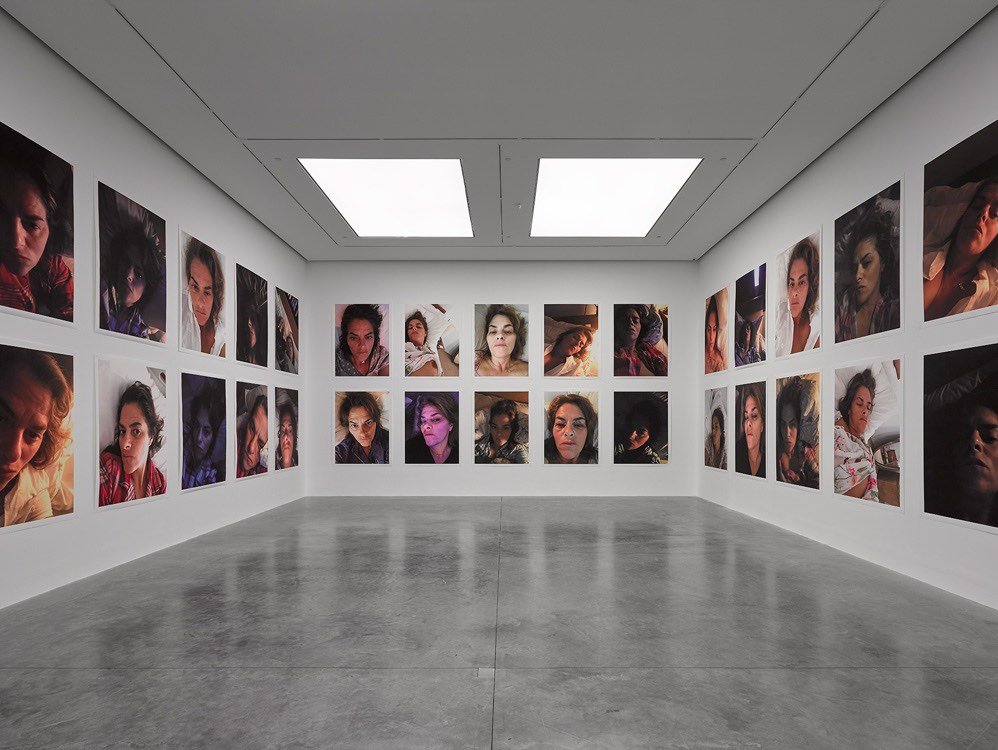
Tracey Emin, A Fortnight of Tears, 2017. Installation view courtesy of White Cube London. 

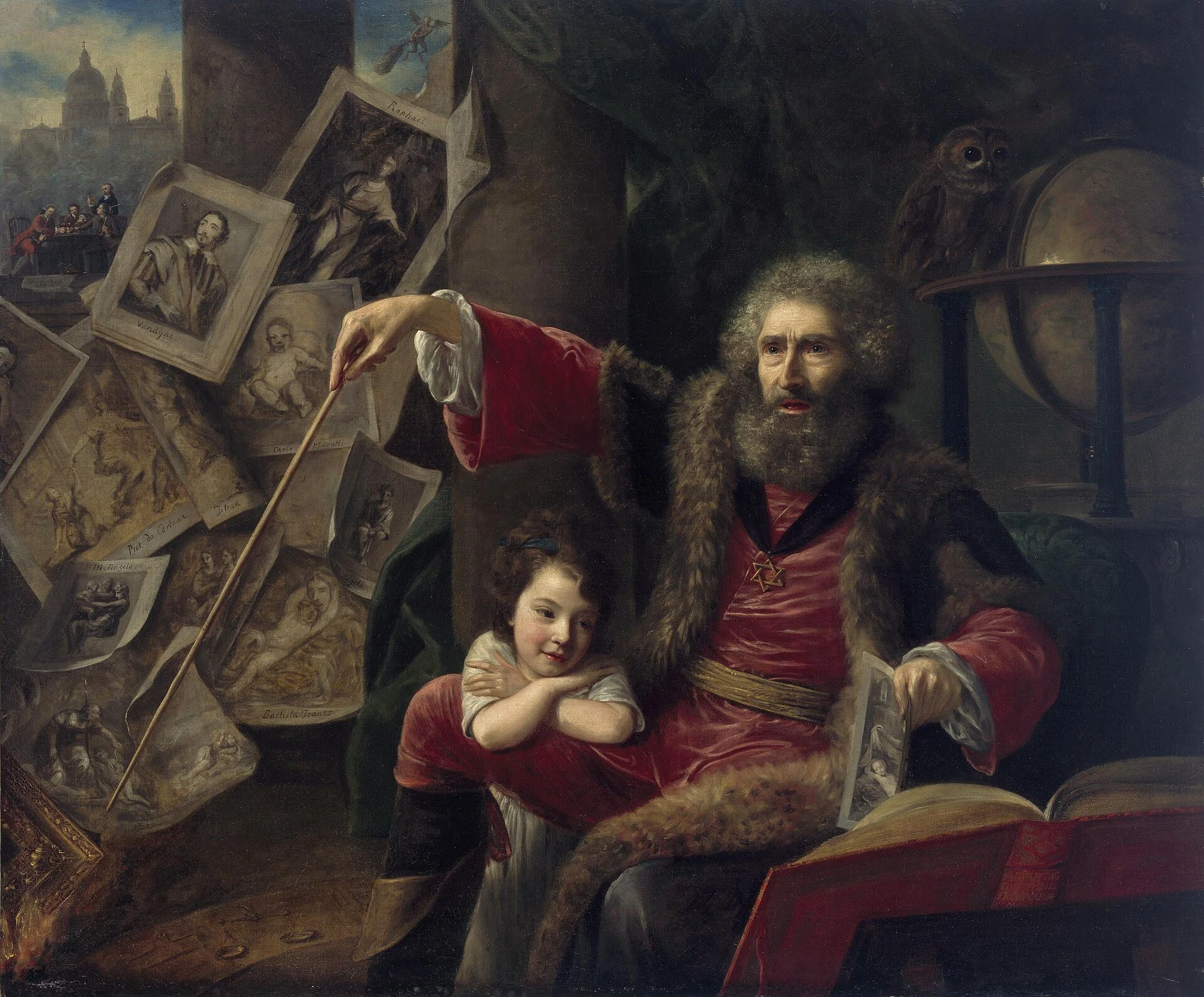
It was across the late eighteenth and nineteenth centuries that artist-led counter-display – the grandfather of what we now know as the solo show – became the respectable grammar of ‘serious’ art. In 1775, Nathaniel Hone staged one of the earliest examples after the Royal Academy rejected his controversial painting The Pictorial Conjuror, mounting an independent display that appealed directly to a paying public rather than academy authority. A decade later, Thomas Gainsborough similarly withdrew from the Academy after disputes over how his works were hung, choosing instead to exhibit in his own home. William Blake’s 1809 exhibition pushed this logic further: dismissed by institutional taste, he used the exhibition format to defend both his ideas and his marginal position by organising his works according to a personal symbolic system. On the continent, Jacques-Louis David’s presentation of Les Sabines in 1799 transformed the single-work display into a theatrical encounter, while Horace Vernet, after repeated Salon rejections, staged a studio exhibition in 1822 that attracted large audiences and demonstrated how independent display could generate alternative legitimacy. 

Today, however, the solo exhibition rarely reads as an act of refusal. If anything, it’s seen as one of the primary mechanisms through which institutions, markets, and critics stabilise artistic value: one has only to look at Stephen Friedman and David Shrigley’s old rope, Victoria Miro and Yayoi Kusama, Gagosian and Koons. But before it became the default prestige format, the solo show was, in many ways, a space to bypass gatekeepers, control conditions of viewing, and speak directly to the public on their own terms.

Nathanial Hone, The Pictorial Conjuror, 1775.

In his 2015 essay Notes Towards a History of the Solo Exhibition, João Ribas argues that while exhibition history loves to mythologise the disruptive group show or the epochal biennial, the monographic exhibition gets treated as “straightforward”: one artist, one voice, minimal curatorial authorship, nothing to see here thank you very much. The solo exhibition feels so natural to us now (almost the default unit of “serious” artistic visibility) that it’s easy to forget it began as a minor act of insubordination: long before the monographic show became an institutional rite of passage (complete with catalogue, sponsorship copy, and the familiar promise of a “first major” or “most comprehensive” account), it emerged as a workaround for artists blocked by academies, salons, and hang committees. I’ve set out to reopen that question, and ask artists and curators how we can revisit the solo exhibition as a site of risk and reinvention rather than ritual and repetition.

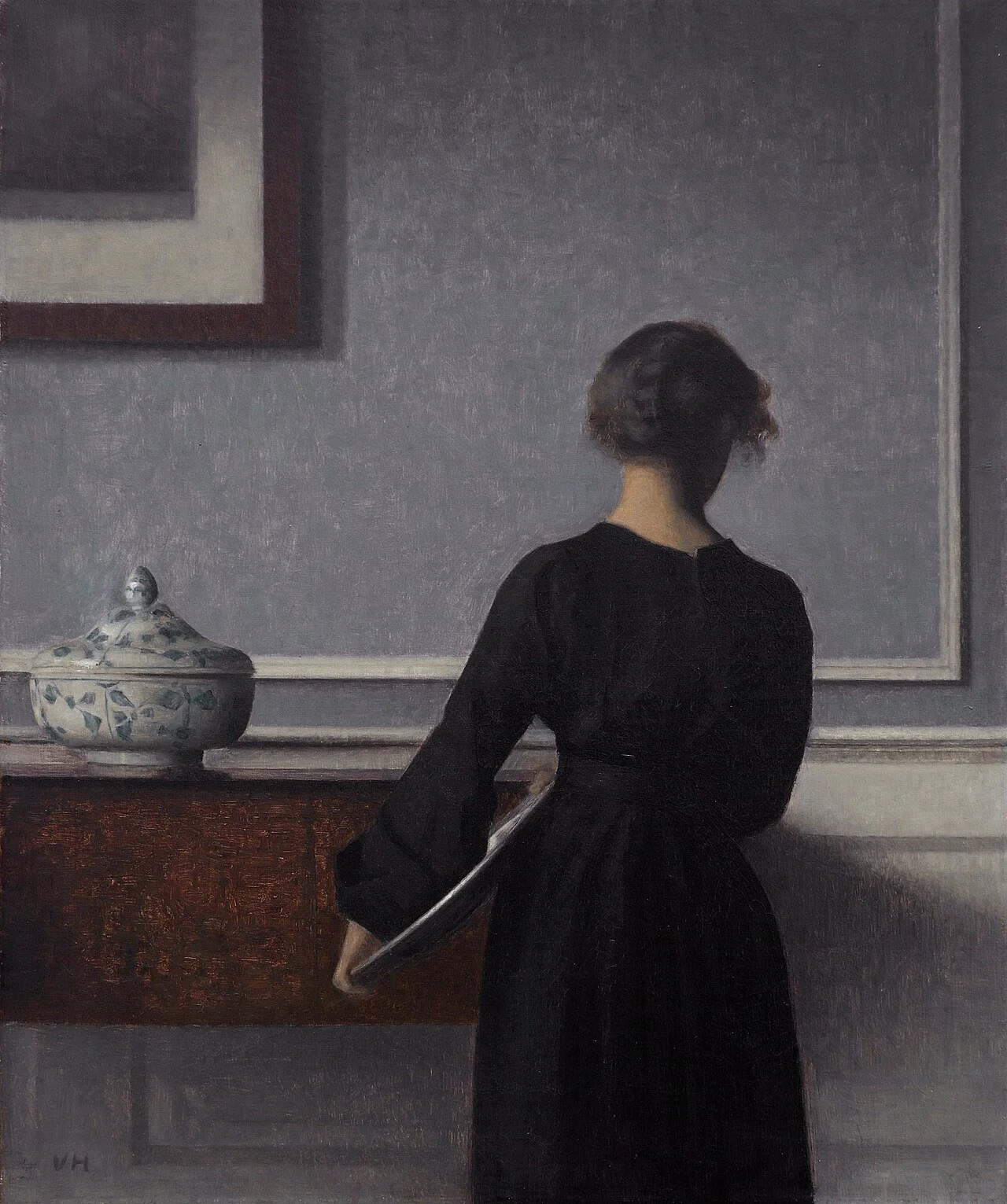
Vilhelm Hammershøi, Interior with Young Woman Seen from the Back, c. 1903–04.

Subscribe to our newsletter for more opinion pieces

For Charlotte Leseberg Smith, Associate Director at Soho Revue, the defining difference between group and solo exhibitions is temporal. “I think the number one departure from group shows with a solo show is time,” she explains. A solo often means “working alongside [the artist], often for a year or longer,” to allow space for reflection and for work to emerge in response to the present moment, rather than as a retrospective narrative. Against the expectation that a solo should summarise an entire career, she argues that “some of the best solo shows have been where the artist captures themselves in that moment in time,” exhibitions that later read as definitive of “those two years of their life and practice, not their whole life.”

The implication is significant: the solo exhibition as a snapshot of active thinking. It is also a way to signal institutional confidence; what Leseberg Smith describes as being “the wind on their backs,” a way of “standing behind them with a sign [saying] we believe in this artist!” A London-based artist concedes that, for her first solo exhibition, the greatest relief was knowing that their gallerist “really, genuinely believed in [her] work.”

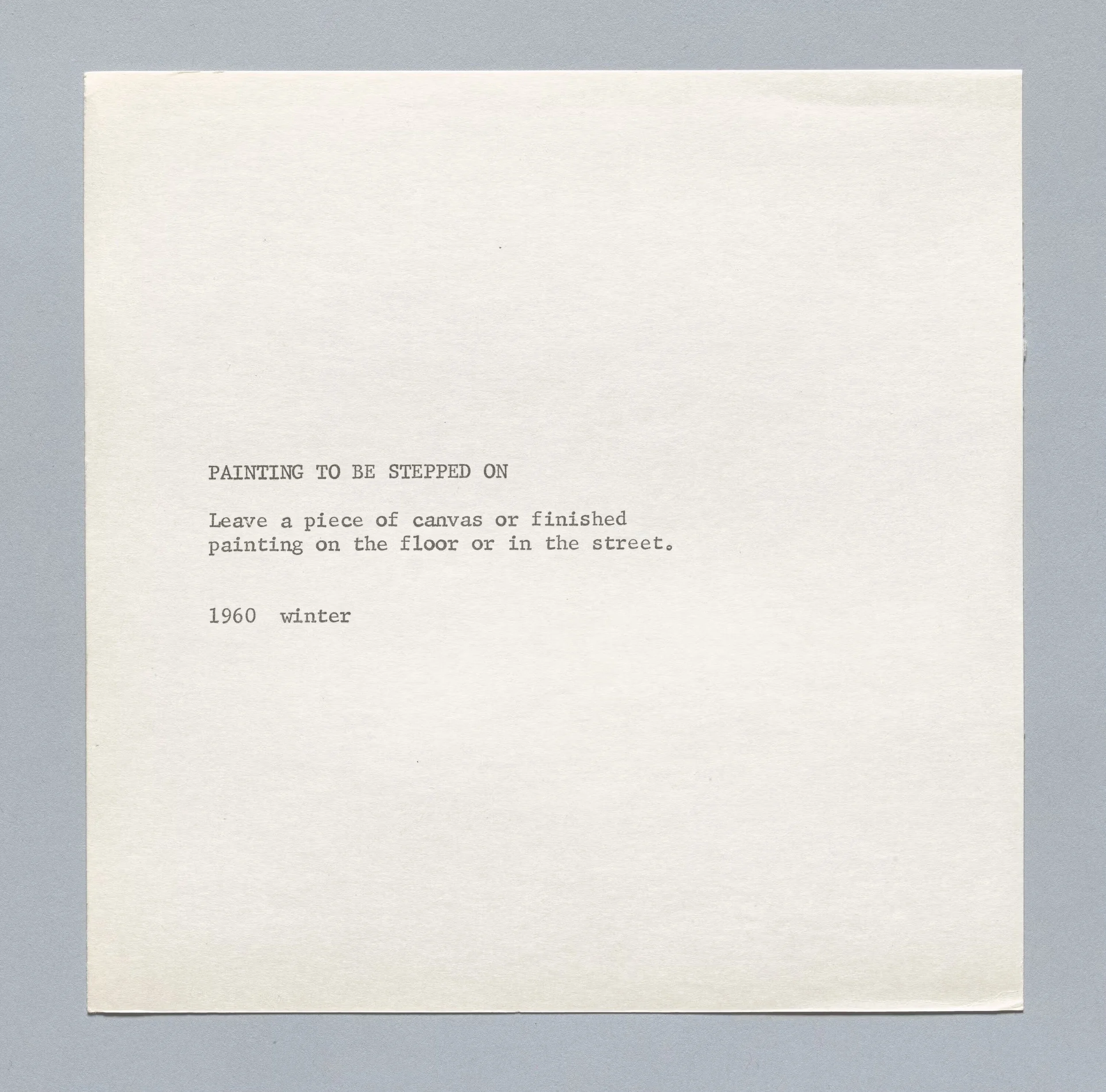
Yoko Ono, Painting to Be Stepped On, 1960.

However, that concentration of attention can feel both exhilarating and brutal. Artist Marcelina Amelia describes the solo show as a space where compromise disappears: “finally I can not compromise as much and really allow myself to present a full narrative.” Yet that freedom comes with exposure. “It’s incredibly vulnerable,” she says, “you are stripping naked and there is no one to lean on really… all the spotlight is on you and we can see your full skin texture.” Having worked within a collective context, she contrasts this with the shared courage of collaboration – a duo where they were “each other’s mirror… the spectator to each other's act of bravery.” The solo, by comparison, demands a psychological, internalised version of that supportive gaze.

Curator Roxane Hemard frames this vulnerability as precisely what makes solos compelling, especially when approached as dialogue rather than presentation. If group shows operate as a “choreography between practices,” solo exhibitions require a different mindset: “a genuine collaboration between curator and artist, where together we construct a narrative that both reveals the work and invites audiences into it,” as she puts it. For her, the most successful projects move beyond an artist’s fixed “style” and instead respond to what is shaping their thinking now (as in a recent exhibition developed from conversations about Arctic light, where the show emerged gradually). In this sense, the contemporary solo exhibition is best understood as a narrative procedure. It is, in some sense, a mode of re-reading, an occasion for the work to be seen otherwise without requiring the artist to reduce it.

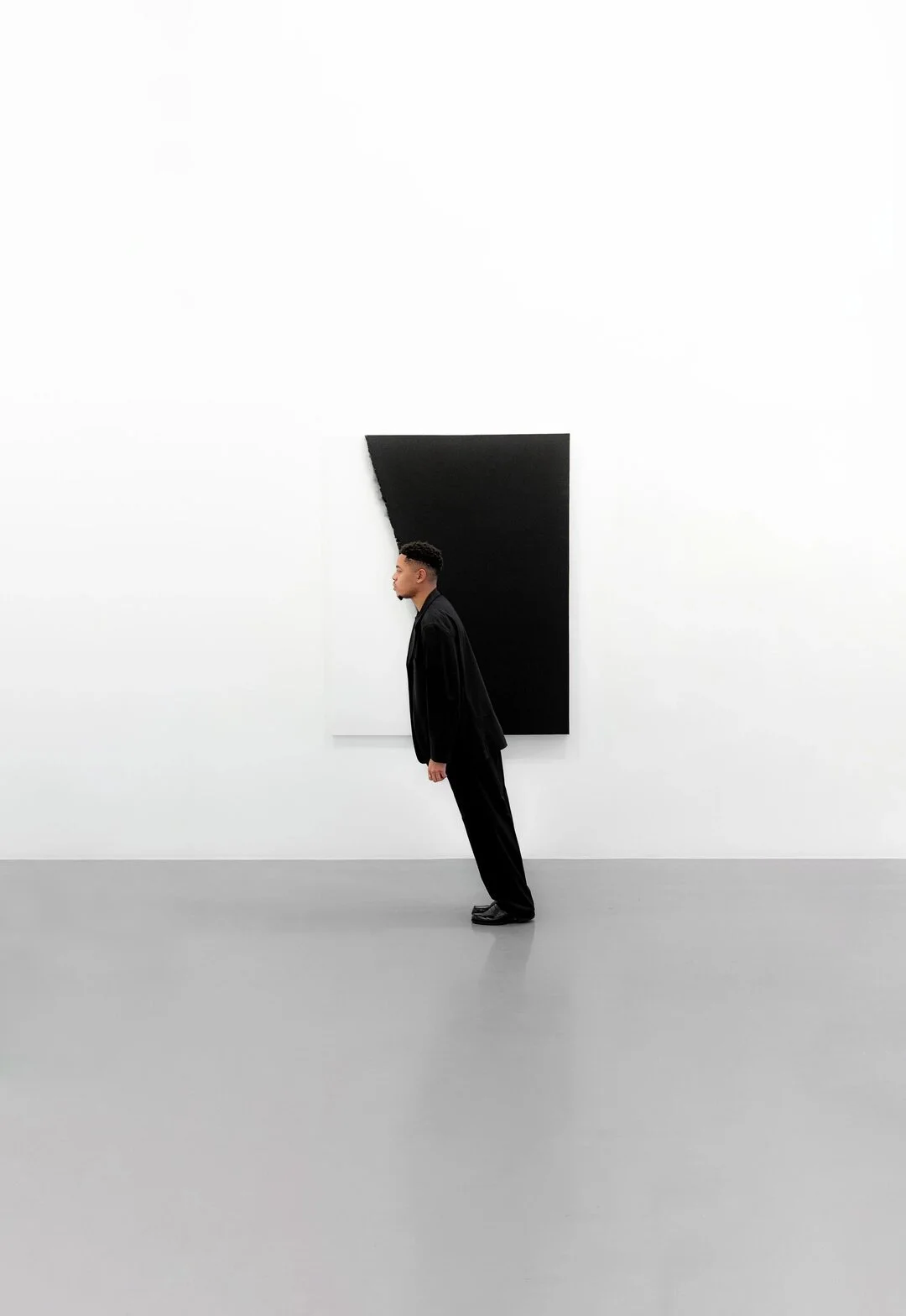
Mohammed Diagne, Erwan Desmazon, 2022.

The language of support surrounding solo exhibitions shows its sharpest edges when the artist–gallery relationship is strained. Writing recently on the artist–dealer dynamic, art advisor Greg Rook describes representation as “intimacy and practicality, generosity and leverage, loyalty and fear.” His most revealing scene arrives in installation week, where Rook relays a London gallerist describing the “loneliest moment a dealer can have,” involving opening the crates for an artists work and realising that they simply don’t live up to the sustained belief, the committed space, the calendar, the budget, the press, the gallery reputation. “You will be standing beside it at the opening, introducing it to collectors, defending it to critics.” the anonymous gallerist tells Rook. The London-based artist tells me of a friend who had a similar experience: “He trusted the curator and when he got to the show the day before he just hated it.” she explains. She insists it was nobody’s fault but the fact that his first solo made the experience “way more devastating… because that’s your first presentation to the world, you want it to be good.”

But what is the difference between a group and a solo show? Nzinga Audre Ngola, curator at the African Heritage Cultural Arts Center Miami, frames group and solo exhibitions as demanding distinct registers of curatorial attention. “In a group show,” she observes, “the work starts speaking to itself before the audience even enters the space.” Curating here becomes a matter of relational composition: “to choreograph that dialogue,” with a focus on “how energy moves between works… how differences generate meaning.” The solo exhibition, however, shifts the curator’s labour. It “asks for something slower and more intimate,” requiring “time, listening, and a willingness to really try and understand what the artist is saying” Rather than assembling a discursive constellation, the curator “follow[s] the rhythm of a single practice” tracking “subtle shifts in intention,” while remaining alert to the representational pressures that make such concentration “powerful and delicate, especially when artists are expected to stand in for more than themselves.” For Ngola, the ethical and interpretive horizon of the solo lies in maintaining complexity: “it has to allow for contradiction and nuance” because the only thing the work is competing against is itself.
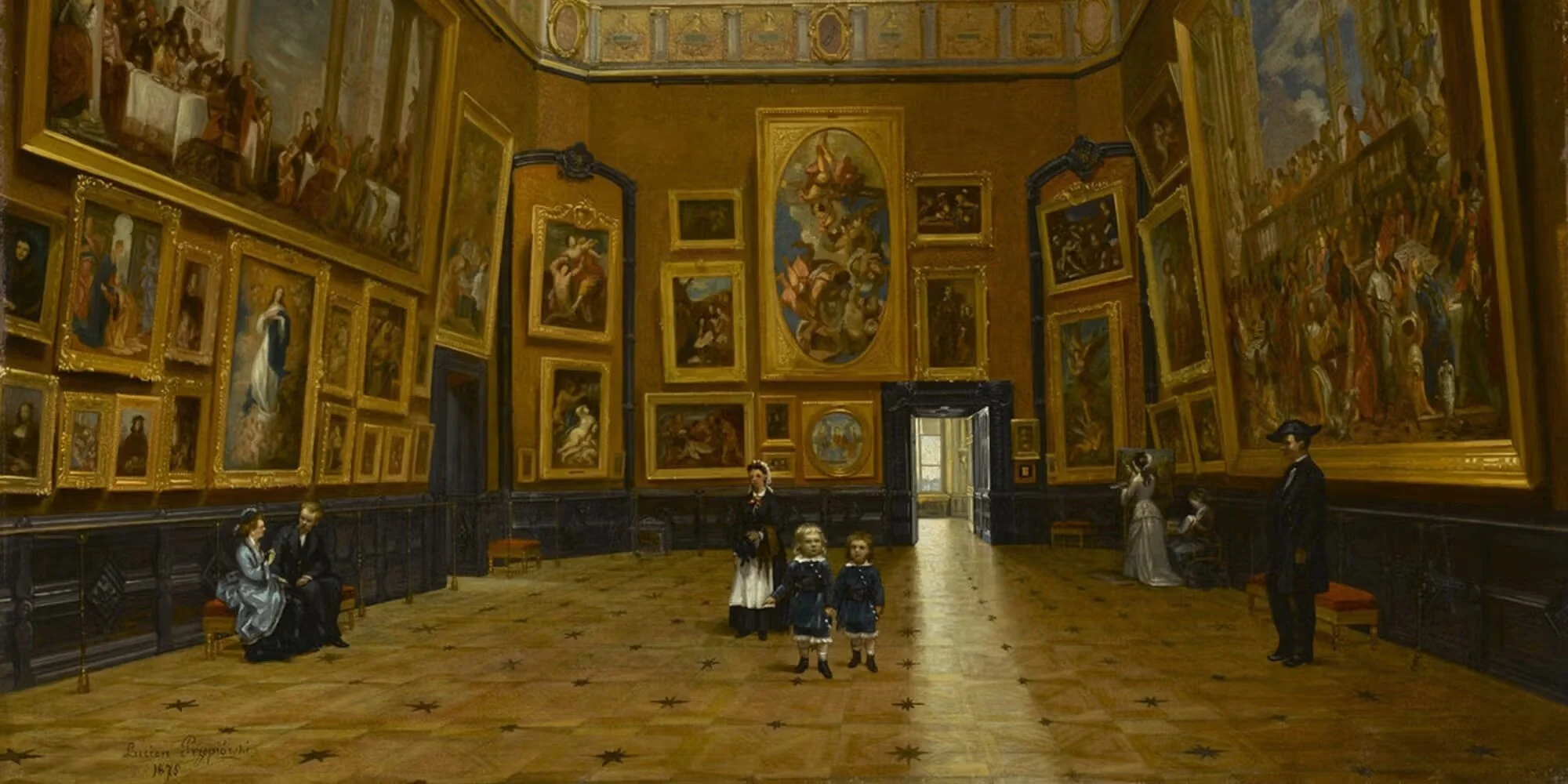
K. Lucjan Przepiórski, The Salon Carré in the Louvre, 1875.

Subscribe to our newsletter for more opinion pieces

What emerges is a portrait of the solo exhibition as a highly charged institutional form, a long-duration collaboration whose public outcome is made to look effortless, even natural, but really can but can also really magnify misalignment into public failure. It consolidates belief, both emotional and economic, at precisely the moment when the artist’s exposure is greatest and constructs a narrative while still letting the work speak for itself. The question, then, is not whether solo exhibitions will continue to dominate contemporary visibility – they will – but how they are authored, and to what ends. If the monographic show once offered an escape from gatekeeping, its task is now slightly more difficult: to preserve the possibility of experimentation within the very structures that so efficiently stabilise (and ruin) careers, taste, and price.


Comments