diaries


What Can the Art World Learn from Other Disciplines?

March 2026
9 min read


Arts Editor: Anna Moss

Contributors: 

Daniel Rey
Justin Bramwell
Philippe Pourhashemi


Anna Moss has flinched at one too many badly designed exhibition posters. Now, she makes the case by speaking to architects, spatial designers and fashion critics about why the art world needs to look outward to get its own house in order.


The art world is famously idiosyncratic. So idiosyncratic that it purportedly has its own language - International Art English (IAE) - coined by David Levine and Alix Rule. However we feel about art world jargon, it is fitting for some of the bemusing practices undertaken by artists, academics and gallerists. As of 2025, the art market is worth 59.6 billion, and yet it continues to insist on calling itself a 'world', rather than an 'industry' - perhaps industry would be too trite to describe the slippery gradations of what art professionals actually do. By definition, 'fine art' is non-functional, and with this comes a reluctance to admit art might serve a purpose outside of cultural appreciation. People in the industry (or world, whatever you like!) know this to be false. Money resides in the very fact that the art world loves to posture as above commercial gain. Every catalogue essay at a certain blue or red auction house will claim an artwork to be 'exemplary' of the artist's style, executed at 'the height' of their career. Strange that there are so many of those! We aren't just moving money around, fraternising with shell companies and corresponding with collectors who buy what their art advisors tell them to: I promise you this is really one of a kind.

Walter Pater termed a concept, Ander-Streben (Other-Striving), to denote how different forms of art could overcome the limitations of their medium by 'borrowing' from other disciplines. He was of course thinking about creative output - of how painting, for example, could aspire to the condition of music and become more abstract. Along similar lines, I think about what the art world could 'borrow' from other creative fields in a practical sense. I don't mean artists should begin plotting paint pigments on spreadsheets, but that we could make small creative, logistic and financial changes to our infrastructure. To get a sense for what this could look like, I spoke to three experts in adjacent fields.

Martin Margiela, Vanitas, silicone and natural dyed hair, 2019. Photo by Pierre Antoine.

Architecture

Architecture occupies an interesting place in relation to the art world. Architects, like artists, can be purveyors of a particular formal language and philosophy. But they are also part of a regulated service industry, recognised by professional bodies such as RIBA. As renowned architect David Chipperfield once stated in French Magazine L'architecture D'aujourd'hui: “Architects aren't artists. They have to be responsible. They can't stand on the edge of society, or even outside it and comment on the state of society as an artist is free to do.”

Daniel Rey is an artist who also studied and worked as an architect. “I see art and architecture as deeply related,” he notes, “more than people often assume. One thing that stands out to me about architecture is how collaborative it is at its core. A building is the result of many people working together over the years, navigating the brief, the budget, regulations, and the context, always keeping in mind how the person will move through and experience the space. That relationship to the user feels important and I think it is something artists could bring more consciously into their practice.”

Artists do work to deadlines and collaborate, but there is a literal aspect of project management to architecture, embedded within its very process. “In architecture you learn very quickly that errors are expensive,” he explains. “There is no room to be loose with materials or time, so precision becomes part of how you think. In art it is almost the opposite, the mistake is often where the work becomes interesting, where something unexpected happens that you could not have planned.”

Whilst technical mistakes are treated differently, it is the idea of defined parameters for oneself - whatever that may look like - that Rey encourages. “Every architect works within a series of rules depending on the brief, the context, the budget.” he says. “I think artists could do the same. Not a rigid system, but something more personal, a set of intentions they define for themselves at the start of each project or across their practice as a whole. Because when you have that, the unexpected becomes so much more exciting. The accident that happens inside a structure is not just a mistake, it is a disruption of something intentional. If everything is loose and unplanned, nothing surprises you. The error becomes meaningful when it happens inside something built with intention. That is what I would want artists to borrow from architecture, not the rigidity, but the foundation that makes freedom actually feel like freedom.”

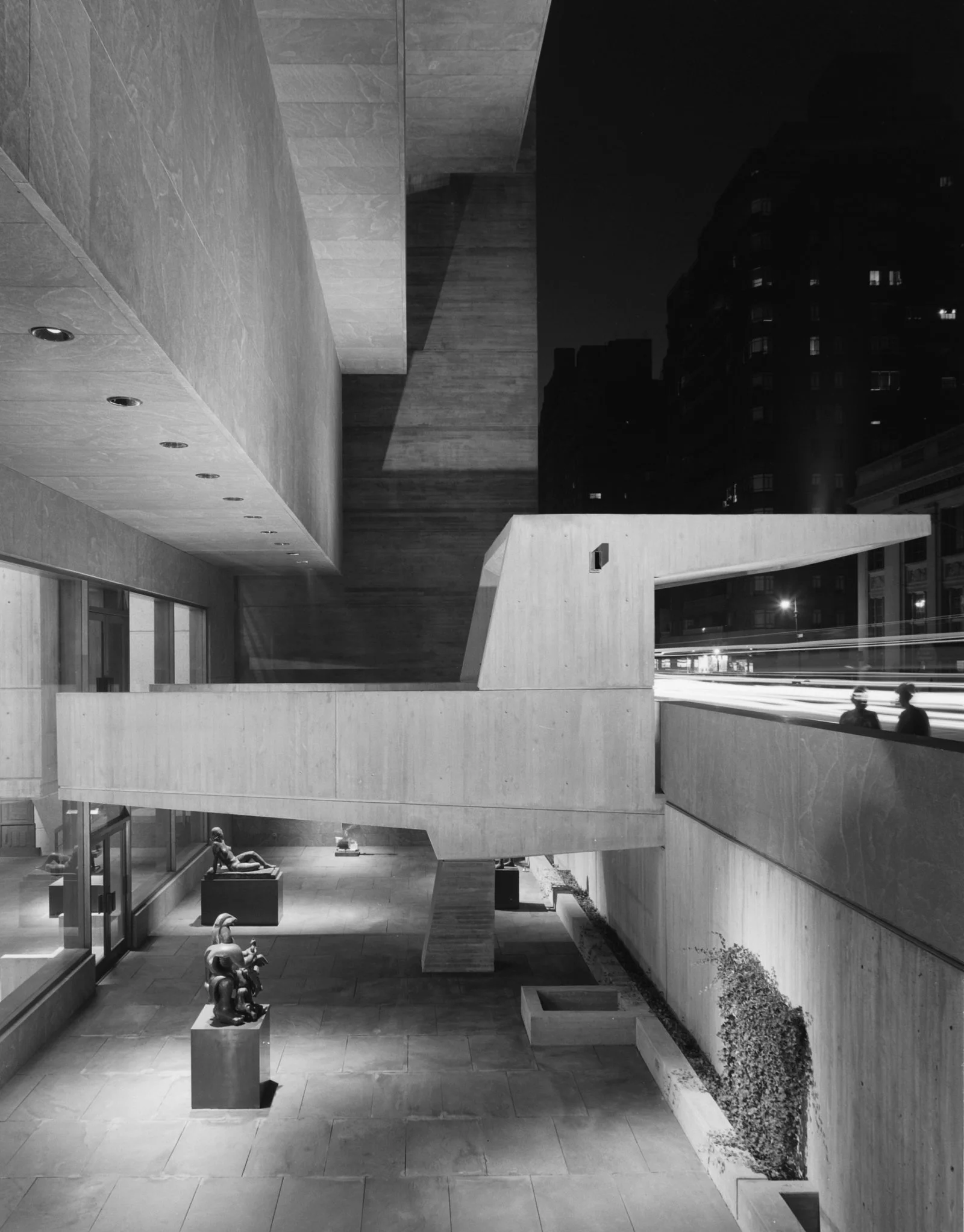
Whitney Museum, by architect Marcel Breuer. Photo by Ezra Stoller.

Subscribe to our newsletter for more opinion pieces

Design

I'll be honest, I have flinched more times than I care to admit at poorly made exhibition posters. One would think that materials designed to promote art would reflect an artistic sensibility - yet so often, presentation is precisely where things fall flat. The separate components do not reflect the larger whole of an exhibition, whether it be in the marketing materials or a cohesive installation. The artwork is often expected to do all the heavy lifting - but then why not show it outside of a studio at all? Speaking to designer Justin Bramwell, a specialist in spatial design, we talk about why designers might not go to as many exhibitions.

A lot of the conventions of the art world, even to designers such as Justin, are unclear. “With a lot of commercial galleries, you don't actually know if you're being sold something or if you're supposed to look around.” he says. “Plotting your journey through the gallery is key. I'm thinking about how the work is laid out to you - the best exhibitions are self-guided, the worst are plaque after plaque where you're basically Wikipedia-ing the whole thing.”

Bramwell emphasises that people should feel compelled to visit an exhibition experientially, rather than view it on their phone. This responsibility doesn't just lie with visitors, but the environment. “I don't need a Disneyland-ride journey of art, but there should be spatial considerations when the work is hung. I take in everything - sound, touch, lighting, smell. With the Hayward gallery, the invigilator will often have a sample of something used in the exhibition for you to touch, which I think is great. You can't go inside the mind of an artist, but a gallery can do its best to take its place.”

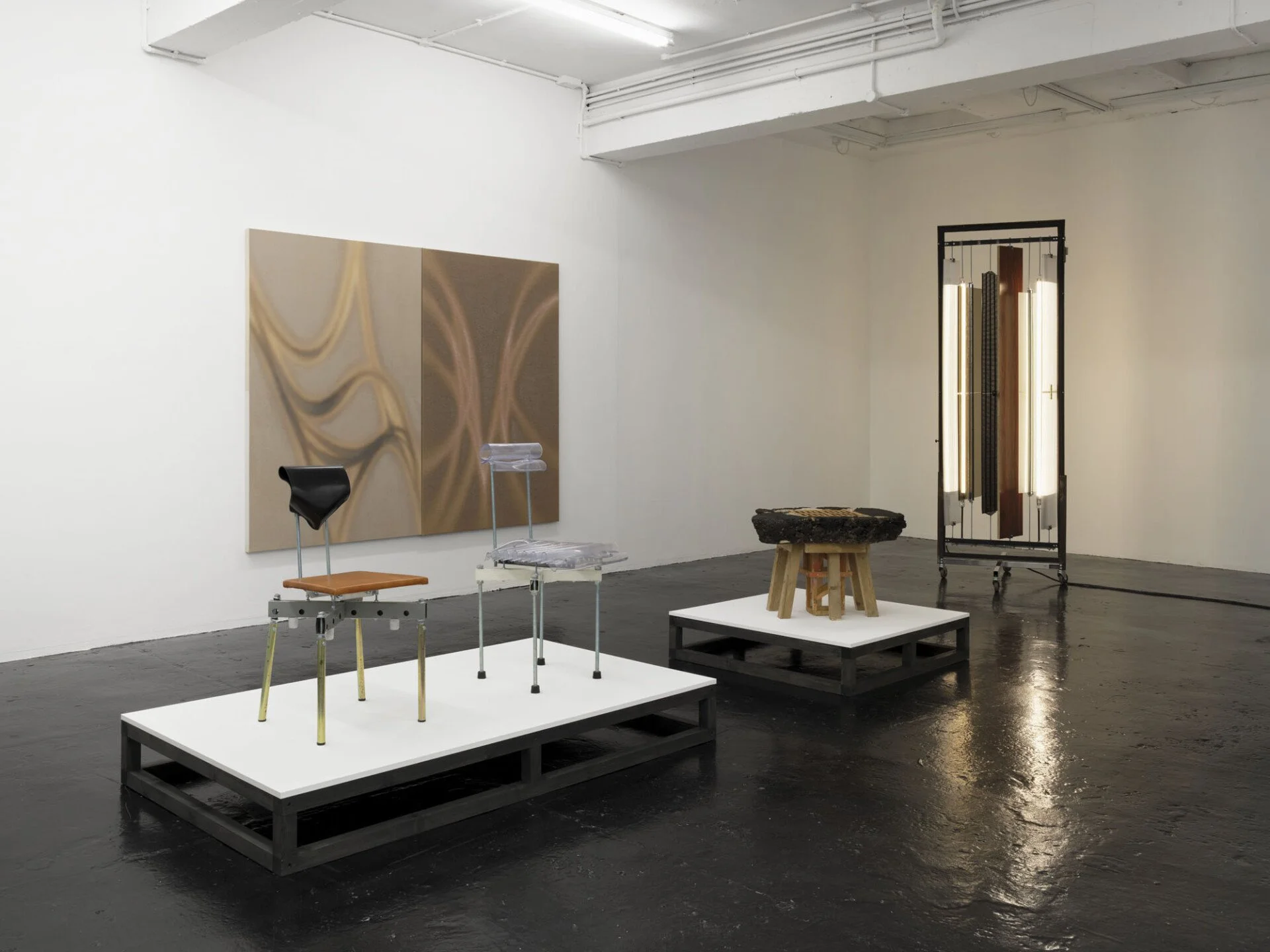
Installation view: ‘Aldehyde’ by pop-up gallery Ontrēp. The gallery merges art with design.

Fashion

Both the world of fashion and art struggle with the push and pull between craftsmanship and commodity. Genuine expertise often gets buried under flashiness and soapbox criticism. Post-runway discourse often revolves, ad nauseam, around arguments of reference versus heritage, echoing waves of derivative, market-driven trends in painting. Perhaps both can hold up a mirror to each other, as highlighted by fashion critic and writer Philippe Pourhashemi.

“The fashion industry and the art world have actually been going through similar changes over the past 40 years, raising key questions on how to maintain relevance - and successful careers - within both fields,” he explains. “Galleries used to play a major part in the art world, but collectors currently have the upper hand. In fashion, the consumer also rules - up to a certain extent - and it's become very difficult for prestigious fashion houses to control public opinion. During the 1990s, many designers had approaches that were non-commercial and they challenged the rules - and framework - of the fashion industry. Today, it's interesting to see how such designers - like Martin Margiela or Helmut Lang - abandoned fashion to embrace art. Dries Van Noten left his eponymous brand as well, and will be showing his first exhibition co-curated with Geert Bruloot next month within the Palazzo Pisano-Moretta, which he has refurbished over the past years. I think there will be more fashion figures intervening within the art world and generating new projects, simply because it is still perceived as a field that may be able to escape cultural commodification. It would therefore be exciting to see more artists getting involved with designers on specific projects that create the kind of crossover encounters, which worked so well during the 1990s."

Subscribe to our newsletter for more opinion pieces

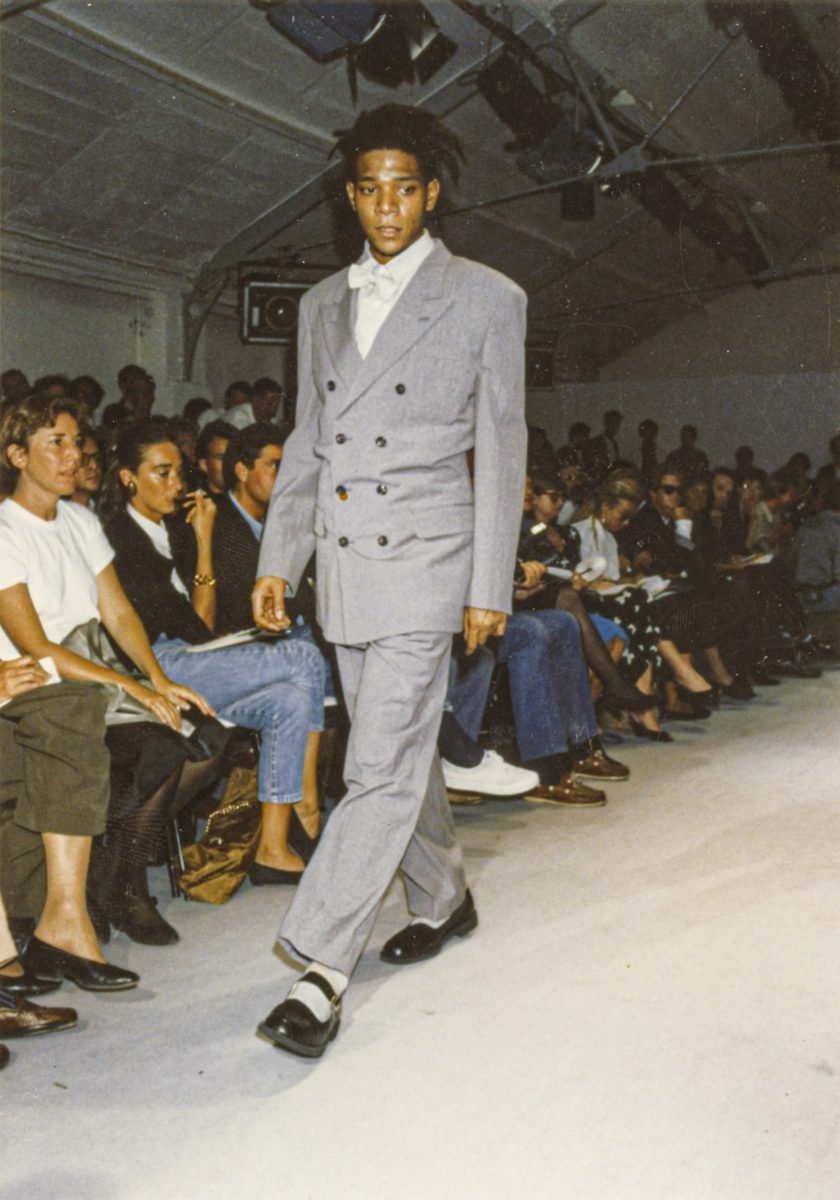
Basquiat walking for Commes Des Garcons.

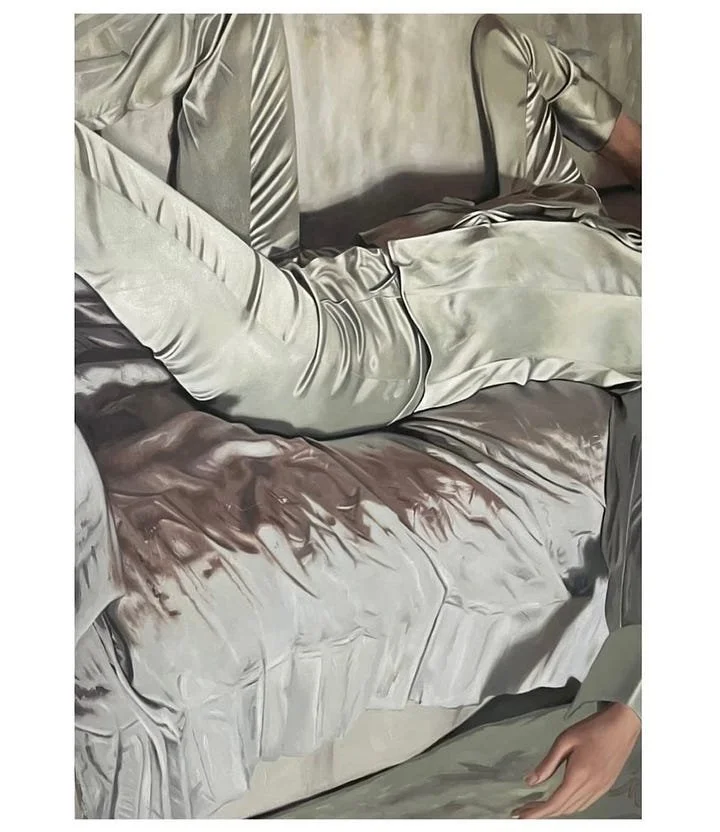
Fashion as subject matter has also become something of a collector's darling, with many painters depicting silky fabrics, gloves and shoes. Sure, Bernini sculpted translucent veils in marble and Vuillard dissected and painted the pattern of dresses. But there's a distinct immediacy to the kind of work we see now, a triumph of saturated imagery over deeper artistic inquiry. Yes, they're often beautiful - I wouldn't mind a Florence Reekie in my bedroom. What's often missing on the collaborative front between art and fashion is the point at which they move beyond the visual and engage conceptually and materially. As Pourhashemi notes in relation to Margiela's departure, the elusive designer declared “the human body is no longer my sole medium of expression”. He understood that fashion and art don't need to be confined to the literal formats we so often limit them to. This logic could extend to how crossovers work, beyond the appropriation of artworks as images simply transferred onto clothing. If fine art and fashion remain accessories to one another, we miss the chance to push either art form to its limits.

It's not a question of parity between art and other fields; each discipline comes with its own tensions. But the art world often swings between extremes: a lack of direction on the one hand, and a rigidity that seems to undermine the premise of art. We only need to look at the closure of some of the oldest blue-chip galleries, such as 80-year old Marlborough Gallery, to conclude that legacy is not enough. What these adjacent fields can give is not resolution, but a framework grounded in intention and process that allows the art world to thrive.

Florence Reekie, Lay Into, oil on cotton, 100 x 70 cm.


Comments