diaries
What Can We Expect from the Art World in 2026?
Arts Editor: Victoria Comstock-Kershaw
January 2026
10 min read
Happy 2026 everyone! As we all know, ins and outs lists are boring and passé, unless they’re yours. I’ve gathered a few of my own predictions for the coming year.
IN: Brand collaborations
I think 2026 will be the year that brands (luxury in particular) will start partnering with contemporary artists in an attempt to appear culturally fluent. I think they’re going to openly start treating contemporary art as a narrative accessory - and, paradoxically, this honesty may make the collaborations more interesting. Luxury houses are not strangers absorbing contemporary art into their storymaking infrastructure (think Murakami and LV), but this year will see fewer limited-edition gimmicks and more full-spectrum integration; gallery spaces used as pop-ups, commissioned runway and photoshoot scenography, sponsorships on the press release, etc.
OUT: Tokenism
There is growing impatience with what writer Talia Pockhai Bramham has aptly described as “praising mediocrity as a form of racism and tokenism.” The bigotry of low expectations dressed up as progressivism is finally being named for what it is and in 2026 institutions are going to face an increasing pressure to raise standards without retreating into exclusion. I’m hoping to see a demand for seriousness and for work to be engaged with critically, unprotected from critique by identity alone. Artists from marginalised positions are not served by lowered bars and as we enter the “post-woke” era I’m optimistic about a shift away from institutional tartuffism.
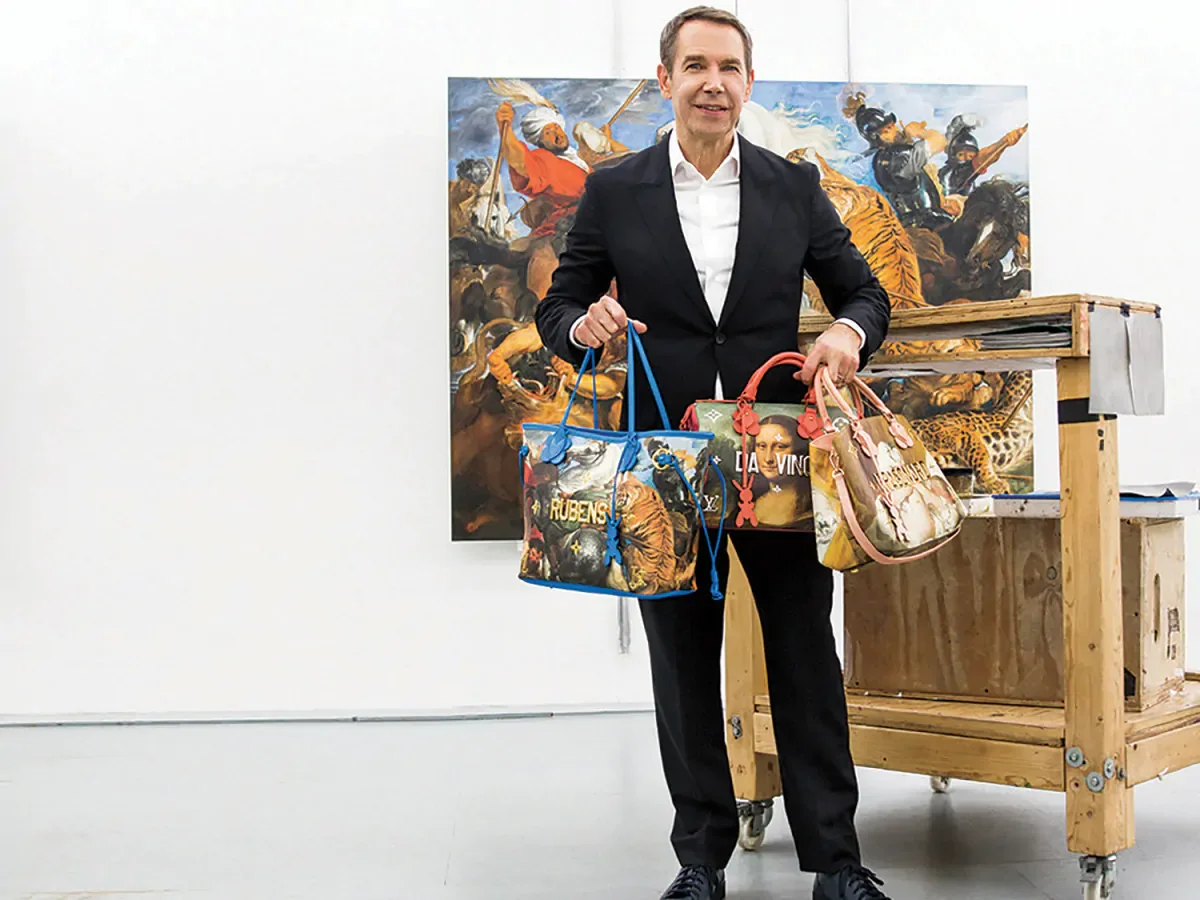
Jeff Koons with his Masters Collection. Photo courtesy of Louis Vuitton.
IN: Repair aesthetics and anti-scarcity craft
2025 was the year of the Ozymandias effect, the making and showing of art that predicted its own demise. For 2026 I think we’ll see visible more mending, material inheritance, and continuity: seams that show works that carry the trace of prior lives rather than erasing them, a sort of hopeful stubbornness that no broken thing (or society) is beyond saving. Rather than fetishise abundance, artists are going to start resisting the constant demand for formal novelty by examining how skills transmit, how materials remember and how objects age before, rather than after, the eschaton.
OUT: Art fairs (even the baby ones)
The contraction of mega-fairs has been widely discussed. What’s less acknowledged is that smaller fairs are also losing their justification. Rising costs, diminishing returns, and cultural exhaustion have made the fair format increasingly unsustainable not only economically, but intellectually. The promise that fairs once held as sites of discovery has eroded under their own weight. By 2026, fewer fairs will survive, and those that do will need to radically redefine their purpose. Meanwhile, collectors (particularly younger and female collectors) are redirecting attention toward studio visits, long-term relationships, and context-rich encounters that fairs simply cannot provide.
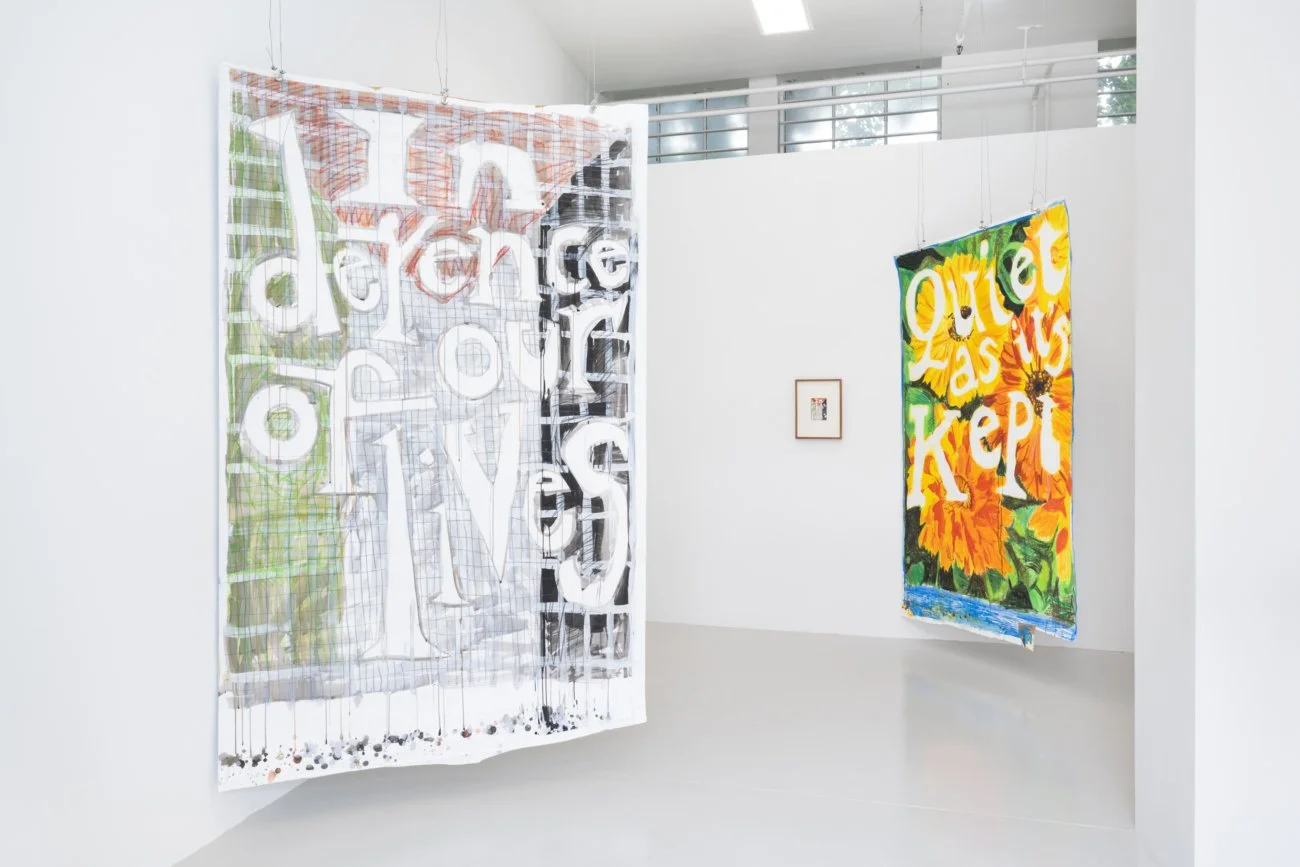
Installation view: Jade de Montserrat’s In Defence of Our Lives at Bosse and Baum, 2024. Photo courtesy of Bosse and Baum.
IN: Writing
The rise of Substack and adjacent newsletter platforms signals a re-professionalisation of critical voice outside institutions. Writers, curators, and artists are increasingly choosing direct readership over institutional mediation. I won’t call this quite a return to blogging culture, but there is something of a consolidation of intellectual authority afoot: fewer writers, stronger positions, clearer stakes. Small, committed audiences are willing to follow long arguments and while I doubt these platforms will replace magazines, they will increasingly set a slightly sharper intellectual tempo.
OUT: Calling artists “emerging”
The term “emerging artist” feels increasingly meaningless. We’re already seeing artists in their late 30s–40s being framed as “new discoveries” and artists with institutional shows still treated as speculative risks (not to mention artists achieving market success before critical framing exists at all). I’m predicting a rise in trajectory-based language: early, mid-acceleration, consolidation, recalibration. This in turn will favour critics, collectors and curators who can read careers longitudinally.
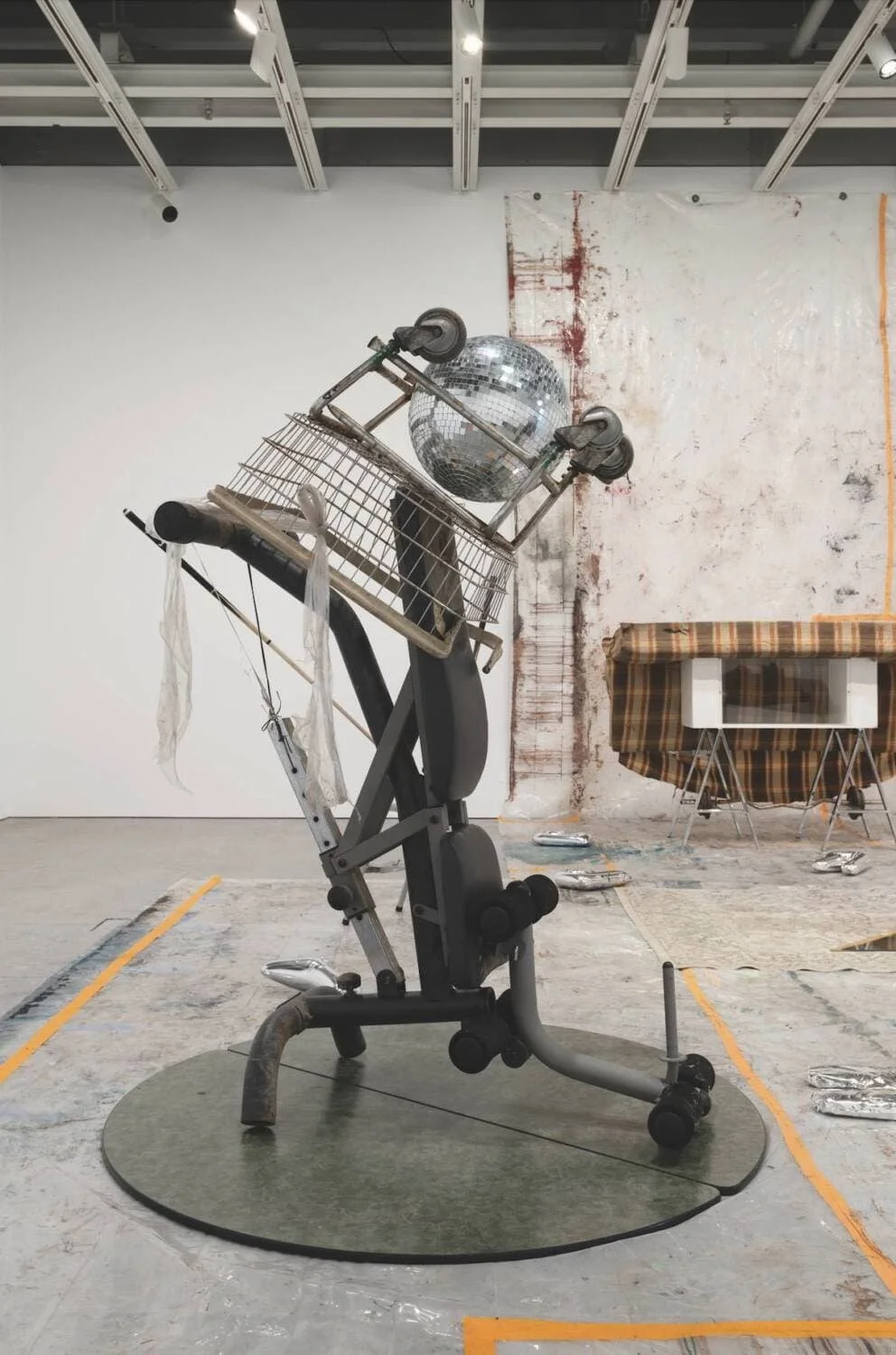
Ser Serpas. huff heavy forget this song the hell I see, 2024. Photo courtesy of Whitney Museum of American Art, New York, and Maxwell Graham.
IN: Editions
Editions are being rehabilitated. No longer treated as secondary or decorative, they’re increasingly understood as core economic infrastructure, especially for artists resistant to constant object production. In 2026, I’m thinking tighter editioning, higher conceptual stakes, and more institutional acquisition of editions as works in their own right. It’s a little sleazy, ideologically and financially (cf. the language of “access” masking plain market expansion) but it does ensure cashflow without forcing artists into a brutal treadmill of novelty. If the primary market is going to keep demanding output, editions offer a pressure valve and a way to fund studios, research, fabrication and living costs while keeping the major works slow, scarce, and uncompromised. The serious multiple is back, baby!
OUT: Public price signalling
Auction theatrics and performative transparency are losing their glamour. If the number of people who have decided to become art advisors in 2025 indicate anything, it’ll be how more transactions will move off-market: private sales, discreet brokerage, relationship-led placements. Collectors want insulation from volatility, artists want context, galleries want control. The fetishisation of public price discovery is giving way to strategic opacity.
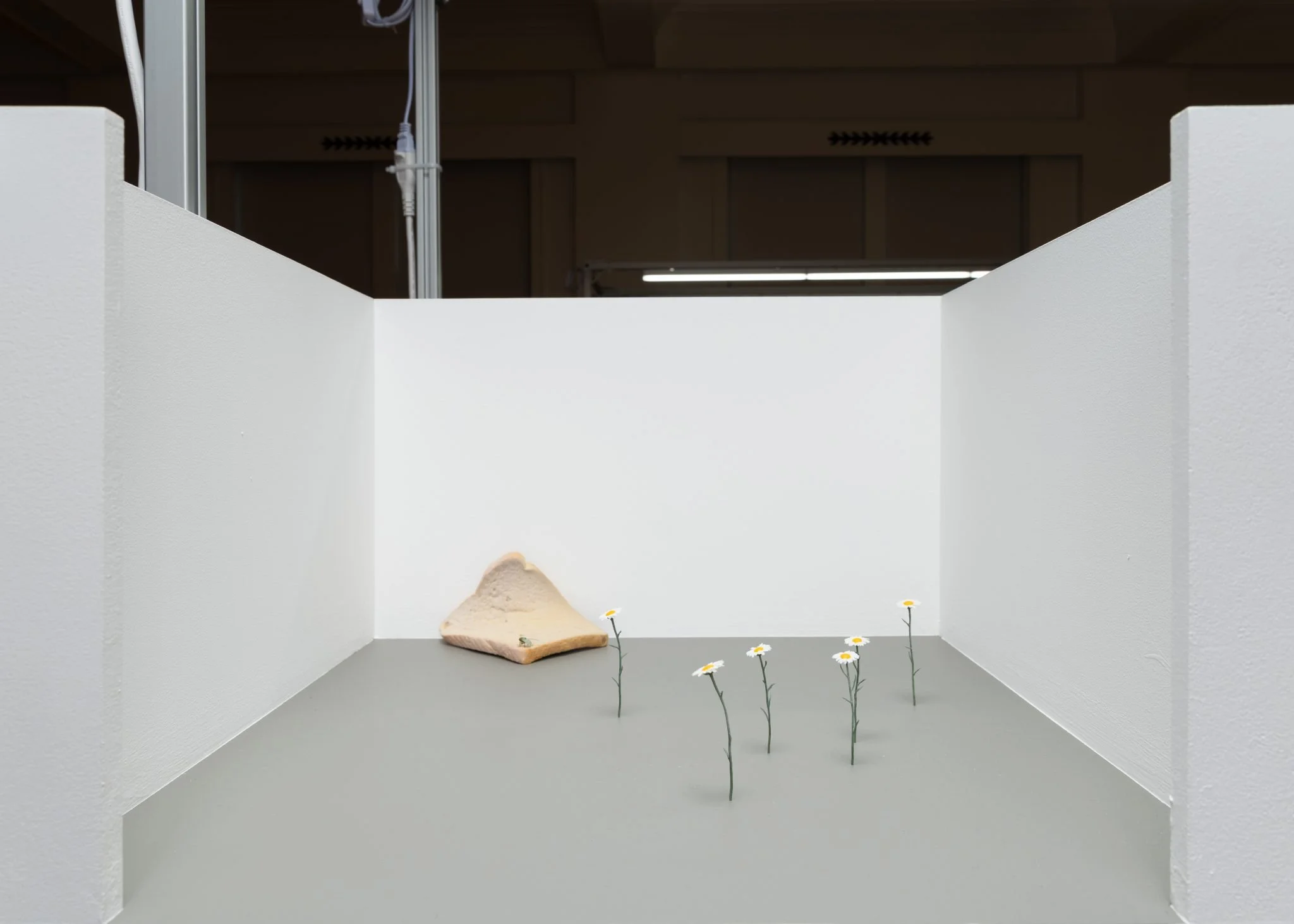
Cob Gallery’s booth at Barely Fair. Photo courtesy of Roland Miller.
IN: Long-term gallery-artist contracts
The age of roster bloating is over. After years of speculative over-signing, galleries are slimming down. In 2026 I predict that we’ll see fewer artists per programme, but deeper contractual commitments and longer timelines. Carrying too many artists has become financially untenable, and artists are increasingly wary of shallow representation.
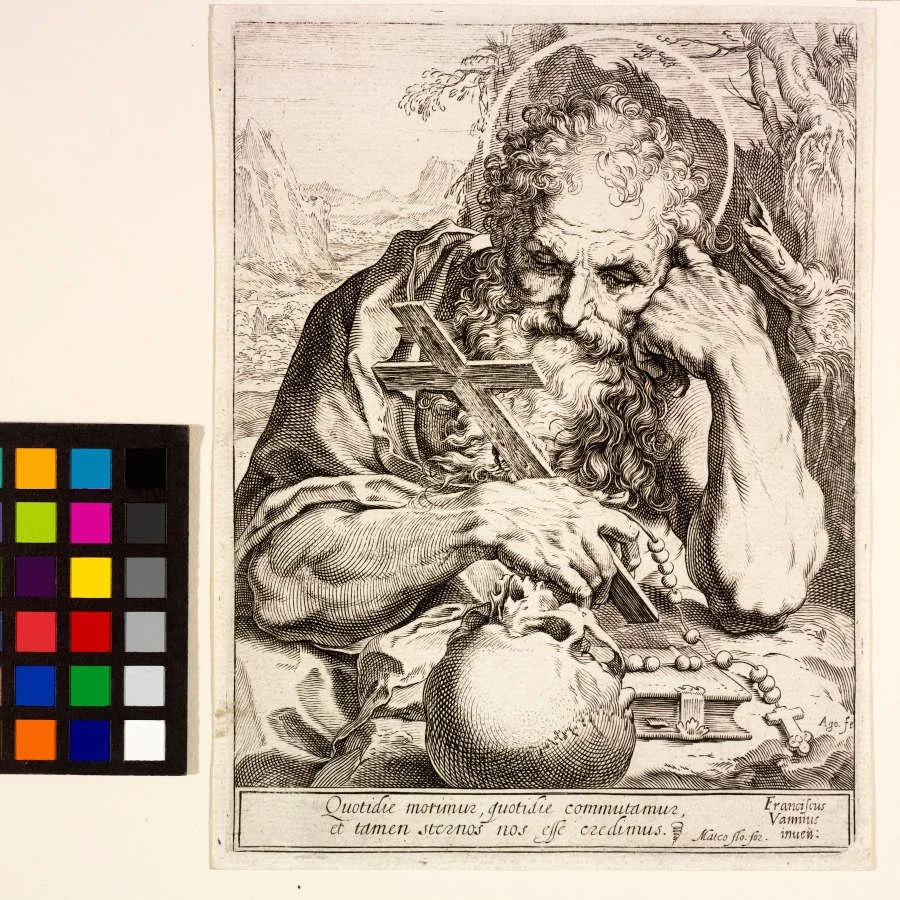
Agostino Carracci after Francesco Vanni, Saint Jerome, ca. 1595 w/ RISD-standard colour card.
In general, I’m predicting an art world abandoning its appetite for excess - excess fairs, excess rhetoric, excess production - in favour of something leaner and more self-aware: quieter markets, longer timelines, sharper writing, and clearer-eyed exchanges between artists, institutions, and capital. And in a field that has spent years mistaking motion for progress, that might finally count as growth.