dialogue
Zachary Merle | Artist
April 2026
5 min read
Zachary Merle works within a space where recollection slips, folds, and quietly reconstructs itself. Shaped by his experience of epilepsy, memory becomes unstable, formed through overlapping fragments that feel convincing yet remain uncertain. His works hold images in suspension, close to recognition but never fully settling. Through pigment transfer, paint, and physical intervention, he allows process to guide the outcome, working in single sittings where irregularities and interruptions remain intact. These traces operate as residues, echoing the incomplete and shifting nature of recall, while decisions around composition and image selection provide a loose framework without fixing meaning.
Figures are often partially obscured or turned away, removing a clear point of identification and shifting attention towards sensation rather than recognition. Repetition further unsettles the image, with moments returning in altered forms that resist a single, reliable version. Within this, a tension emerges between distance and exposure, as the work moves between concealment and the urge for clarity. In occupying this unstable ground, Merle’s practice reflects an ongoing negotiation with what can be held onto, and what inevitably slips beyond reach.
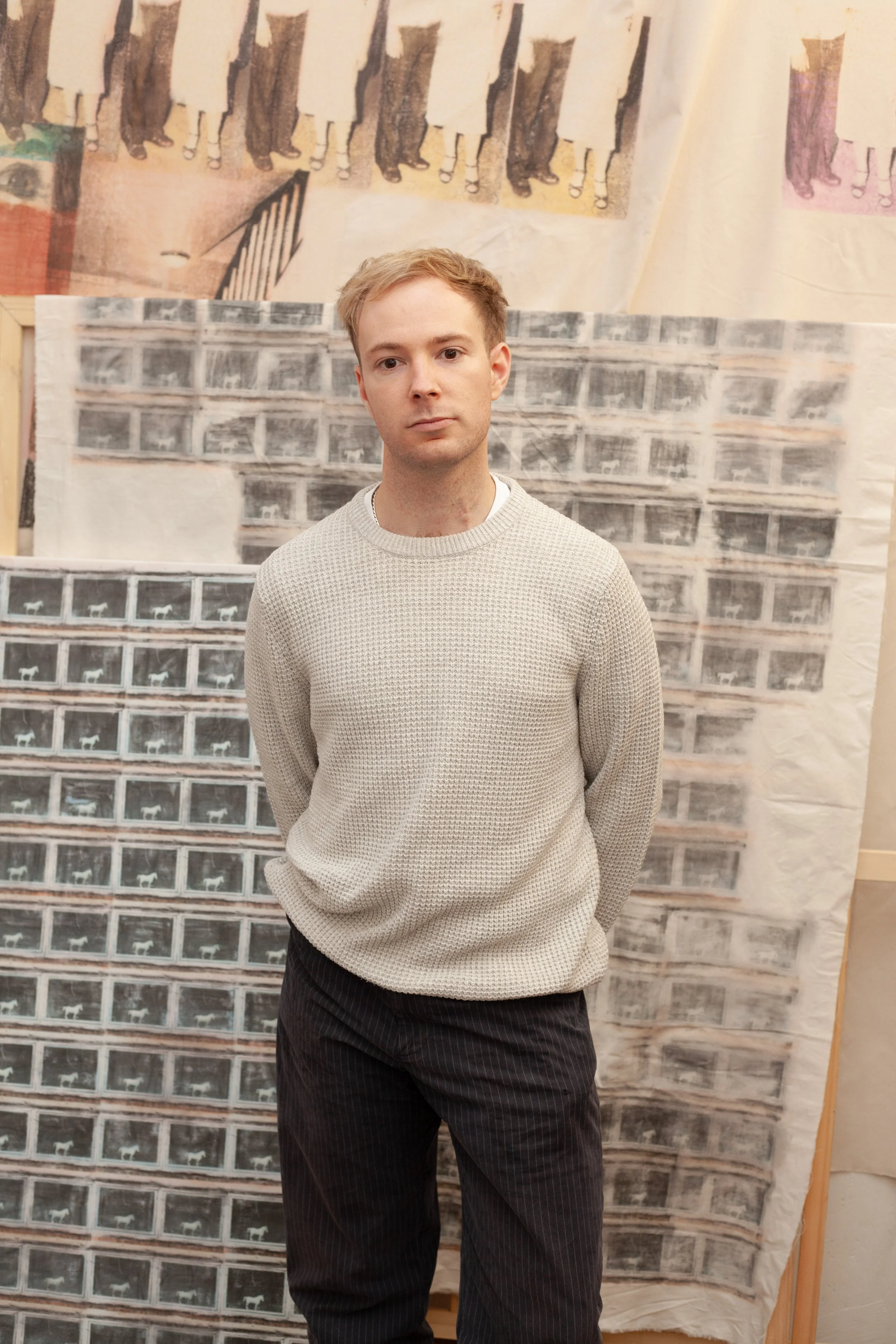
Zachary Merle. Photo courtesy of Palmer Gallery.
Instead of asking who influences you, we’d like to ask what you actively resist. What do you consciously push against in your work?
”I resist attempting to form a fixed or controlled narrative, I like to allow enough room for ambiguity and spontaneity to exist within my works. When a piece is overexplained or overplanned, I feel it diminishes the energy built between the individual images and how they intersect and interact with one another. I’m more interested in finding this tension, making a memory feel present but not fully accessible. For me, the process of image making is a constant push and pull, trying to achieve a balance of understanding and uncertainty, which can only be found through play.”
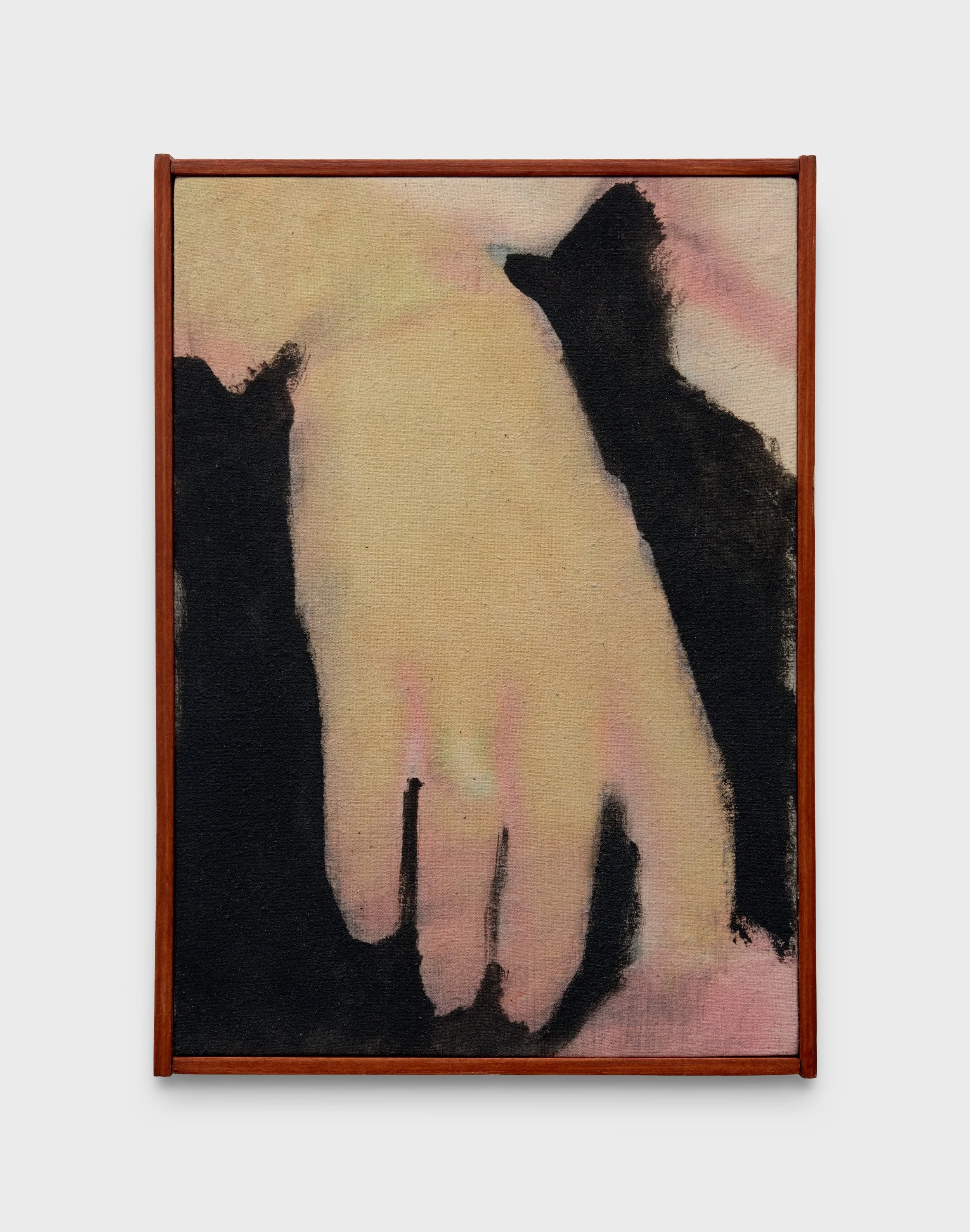
Zachary Merle, Fragment II, Oil and pigment transfer on calico with artist frame, 29 x 21 cm, 2025. Photo courtesy of Tom Carter and Pipeline Contemporary.
You are currently exploring pigment transfer on canvas. Do you allow imperfections to remain in the final work, or do you tend towards control and precision?
“Pigment transfer carries a level of unpredictability, and I lean into this lack of control whilst making my work. Most of my work is done in a single sitting, and I don’t return to correct any errors or imperfections. Instead embrace them and allow the process to dictate that part of the outcome. Relinquishing that control reflects my own experience during and post seizure, where I have little or no conscious authority. If I was fully obsessed with precision it wouldn’t be true to my own memory, where there are gaps, distortions and partial memories that never fully resolve. Allowing imperfections to exist in the work, they act as a form of residue which behave like echoes. How I bring my control back is through my decisions about composition, initial image selection and ultimately when to leave the work alone.”
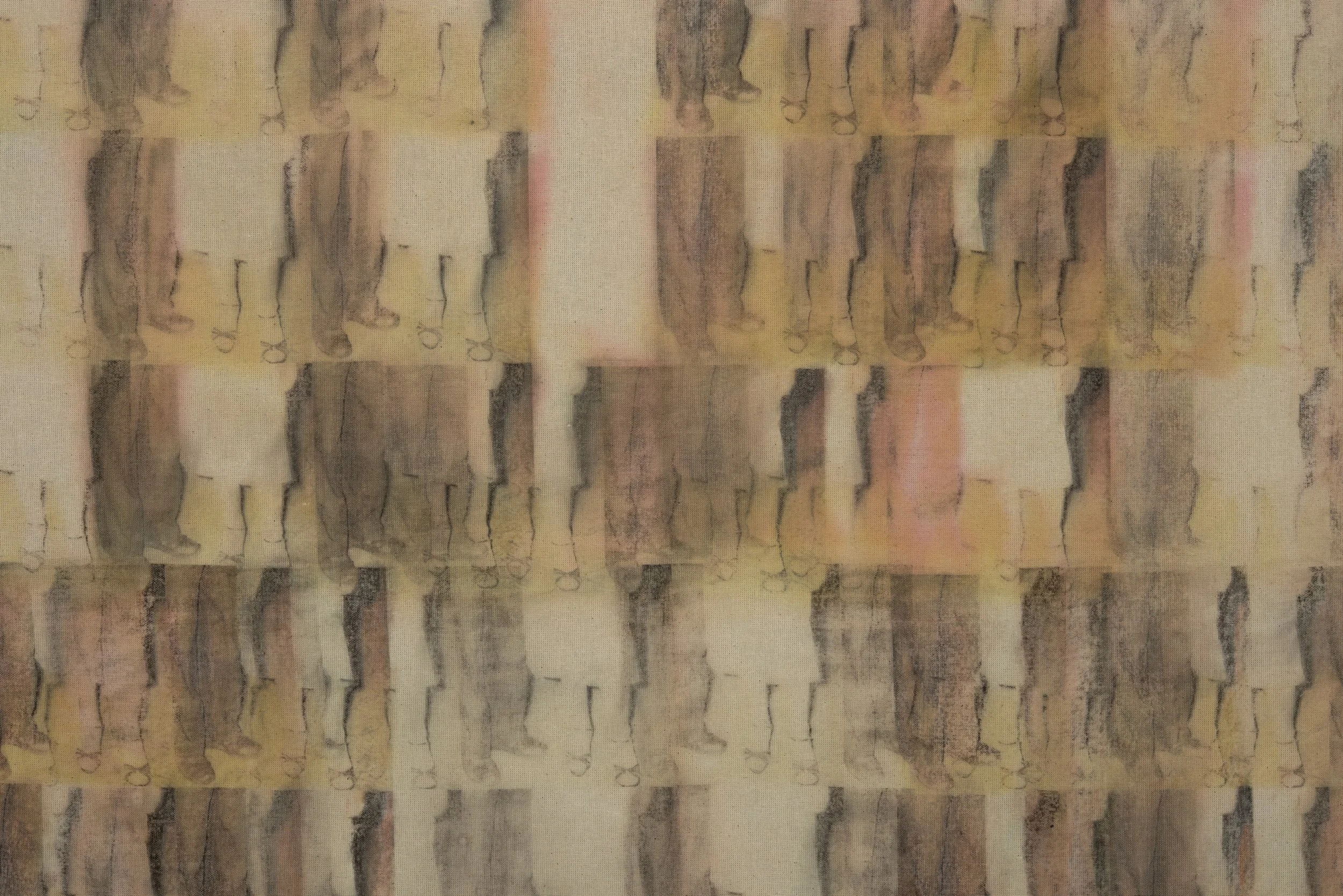
Zachary Merle, Echoes of the place we remember II (detail), Pigment transfer on canvas with artist made frame, 53 x 388 cm, 2025. Photo courtesy of Tom Carter and Pipeline Contemporary.
You have spoken about living with epilepsy producing unreliable or false memories. How has that experience reshaped your trust in what you remember, and how does this enter your work?
”When recalling a memory, I often experience it as an amalgamation of separate moments, seamlessly compressed together creating a new coherent fiction, which I have no reason to question not to be true. Subconsciously shifting, quietly rewriting itself over time, and I’ve learnt not to fully trust it. This unreliability feeds the way I approach my work, mirroring this lack of trust. Figures become partial, bodies fall out of context, and the image resists the ability to be pinned to an exact moment. I use repetition to lean further into this instability, the same singular memory presented numerous times, yet never fully able to grasp at which is the true recollection. Each passing seizure only heightens their manipulation and ultimate deterioration. Practices like journaling and photography have become ways of trying to regain some form of authorship over my own recollection, even if that control is always partial.”
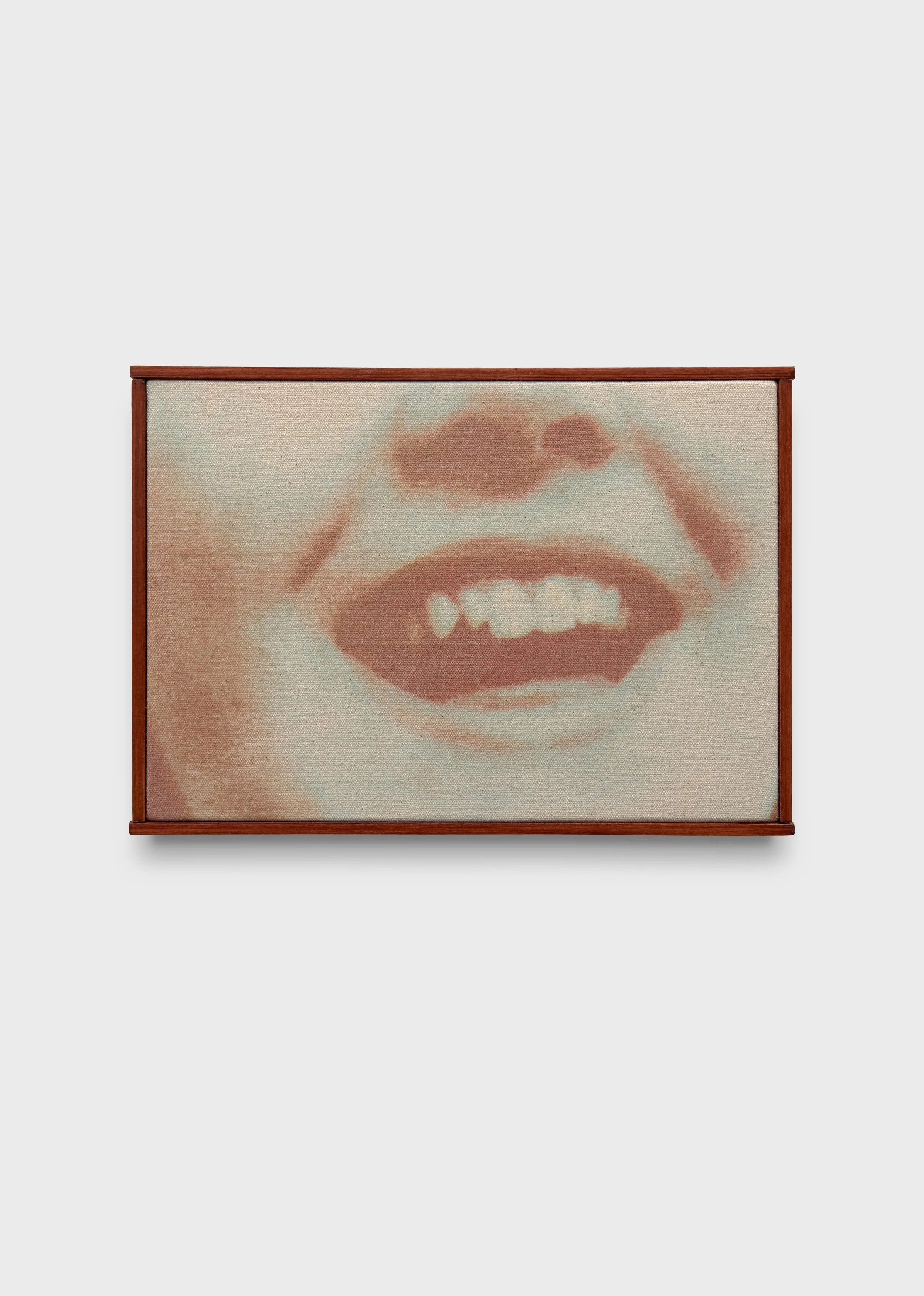
Zachary Merle, Fragment, Pigment transfer on canvas with artist frame, 21 × 29 cm, 2026. Photo courtesy of Tom Carter and Pipeline Contemporary.
Many of your figures are partially obscured or turned away. What draws you to withholding their faces?
“A face has the ability to anchor a painting very quickly, and the viewer has the opportunity to identify with them through their emotion, their characteristics and personal features. By removing that possibility, I place the figures into a more abstract state, a space where they act as fragments or recollections rather than a set identity. This lack of clarity shifts the focus of the works, and I’ve found people tend to project their own narratives because there’s more room for personal interpretation and association. This act of withholding also feels closer to that of my own experience, an obscured memory that I’m left to decipher.“



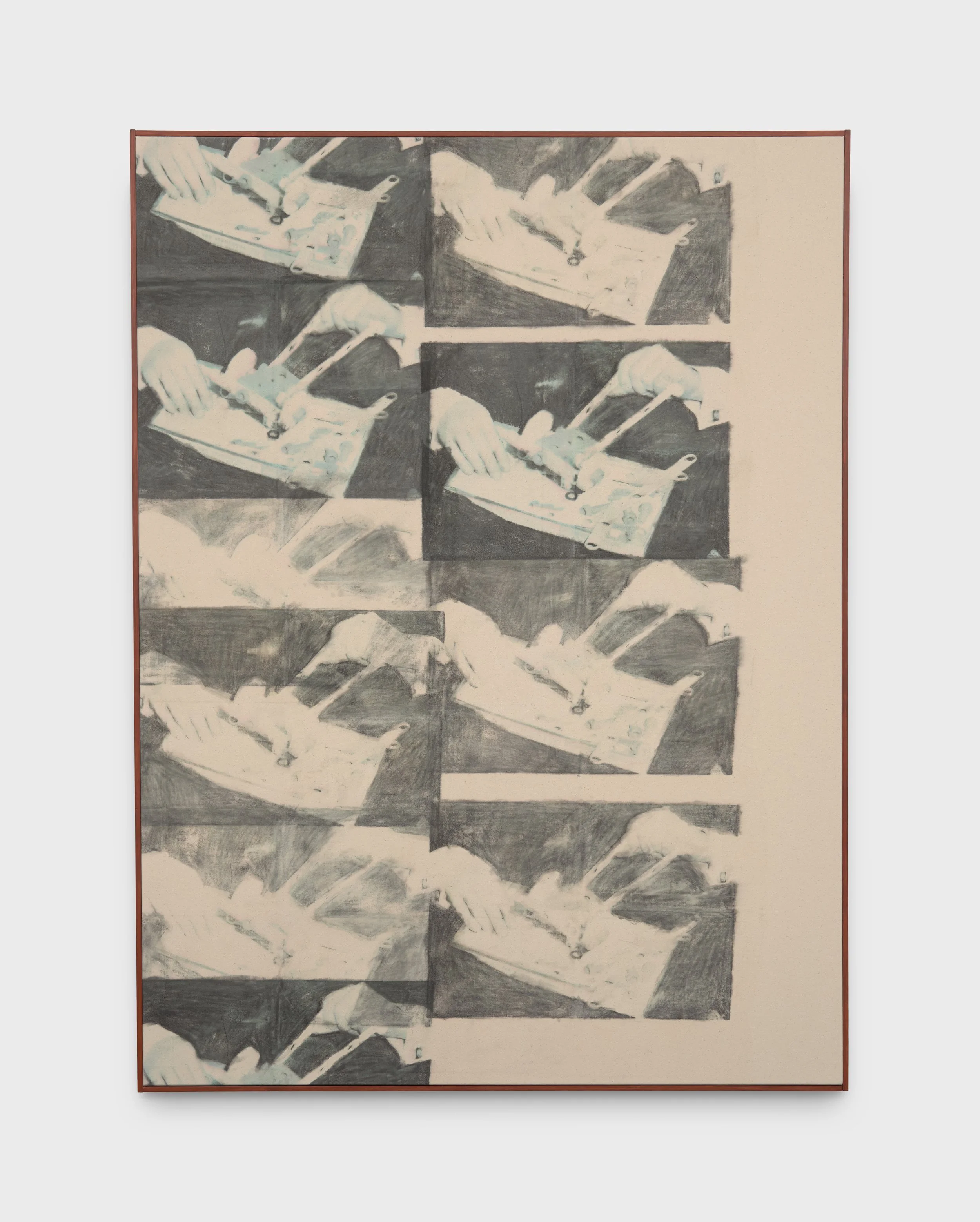
Zachary Merle, Play, Pigment transfer on canvas with artist frame, 178 x 132 cm, 2026. Photo courtesy of Tom Carter and Pipeline Contemporary.
If your work could speak, what would it accuse you of?
“It would probably accuse me of holding back too much of myself and not fully trusting my own perception. I’ve mentioned I like to linger in a more obscure space, so I think it would ask: why am I afraid to move beyond the comfort of ambivalence and develop more direct figurative compositions that confront my fragmented memory with less room for concealment? A series I’m developing feels like a response to these silent accusations.“
Recommended