dialogue
Michele Fletcher | Artist
March 2026
5 min read
Michele Fletcher approaches painting as a continuous state of becoming rather than the depiction of fixed forms. Growth and expansion emerge through accumulation, one gesture prompting the next, forms branching almost autonomously and she is most drawn to the moment where control gives way to something more organic. Long, intensive sessions of scraping, dragging, and reworking leave their mark both bodily and psychologically, and Fletcher treats this as inseparable from the paintings themselves.
Titles such as Bloodsport and Come Away Bruised introduce human registers, conflict, vulnerability, without fixing meaning. They create a productive friction between what the eye sees and what the body might feel, anchoring unfamiliar imagery to lived experience. Fletcher positions herself at an immersive rather than observational register, with marks that interact, overlap, and sometimes undo one another.
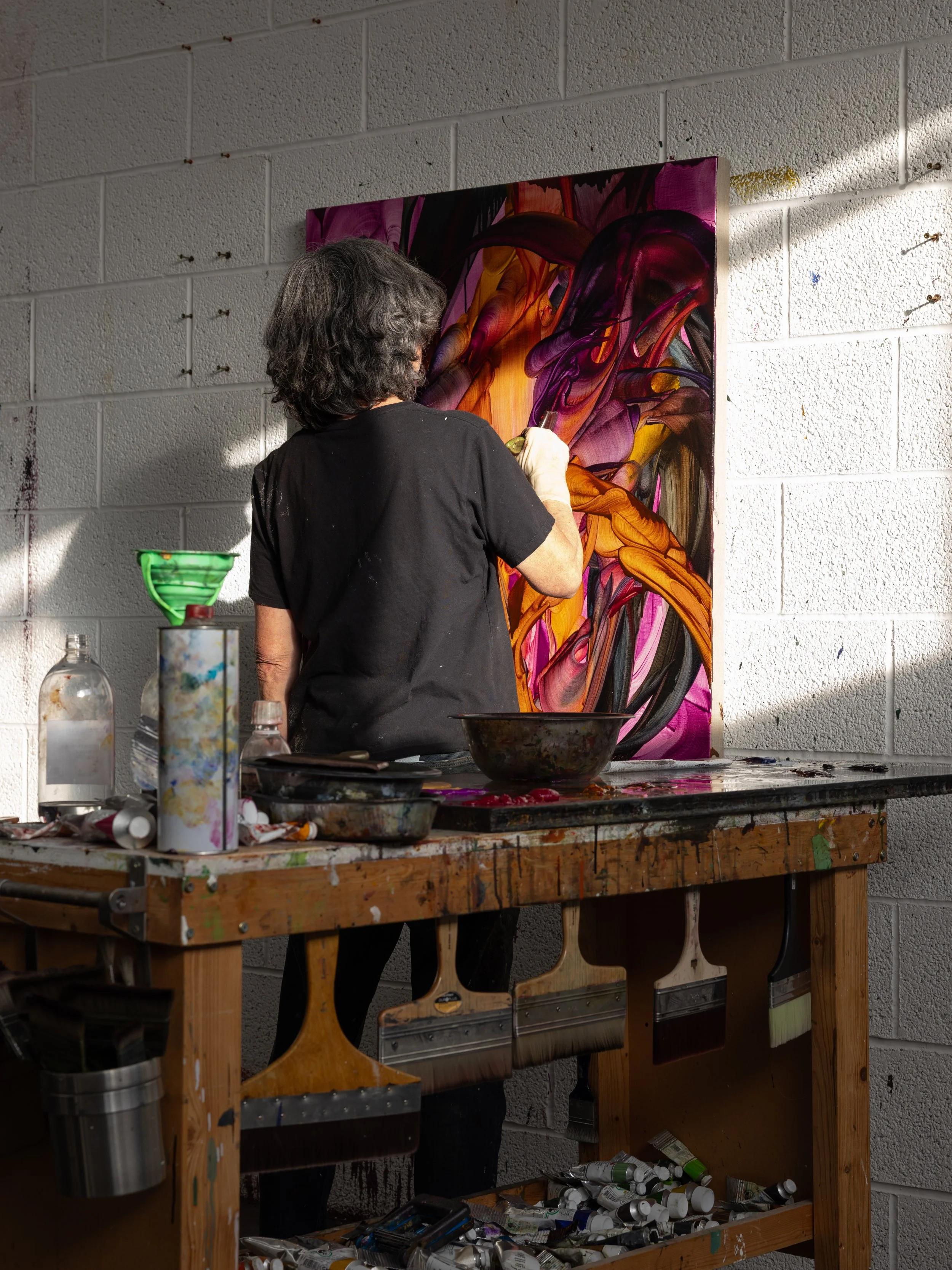
Michele Fletcher. Photo courtesy of the artist.
Your paintings often feel like environments in motion, with forms unfolding, branching, and proliferating.
How do you approach painting growth or expansion as a visual experience?
”I think of growth less as a stable outcome and more as a continuous state of becoming. When I paint, I’m not trying to depict a fixed form but to stay inside a process that feels alive. A process that can shift, mutate or even collapse. Expansion happens through accumulation and response. One gesture suggests another, and forms begin to branch almost autonomously. I’m interested in that tipping point where control gives way to something more organic in the making.”
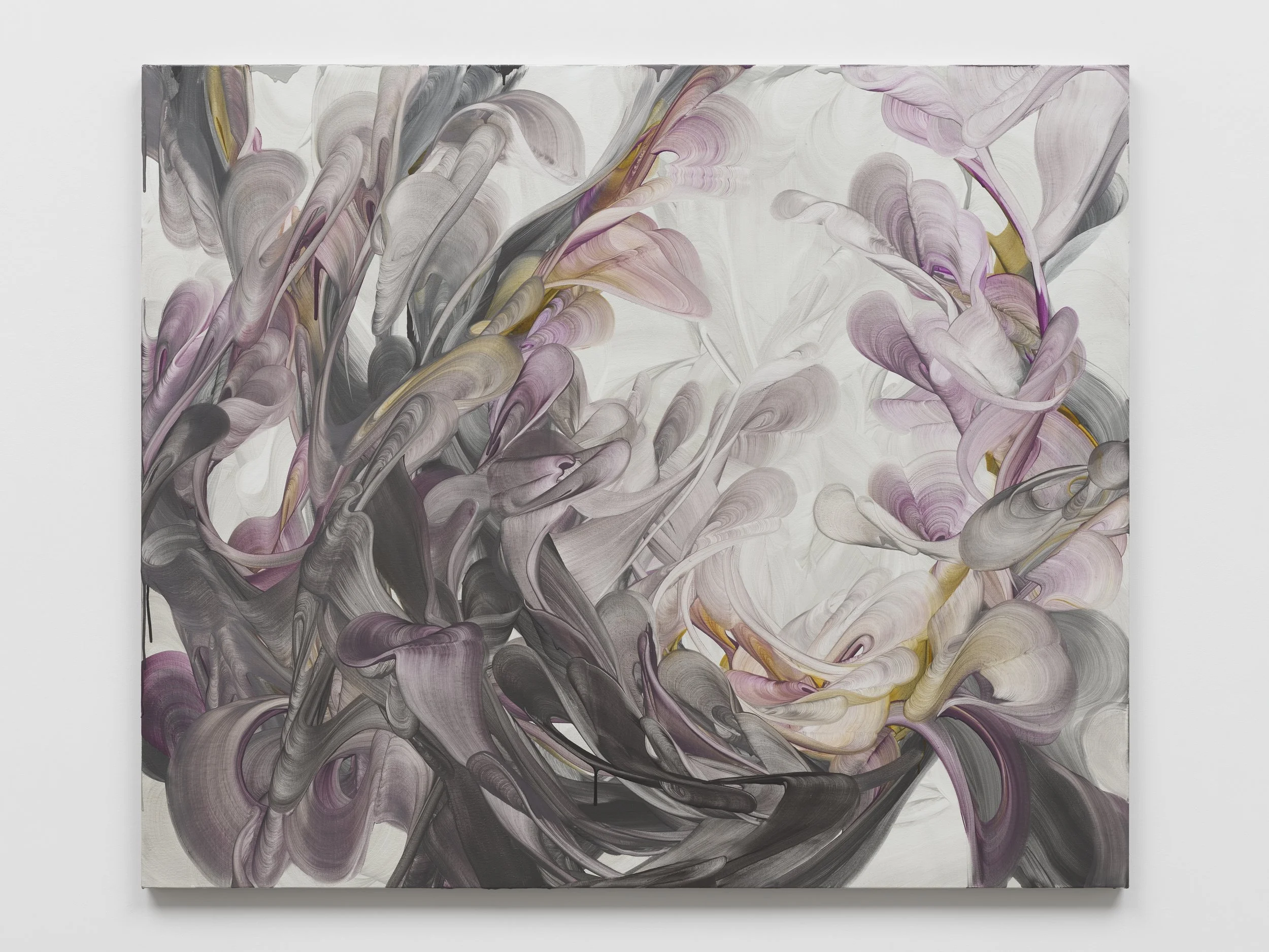
Michele Fletcher, Winter's Curve, Oil on linen, 150 x 180 cm, 2024.
Your surfaces carry traces of scraping, dragging, and dripping paint. You also paint for many hours in one stretch, one can see these things as difficult and hard on the body.
How would you describe your relationship here with your work?
“It is a process that leaves its mark both physically and psychologically due to self-imposed constraints. I see this as central to the work rather than something separate from it. The marks hold a sense of time and effort, showing the pushing, dragging, and reworking that happens over the duration of making. There’s an ongoing back and forth between my body and the surface. The intensity of the process allows something corporeal to come through and I don’t want to smooth that out.”
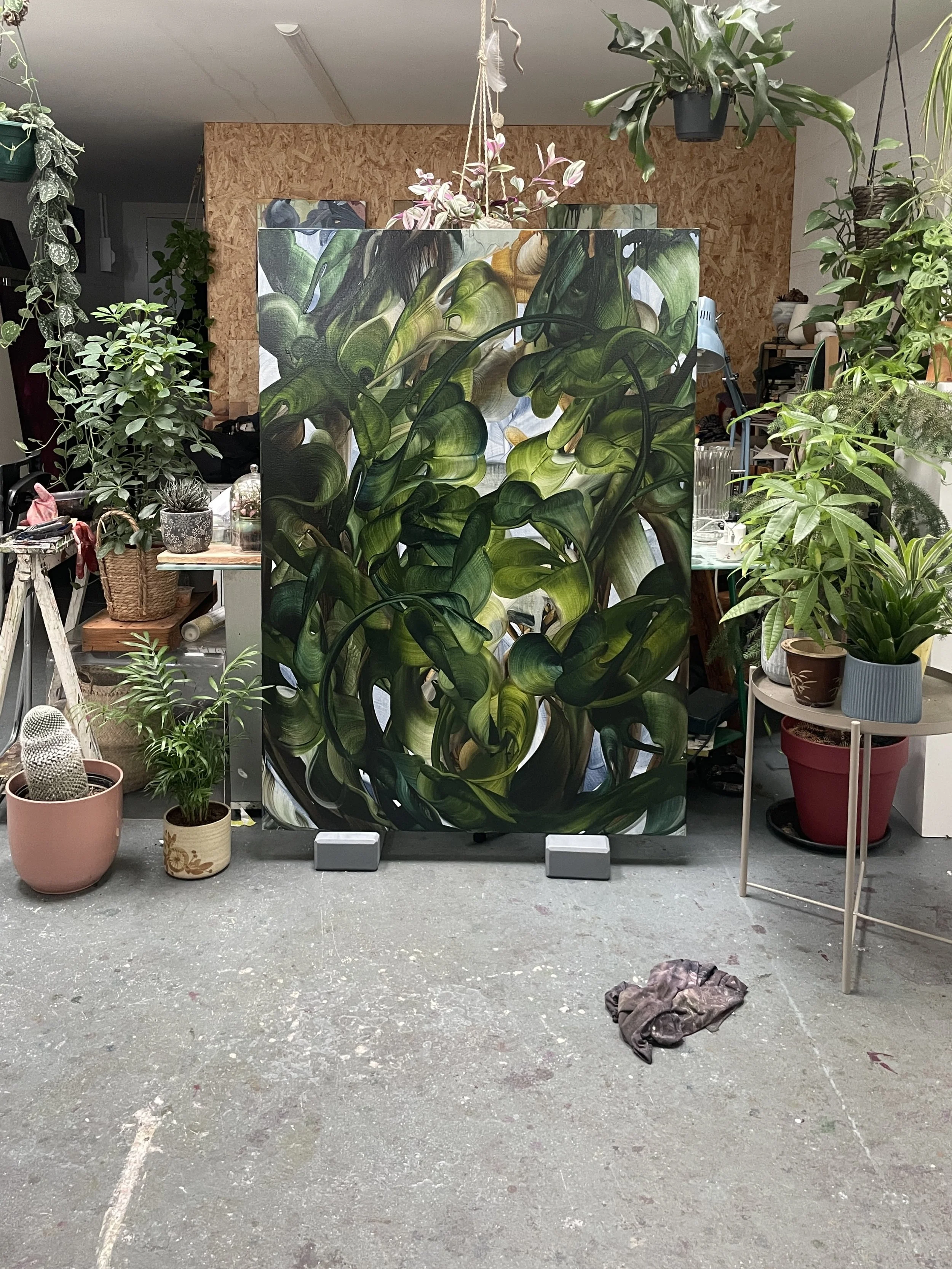
Michele Fletcher, Green is Our Weapon (studio install), Oil on linen, 140 x 100 cm, 2025.
The titles introduce references to conflict or vulnerability, such as Bloodsport or Come Away Bruised. What role do these human associations play in otherwise non-human landscapes?
”The titles open a way into the work without fixing its meaning. The paintings aren’t literal landscapes, but they can carry emotional or psychological weight. Bringing in those references creates a link to human experience, even if the imagery itself feels unfamiliar. It sets up a kind of contrast between what you see and what you might feel.”
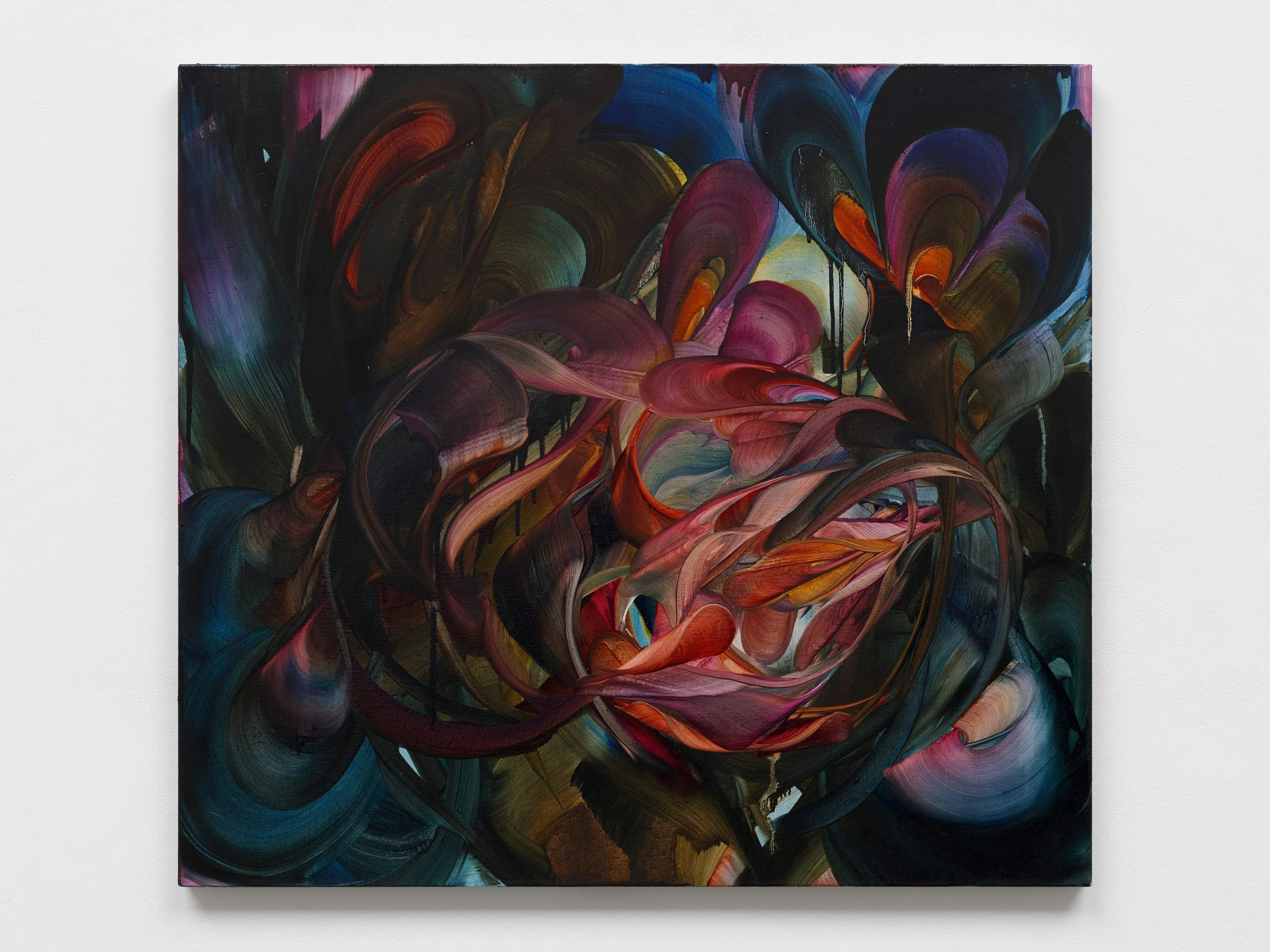
Michele Fletcher, Damn the Darkening Days, Oil on linen, 90 x 100 cm, 2023.
You draw on a lineage of artists engaging with landscape and gesture. What do you feel you’re adding to that conversation?
“I’m interested in pushing that conversation toward something more immersive and less grounded. Landscape, for me, isn’t something viewed from a distance but something you’re inside of. Gesture isn’t only about expression. It’s a way of building the work, where marks interact, overlap, and sometimes undo each other. I’m trying to create paintings that feel active and changeable, reflecting a world that’s constantly shifting rather than something settled or fixed.“



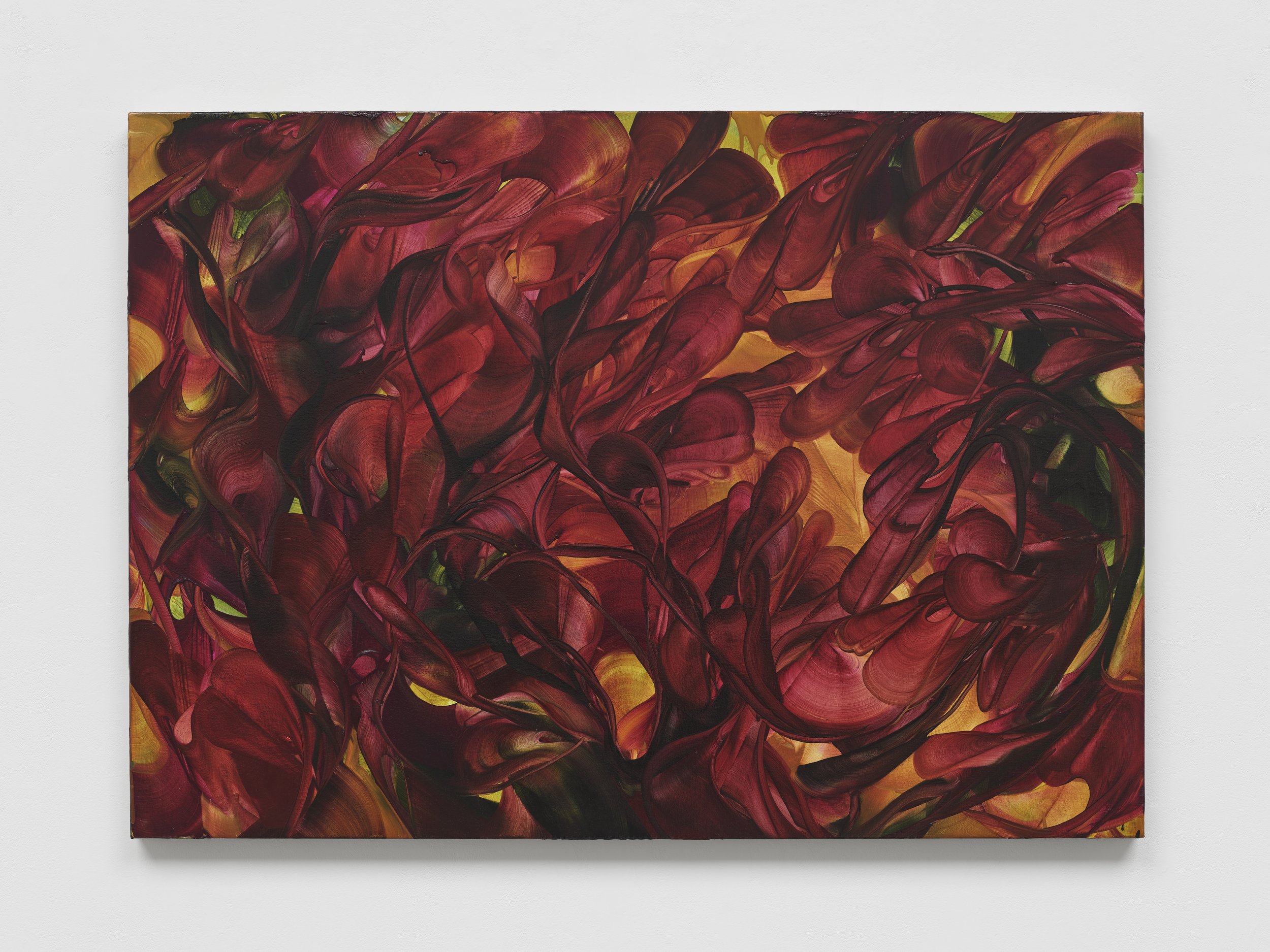
Michele Fletcher, Noon Day Demon, Oil on linen, 100 x 140 cm, 2025.
Recommended