dialogue
Katarina Caserman | Artist
March 2026
8 min read
Katarina Caserman’s practice is rooted in instinct and bodily memory rather than fixed reference, embracing memory’s unreliability as an inherent and generative condition. Painting becomes a process of release, where meaning emerges through doing rather than through premeditated intention. Her works are rarely considered finished, instead existing in a continuous state of becoming, guided by what the painting itself demands rather than by a fixed outcome.
Across multiple works, repetition and borrowing are not resisted but recognised as part of a natural dialogue between paintings. Caserman’s process balances intuition and control, where surrendering to spontaneity is essential, yet moments of structure and decision-making provide clarity. Ultimately, her work unfolds through this tension, with the artist continually negotiating what needs to be said, allowing each painting to reveal its own direction over time.
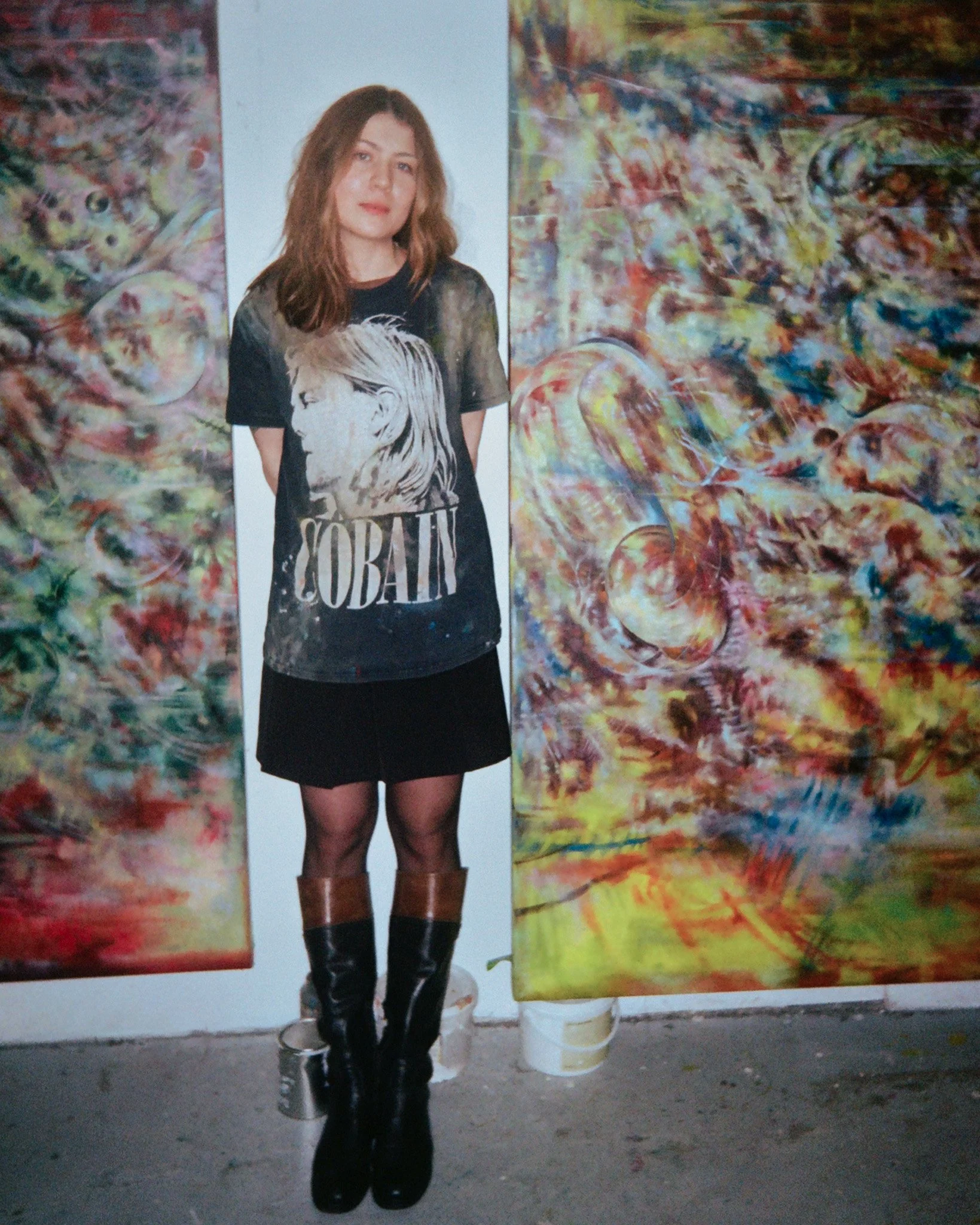
Katarina Caserman. Photo courtesy of the artist.
You work from memory rather than reference, describing memory as a copy of a previous memory. When does distortion become an obstacle rather than a generative force, and how do you respond when memory itself feels unreliable?
”Saying that I work from my memory is both useful and true, but also very vague. It is the best way to describe what happens in my process because it is so instinctive and intuitive. It is less a conscious or cognitive memory and more a bodily memory - very spontaneous impulses and short bursts of sensation. For me, painting is a way of getting rid of things, and in that sense the intention lies already in the sheer act itself; meaning then arises naturally through doing. Memory will forever remain unreliable because it’s poisoned by subjectivity and altered by time. That unreliability is not separate from memory - it is part of it.”

Katarina Caserman, Auresysnahan (After five stages of sleep there's an entry), 2025.
When a painting feels unresolved, how do you move forward without prematurely closing it. What questions guide you through?
“In a way, all paintings are always prematurely closed. You can create new beginnings within a single painting and treat it as an object in a constant state of becoming. It is always asymptotically approaching the final work. For me, the question is less whether it is finished and more when I want to step away from it. There are many moments like this within one painting - a single work contains multiple others. It is about deciding which one I want to allow to exist at a specific moment in time. I also tend to question what the painting needs rather than what I want to do with it.”
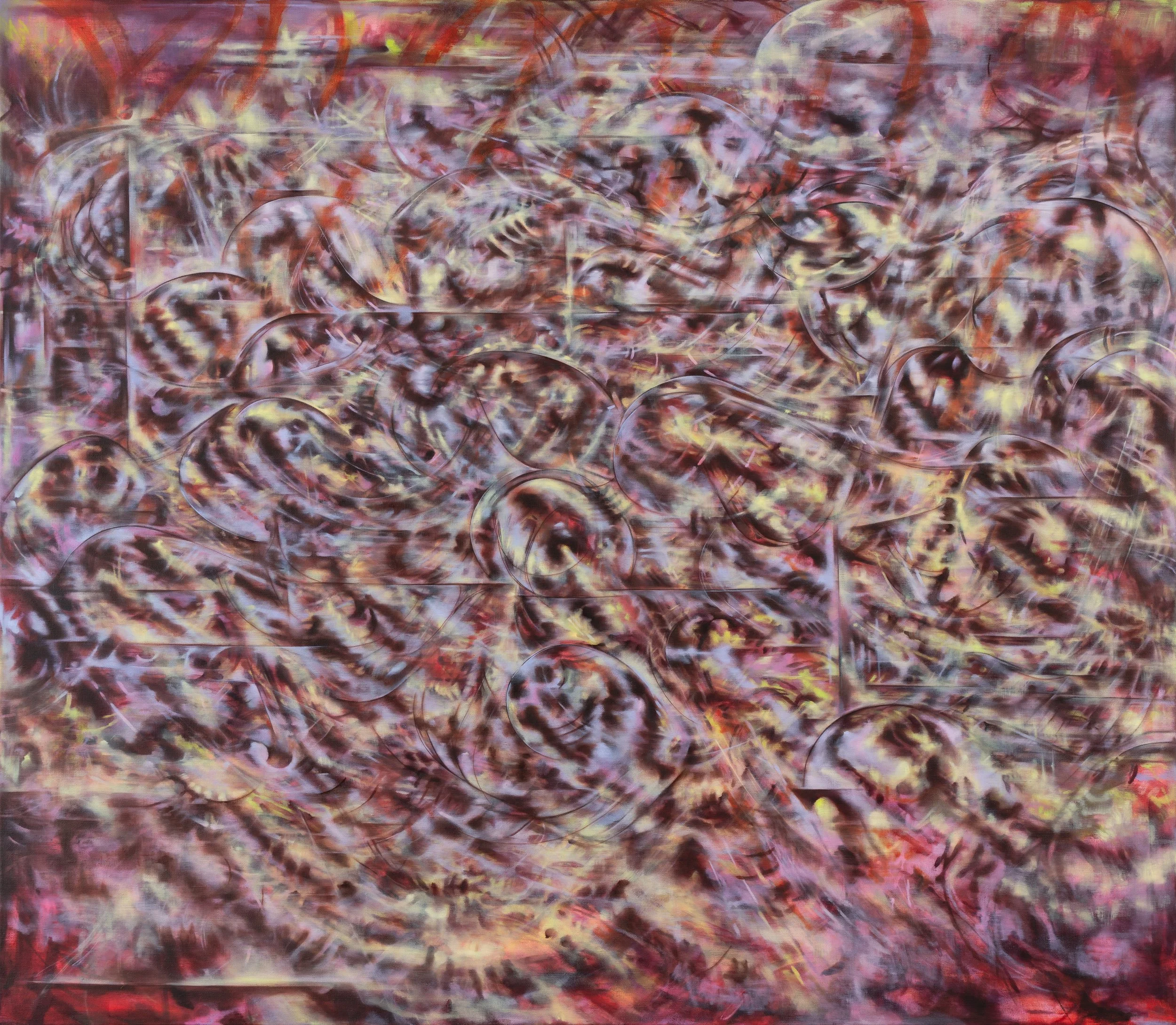
Katarina Caserman, Frazinhex (Twice in a red moon), 2025.
When working across multiple paintings simultaneously, how do you recognise the moment when one work begins to borrow too heavily from another?
”I try to stay as aware and observant as possible and recognise when that starts to happen, but I do not resist it. If the painting needs these borrowed moments, then so be it, I do not go against it simply for the sake of avoiding repetition.”
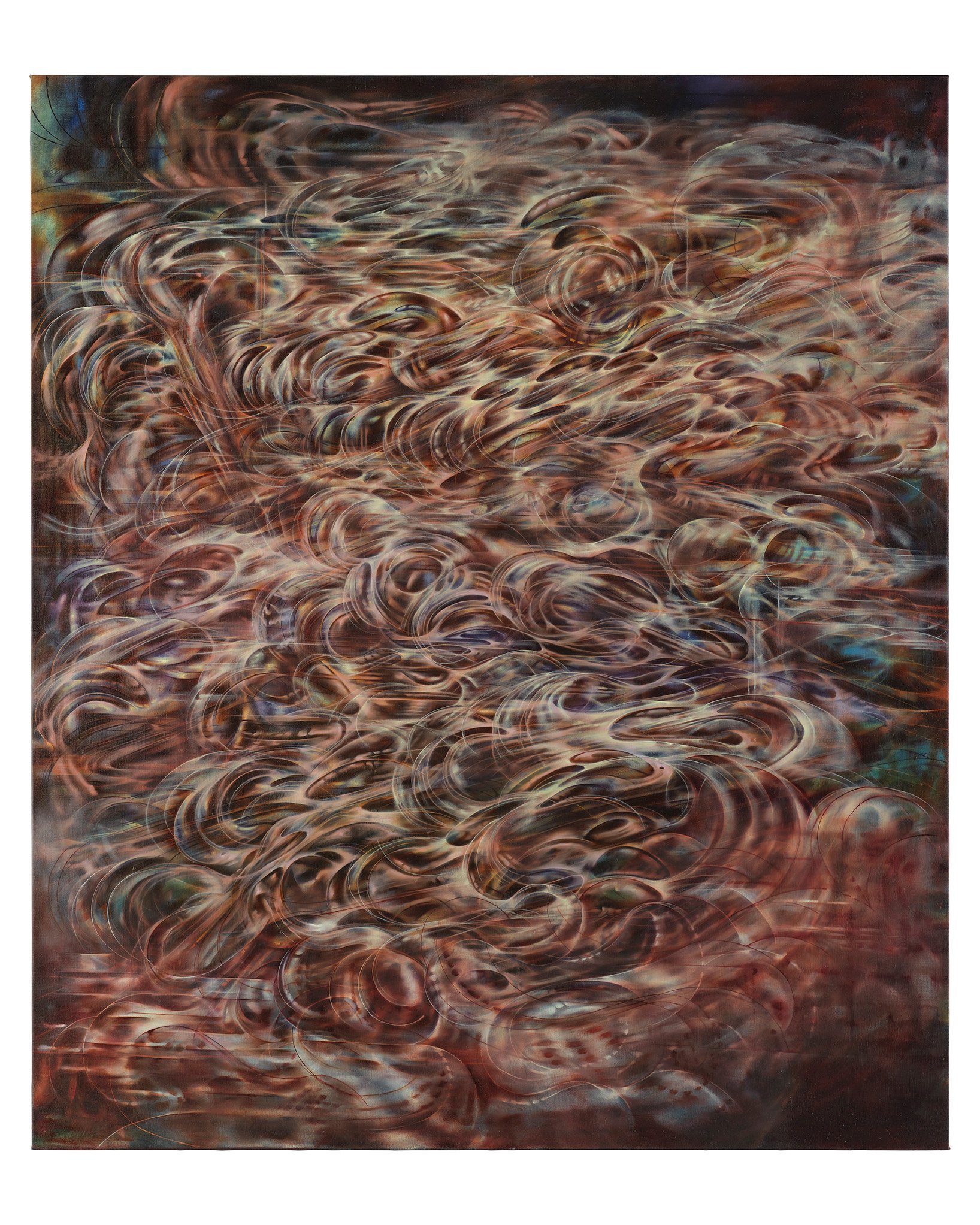
Katarina Caserman, Etomblisapai (30th of February), 2024.
How do you determine whether a painting is asking for further intervention or for restraint?
“This is incredibly challenging, since I cannot rely only on formal aspects, but I also cannot go by feeling at all times. Feeling can become confusing. Sometimes I work on one painting and keep turning around to another, as if it is begging for more, and sometimes the painting is begging for me to stop. It is not obvious or straightforward, so at some point I have to make a decision, accept the painting as it is at a specific moment in time, and be at peace with it.“



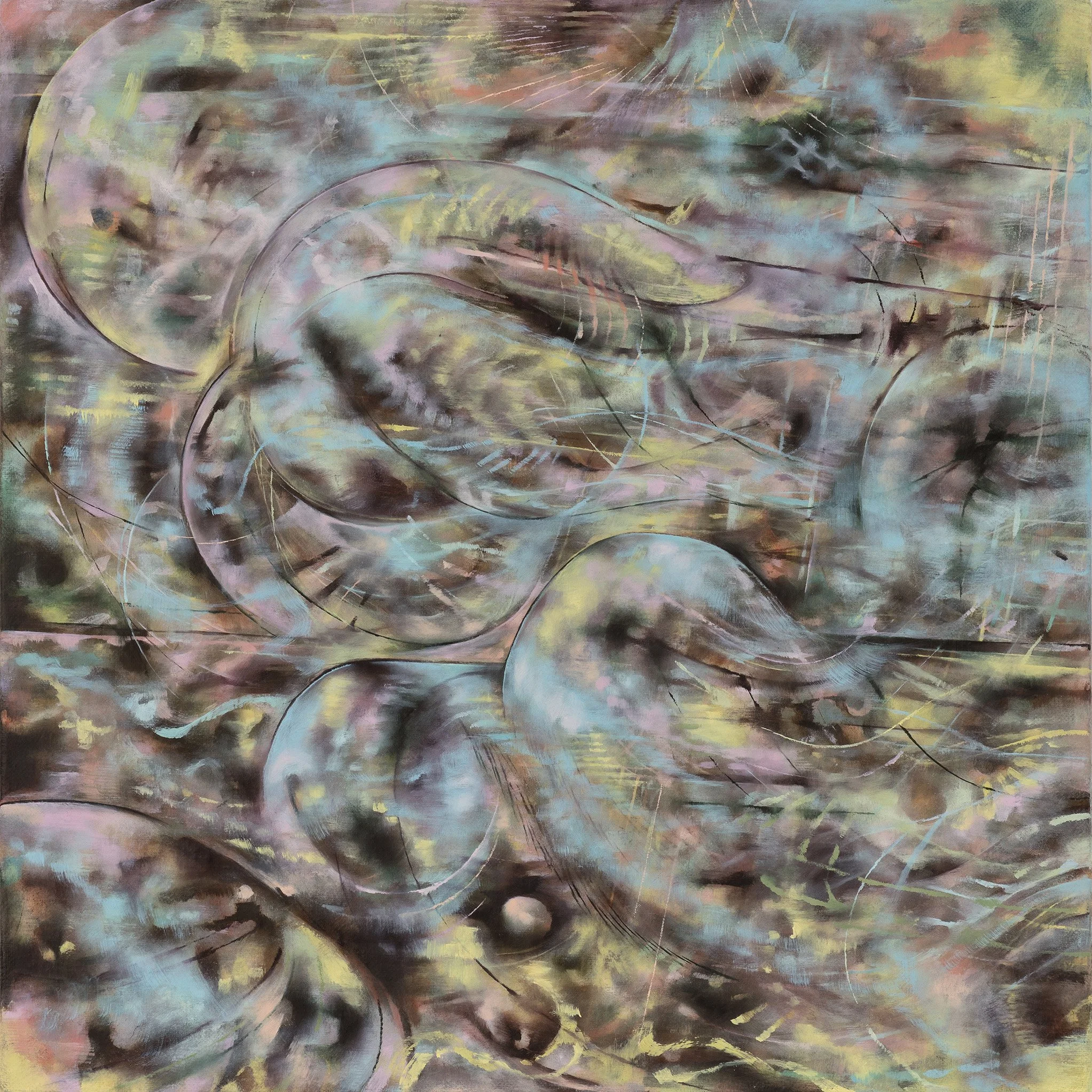
Katarina Caserman, To all my lovely Winters, 2026.
Looking back at your exhibitions so far, what moments of growth stand out to you?
“Looking back, the moments of growth that stand out to me are both external and deeply internal. Over the past four years, I’ve had the privilege of showing my work internationally and living in places like London, Los Angeles, and Mexico, experiences my younger self could never have imagined. I carry a lot of gratitude for those opportunities and for exhibitions I’m still deeply proud of.
At the same time, growth has come through difficulty. Like many young artists, I encountered moments of exploitation, confusion, and disillusionment early on. Those experiences taught me how to recognize the value of my work and, more importantly, how to say no. That shift marked a transition from simply participating in the art world to actively authoring my own path within it.
Community has been essential to that growth. Sharing studios, daily life, and vulnerability with other artists who understand the emotional and economic instability of this profession changes everything. This job requires a certain madness, the inconsistency, the uncertainty, the art market, and still showing up with commitment and care anyway. You have to be a little crazy and relentlessly consistent at the same time.
The most meaningful growth has been learning to return, again and again, to the work itself. Producing show after show can pull focus away, but the work is the source. Protecting that relationship, and continuing to make work with gratitude and clarity, feels like the greatest achievement so far.“
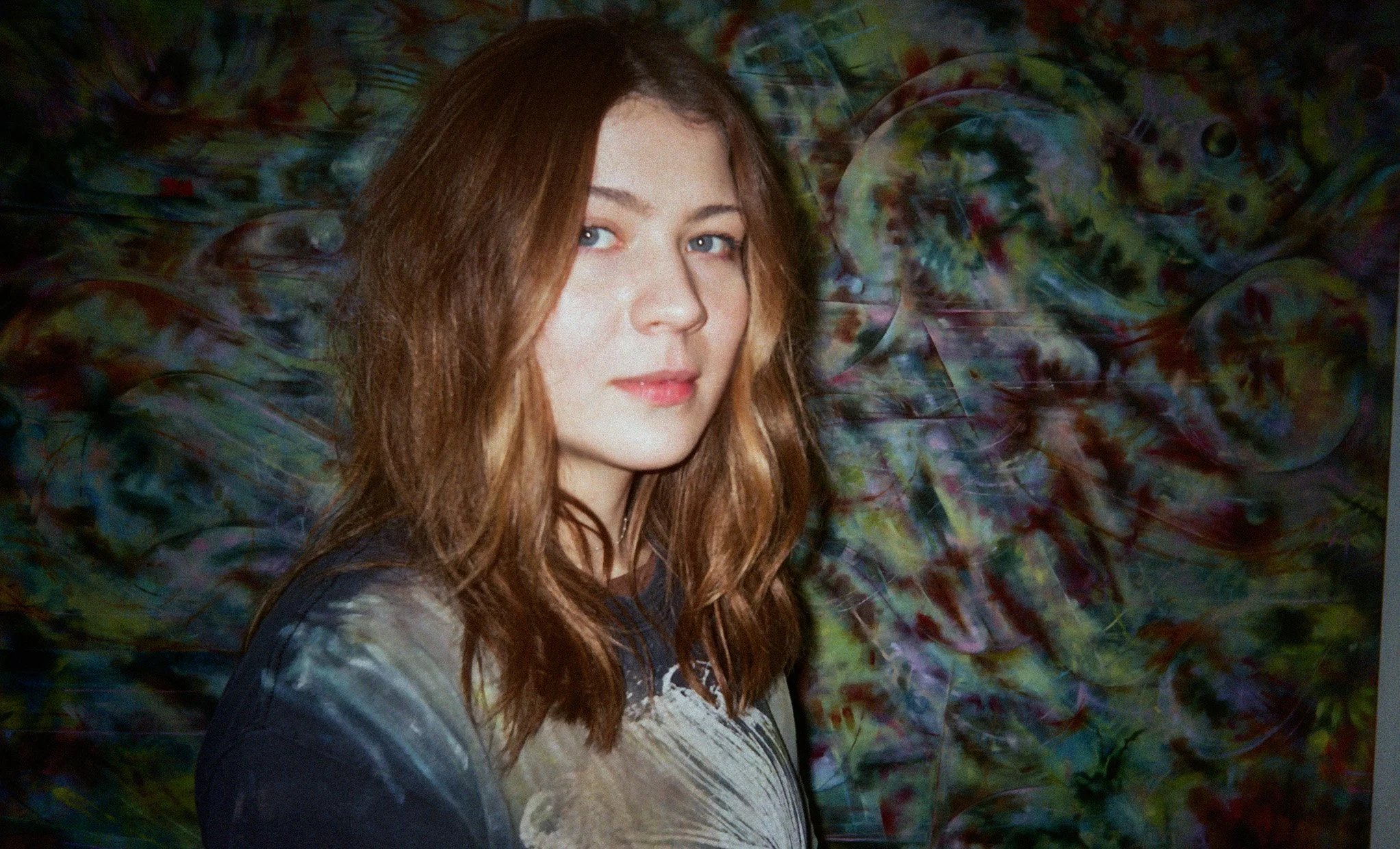
Katarina Caserman. Photo courtesy of the artist.
How do you negotiate control when the work is driven more by intuition than by intention? Do you course correct or do you allow intuition to take over?
“Painting forces me to let go in a way that does not come naturally to me. I have a strong need for control, so in that sense painting constantly asks me to let go and surrender. Without that tension, the work cannot really happen. But control also has an important role - it reintroduces order into chaos when needed, and it helps me understand the work better when overly lost or confused. Intention is always there, even if it’s not obvious at first - I need to keep asking myself what do I want to say, what needs to be said? Even if that’s not the starting point, the painting eventually reveals what that is.“
Recommended