diaries


Can We Separate Art from Artist?

March 2026
9 min read


Arts Editor: Victoria Comstock-Kershaw


Can we separate art from artist? Victoria Comstock-Kershaw argues that we not only can, but must, and that refusing to do so is making criticism weaker, culture flatter, and all of us a little bit stupider - and makes the case for Kanye West and Jay-Z’s 2011 album ‘Watch the Throne’ as the greatest piece of twenty-first century art.


The first time I heard my rabbi talk about Kanye West I genuinely thought I was undergoing some sort of religious psychosis. In what world, I thought, am I being asked to think about College Dropout before reciting the Shema in shul? This was in the latter part of 2022, a few weeks after West, who was going through his own verifiable mental health crisis, had tweeted that he was ready to go “death con 3 on Jewish people” and posted an image of a swastika fused with the Star of David. Hearing a seventy-year-old Polish guy stand at the bimah asking whether Kim Kardashian’s ex-husband might one day be responsible for a second Kristallnacht was an incredibly jarring experience in and of itself, but it was also the first time I remember seriously having to consider the following question: can you separate the art from the artist?

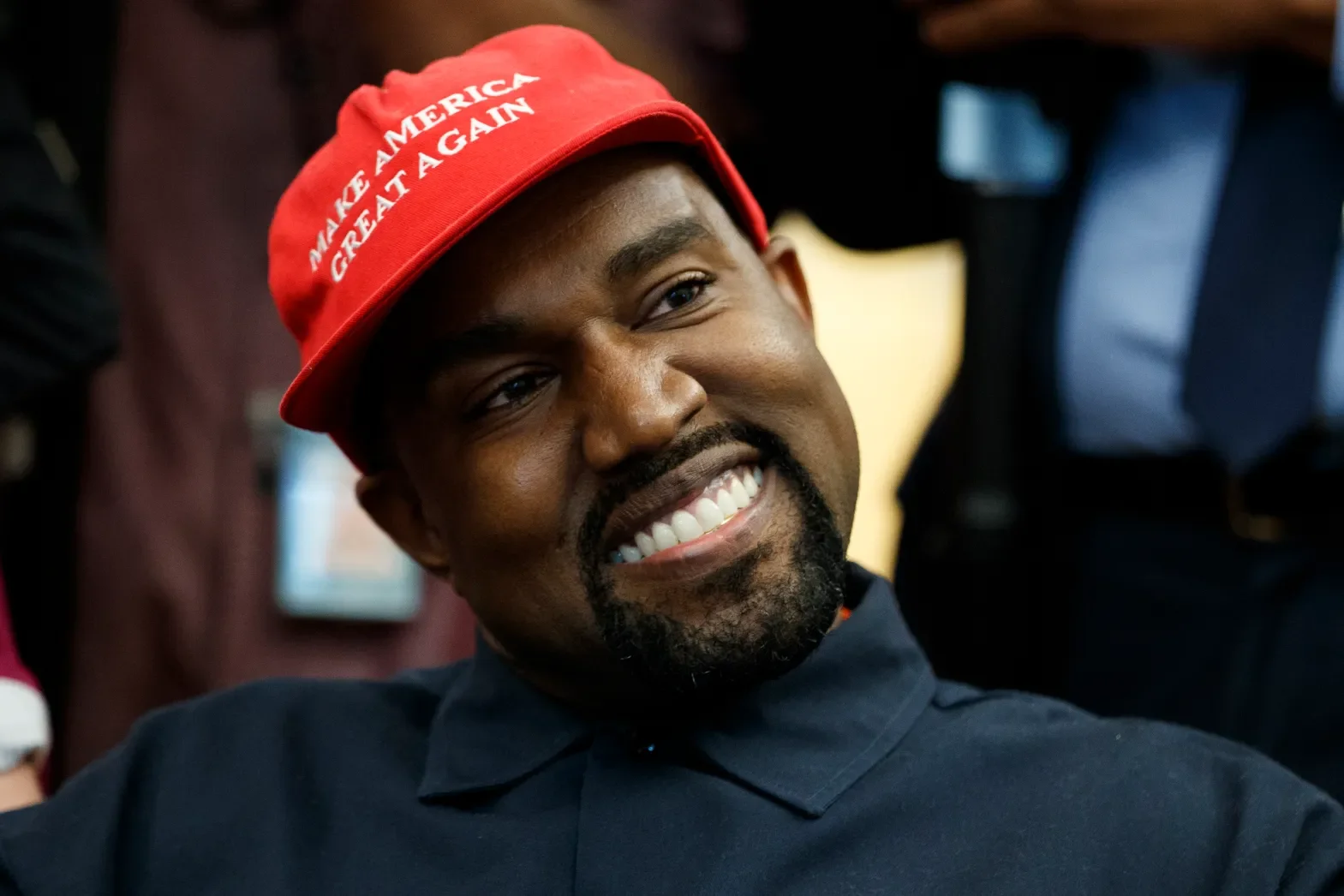
Kanye West smiles as he listens to a question from a reporter during a meeting in the Oval Office of the White House with Donald Trump, Evan Vucci, 2018.

I was, of course, vaguely aware that this was already something being asked. I had studied Barthes and Ransom at university, I had listened to debates surrounding figures like Michael Jackson and Roman Polanski, I was not under any impression that there was no pre-existing interrogation regarding whether or not society should forgive bad people if they create good things. But West - who I had regarded since the release of Watch The Throne in 2011 as one of the greatest artists not only alive today but ever born - was not some abstract figure in a textbook on New Criticism or a dead-slash-old guy making stuff I had no interest in consuming (to this day you still couldn’t pay me to watch a Woody Allen film). He was a creative hero of mine, a sort of Freudian ego ideal, a figure I had unconsciously used to calibrate my own sense of what artistry could be. And now he was on Joe Rogan saying he quite liked the architect of the Holocaust.

This tension can be traced back millenia. The Greeks didn't have a word for "art" in our sense; they used techne, meaning skilled craft, which covered everything from painting to carpentry to medicine. Plato thought art was essentially mimetic, a copy of nature, and presumed that it needed to serve some useful purpose or at least not be harmful if it was to be supported or even tolerated. This is the root of the debate: does a work's moral effect on society matter? Plato would ban Homer from his ideal Republic not because Homer was a bad craftsman but because his poetry stirred dangerous emotions in audiences. The artist's character and the work's social influence were inseparable. Aristotle disagreed; he argued that art has positive value and that strong art was neither psychologically destabilising nor politically destructive, but actually a therapeutic part of the healthy life of not only the individual but of the nation. His concept of catharsis (tragedy purging us of fear and pity) was essentially the first formal argument that art can be morally useful regardless of the artist's personal virtue.

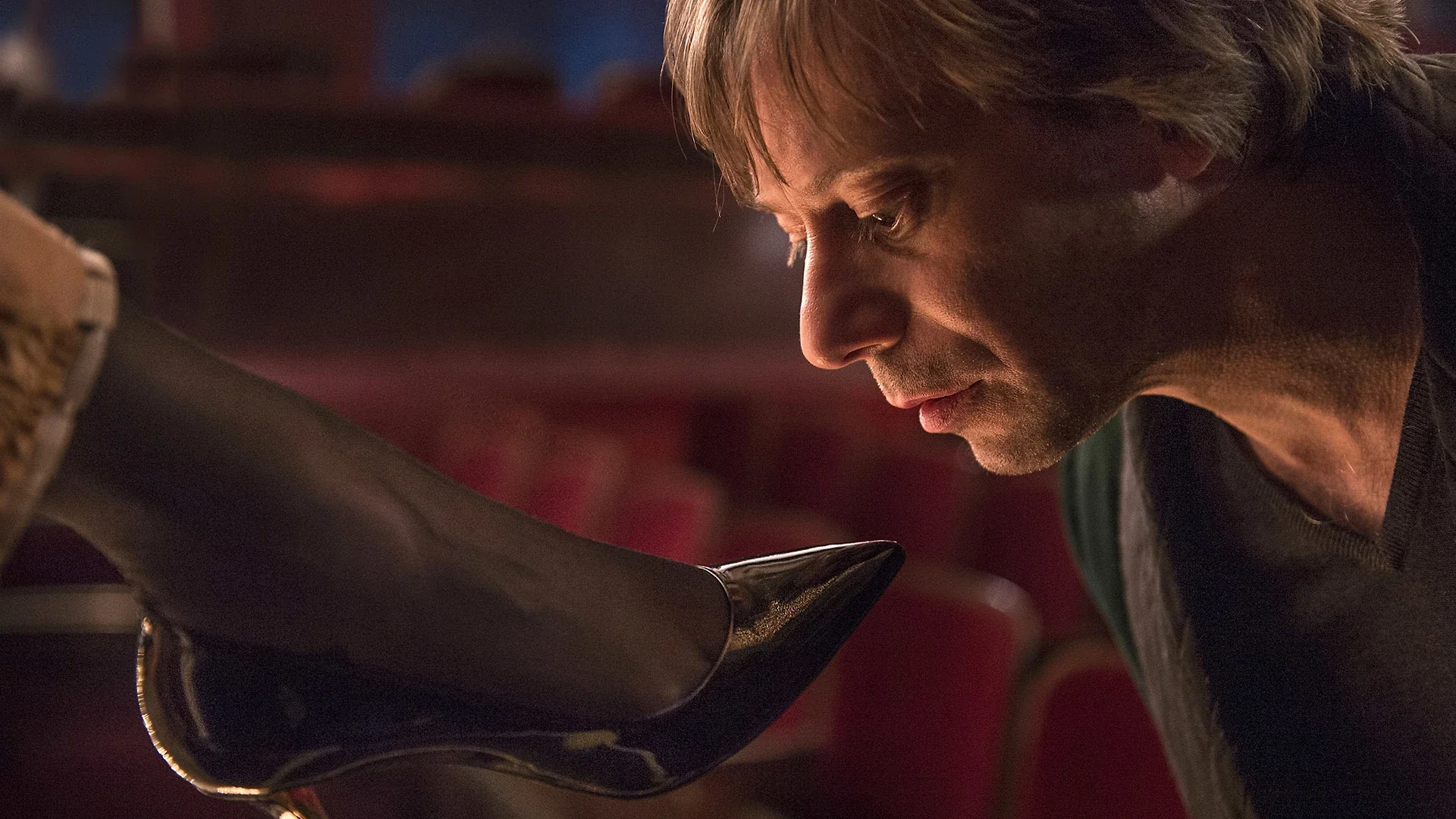
Venus in Furs, Roman Polanski, 2013.

However, the specifically biographical version - asking whether we can judge a work independently of what we know about the person who made it - is really a post-Romantic problem. Before the nineteenth century, artists were largely seen as craftsmen executing commissions; the cult of the individual genius (and therefore the moral weight of their personal life) came later. Following the advent of the twentieth century, a significant shift to general aesthetic theory took place, resulting in the rise of the New Criticism school and debate concerning the intentional fallacy. At issue was the question of whether the aesthetic intentions of the artist in creating the work of art should matter to how we evaluate it.W.K. Wimsatt and Monroe Beardsley's 1946 essay The Intentional Fallacy argued they shouldn't, and Barthes's Death of the Author in 1967 took that further by positing that the author's biography, intentions, and moral character are especially irrelevant compared to what the text means.

I hated Barthes in university. I rallied very strongly during my early twenties around the idea that “All Art is Political”, by which I meant that all art was a result and therefore an informant of the social, economic, and governmental forces of its creator and the society under which its creation took place. Ergo, by my bright-eyed undergraduate logic, the creator and his world were impossible to remove from the equation; all art was, in my view, inseparable from the hand behind it. 

And then West happened and I found myself staring down the barrel of a suspiciously Barthes-shaped gun - and now, three years later, apparently so does singer-songwriter Rosalía.

Subscribe to our newsletter for more opinion pieces

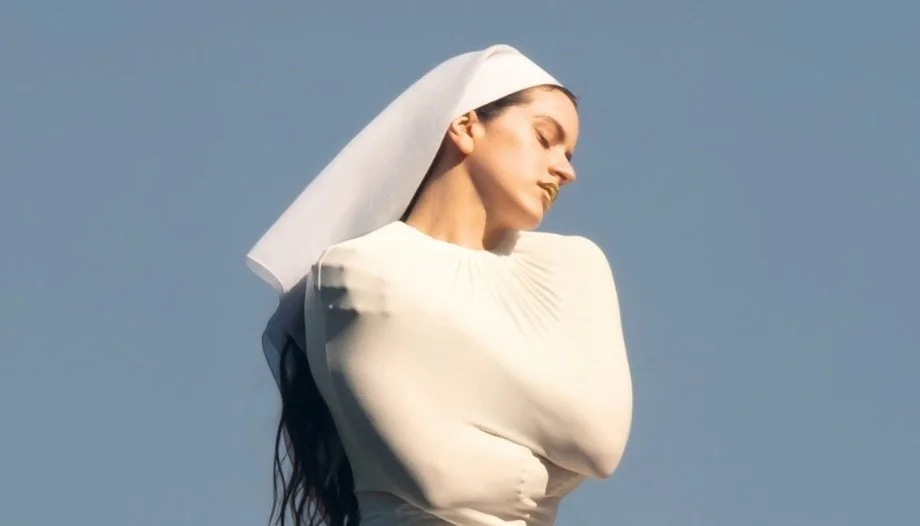
Rosalía, Lux, Noah Dillon, 2025.

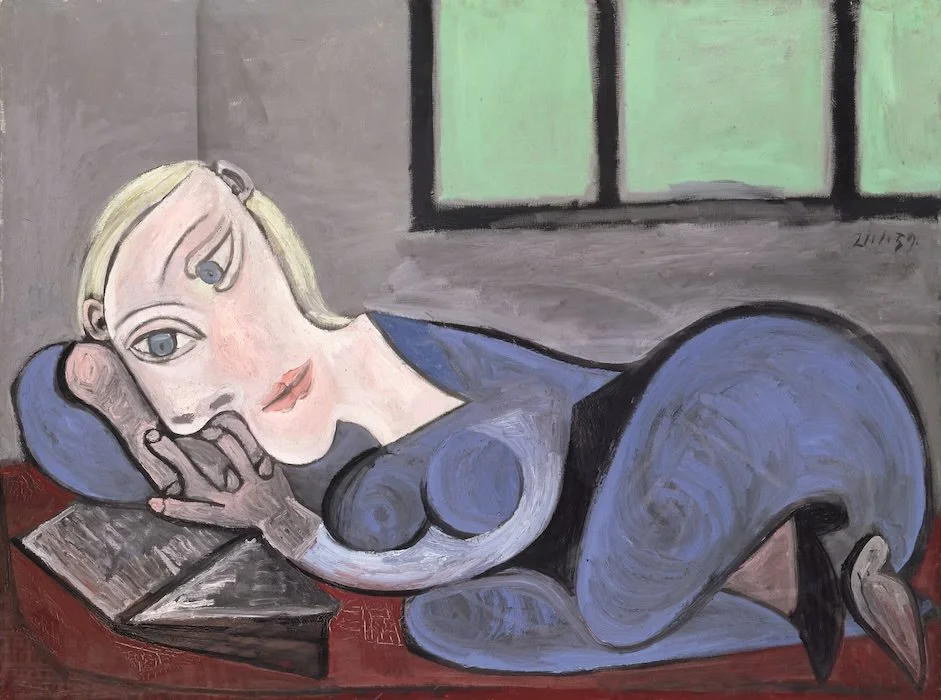
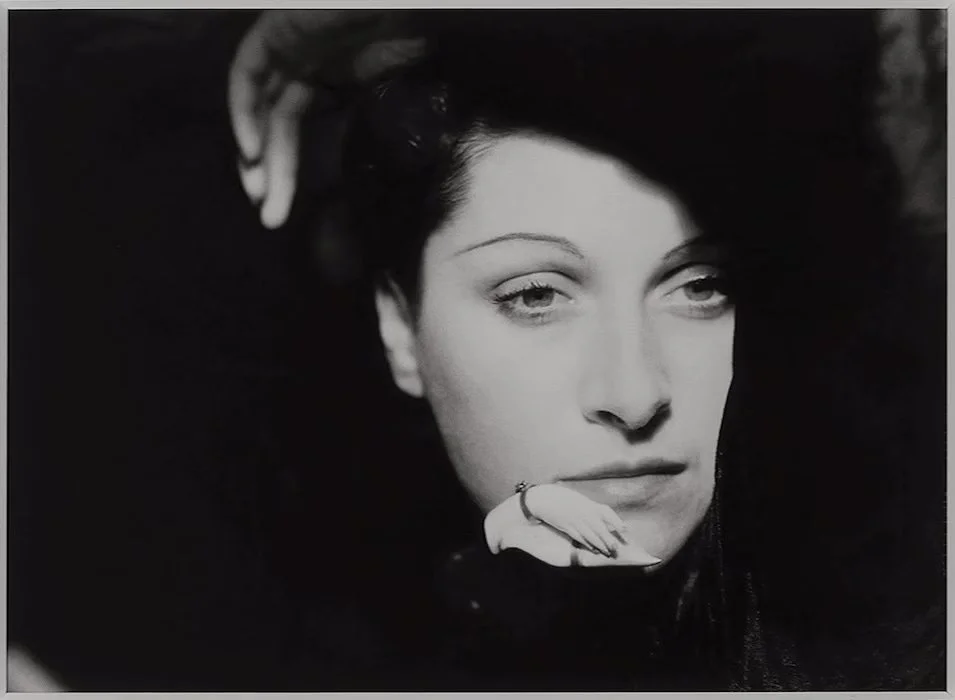
Rosalía recently appeared on a Spotify podcast with Argentine writer Mariana Enriquez and said: "I really like Picasso and I've never bothered to differentiate the artist from the work. Maybe I wouldn't have liked him as much for the things I've been told, but who knows, maybe I would have. I don't know and I don't care, I enjoy his work." Social media pushed back hard, pointing to Picasso's documented abuse of women. (Françoise Gilot wrote in her memoir that Picasso treated women like "goddesses and doormats" and threatened to throw her off a bridge; Dora Maar also said he abused her; and Picasso began a relationship with Marie-Thérèse Walter when she was just 17). Rosalía then released a TikTok video saying she was "not at peace" with her comments, admitted she had been unaware of the real abuse cases, and apologised for her lack of empathy toward the women involved. Rosalía’s apology-retreat was understandable. It was also revealing. What should have been a fairly ordinary statement about aesthetic experience had become, almost instantly, a public test of moral legitimacy, and one I’m keen to provide my humble but correct opinion on.

Here is what I have come to believe, three years on from that synagogue and eight million TikTok views later: not only can you separate the art from the artist, you have a moral and intellectual obligation to do so.

Pablo Picasso, Femme couchée lisant, 1939.

The first problem with refusing to engage with art made by people whose views or behaviour we find repugnant is that it is, quite frankly, making us stupider. There is a version of moral seriousness that looks like curating your cultural diet to reflect your values, like that tweet about reading Mein Kampf and shaking your head the whole time so the people on the bus know you disagree with it, like reading Virginia Woolf and posting a screenshot of every time she uses a racial slur. I want to suggest that this version of moral seriousness is, in practice, intellectual cowardice. If you cannot bring yourself to read, watch, or listen to something you disagree with without posturing, if the experience of encountering the work becomes inseparable from the fear of being associated with or admirative of it, then you gradually lose the ability to articulate why you disagree with anything at all. Moral conviction requires friction. It requires the discomfort of sitting with something uncomfortable and emerging with a clearer, harder-won sense of where you actually stand. A generation that outsources its ethical positions to the question of who made the thing - rather than what the thing is and does - is a generation doomed to intellectual atrophy.

The second problem is the late capitalist tyranny of lifestyle identification. In 1999, economists B. Joseph Pine and James Gilmore published The Experience Economy, arguing that Western capitalism had moved beyond selling products or even services, and had begun selling experiences: immersive, identity-shaped worlds that consumers could buy access to. Jeremy Rifkin extended this idea in The Age of Access a year later, describing a world in which the exchange of physical goods was giving way to the leasing of experiences, where what you consumed was increasingly indistinguishable from who you were. What neither of them could have fully predicted was the degree to which this logic would come to swallow the individual artist whole. The musician or painter or filmmaker has long abandoned the role of craftsman selling a discrete object in favour of becoming (or at least, being sold as) a universe, a set of aesthetics, values, and associations. 

Subscribe to our newsletter for more opinion pieces

Dora Maar, Man Ray, 1936.

You can see this everywhere once you start looking. The clean girl, the old money aesthetic, the off-duty ballerina, the tradwife - these are not lifestyles, they are visual identities constructed by products that sell the image of a way of living entirely decoupled from its actual practices. You don't have to go to the Hamptons; you just have to buy a Ralph Lauren knock-off. You don’t need to go to anti-war protests; you can just buy the keffiyeh. This in turn worsens the product as ding an sich, because both the artist-manufacturer and the viewer-consumer no longer treats art as art but as a conduit for satellite experiences. God, just look at Lily Allen's most recent album, musically unlistenable, but a completely functional experience economy of its own: who cares if the lyrics are bland or the mastering is terrible? You’re too busy googling her ex-husband! Watching the Architectural Digest of their (very ugly) brownhouse! Opening Twitter and finding out what everyone else is saying! The music is the least important part because the world is the product, which lets the art and artist get away with being and making, as Joan Rivers would put it, complete dogshit.

When we say we cannot enjoy good art made by bad people, what we are tacitly trying to do is to create an ideal image of civilisation by signalling our own desires about how we think society should work. This citizen, we say when we tell people they cannot express admiration for works by the likes of Picasso, is behaving or has behaved in a way that I believe is detrimental to society and therefore should reap no rewards for their artistic efforts. In Platonic terms, this should be of great civic use, and there is natural, visible merit to the idea that there are consequences to letting harmful rhetoric run unchallenged: the ADL has documented at least 30 antisemitic incidents directly referencing West, including vandalism, banner drops, harassment, and campus propaganda. Theroux’s Manosphere documentary is a further example of this. The solution, however, is not to say “Kanye needs to shut up” but “we need to stop listening to Kanye, so that whether he shuts up or not nobody gets hurt.”
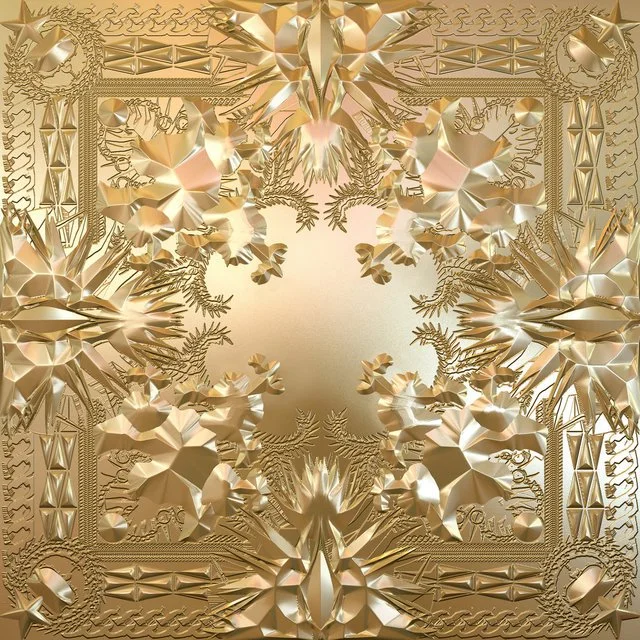
Riccardo Tisci, Watch the Throne (album cover), 2011.

The more authority we grant creators, celebrities, or influencers as moral or political guides, the more we create the conditions in which their rhetoric can do damage. What we are living through now is, simply put, an organic failure of human psychology. Robin Dunbar's research suggests that the human brain is only really equipped to maintain meaningful relationships with around 150 people at most. Our neural architecture was shaped in an environment where the only humans who existed, for all practical purposes, were the ones sitting around the same fire. We are not built to have feelings about people we have never met. We are not designed to judge the way we interact with others on the say-so of people we could not, if push came to shove, hit over the head with a very large stick once we deem their behaviour too damaging to the wellbeing of those around us (this is in fact the fundamental sadness of Nietzsche; perhaps of all men). However, because we live in this unthinkable thing called civilisation and it is generally frowned upon to commit grievous bodily harm against those who scorn us - those who now often cannot even be reached even by the largest stick known to man, because their ideas and values are propagated via print media and the internet - we are reduced to digital floggings, gestures of disapproval that serve only to re-assert our own mediated impulses and wants to a broader public. This serves nobody: as West would put it, there is “no church in the wild.”

No antisemite became an antisemite because Kanye West said so. No misogynist requires Rosalía’s permission to admire Picasso. The fantasy at work here is one of symbolic purification: the belief that if we loudly enough disavow bad people, the world itself becomes cleaner. It does not. What actually happens is that we become less able to judge what is good, bad, beautiful, dangerous, or true. Separating art from artists is part of that judgement, and judgement requires contact with the thing itself. It keeps criticism concerned with form, force, meaning and effect rather than the increasingly tedious question of whether admiration might be mistaken for endorsement by somebody very eager to be seen having the correct feelings. Kanye West is still a dick, and Watch The Throne is still the best album of the twenty-first century - possibly ever. Neither of these facts cancels the other out. 


Comments